Dost Pakistan Journeys Tours and safaris in the North & South Pakistsn
Related Articles



Women’s Inheritance Rights: Pakistan’s Supreme Court Upholds Sharia Principles Against Customary Practices
The News: A Landmark Judgment for Inheritance Rights
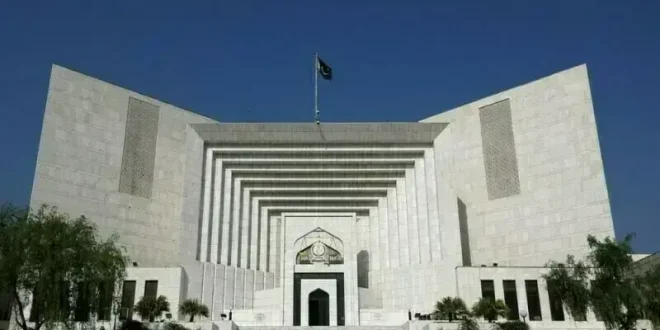
In a pivotal decision, the Supreme Court of Pakistan recently brought closure to a protracted 71-year-old family dispute, issuing a definitive ruling on the entrenched issue of women’s inheritance rights. The apex court unequivocally declared that inheritance is a fundamental Sharia (Islamic) and legal right, vesting immediately in all eligible heirs, including women, upon the death of a family head. This right, the court stressed, cannot be circumvented by private agreements, social pressures, dubious administrative entries in revenue records, or procedural ploys.
Justice Shahid Bilal Hassan, authoring the judgment, powerfully articulated that the right to inheritance is not a “bounty” to be dispensed at the discretion of male family members, nor is it a concession contingent on custom, convenience, or familial goodwill. The case itself originated from the 1955 death of Roshan, where an alleged verbal gift from his widow and daughters to his two sons was used to create a fraudulent mutation (Mutation No. 75), effectively depriving the female heirs of their lawful shares. After a prolonged legal battle spanning multiple courts, the Supreme Court ultimately sided with the petitioners, declaring the contested mutation null and void, and directing revenue authorities to rectify the records to ensure women receive their due shares under the applicable law of inheritance.
Background: Sharia, Custom, and the Struggle for Justice
To fully grasp the significance of this ruling, it’s crucial to understand the intricate interplay of Islamic law, customary practices, and Pakistan’s legal framework. Islamic jurisprudence, particularly Sharia inheritance law, provides a clear and detailed scheme for wealth distribution upon death. It specifies fixed shares for various categories of heirs, including daughters, mothers, and wives, ensuring an immediate devolution of property. This divine mandate is designed to promote economic justice and prevent concentrations of wealth within a few hands.
However, for generations in Pakistan, particularly in rural and conservative areas, these Sharia principles have often been sidelined by deeply entrenched customary practices. These customs, largely patriarchal, frequently lead to the systematic deprivation of women’s inheritance rights. Women might be coerced into “verbal gifts,” forced relinquishments, or simply denied knowledge of their entitlements. The rationale often invoked includes preserving family land within the male line, maintaining ‘family honour,’ or avoiding fragmentation of agricultural holdings. The societal expectation for women to voluntarily surrender their rights “in the name of tradition, family honour or social convenience,” as Justice Hassan observed, highlights a profound disconnect between legal statute and societal reality.
While Pakistan’s legal system is rooted in Islamic principles and influenced by common law, and its Constitution guarantees equality, the enforcement of women’s property rights has historically been challenging. The issue is not the absence of law, but the failure to implement it effectively against powerful social norms and manipulative practices. This long-standing struggle underscores why a definitive stance from the highest court is not merely a legal pronouncement but a crucial step towards aligning societal practices with both religious tenets and constitutional values.
Impact on Pakistan: A Paradigm Shift?
The Supreme Court’s judgment carries profound implications for women’s inheritance rights across Pakistan:
- Strengthening Legal Precedent: This ruling establishes an unambiguous precedent for all lower courts and revenue authorities. It serves as a stern reminder that Sharia inheritance law, specifically designed to protect female heirs, must be upheld without compromise. Any transaction or maneuver aiming to exclude a woman from her rightful share must now face the “utmost care and judicial scrutiny.”
- Empowerment of Women: By safeguarding their property rights, the judgment offers a pathway to greater economic independence and improved social standing for Pakistani women. Property ownership can provide security, enhance decision-making power within families, and contribute to overall poverty reduction, especially in female-headed households.
- Challenging Patriarchal Norms: The court’s unequivocal rejection of customary practices that deny inheritance directly confronts entrenched patriarchal norms. It sends a strong message that tradition cannot override divine law and constitutional guarantees of equality.
- Accountability for Institutions: The ruling places a renewed emphasis on the responsibility of revenue officials, legal practitioners, and even community leaders. They are now explicitly tasked with ensuring the protection, rather than the defeat, of women’s inheritance rights. The court’s directive to correct revenue records highlights the need for institutional integrity and vigilance.
- Shift in Burden of Proof: A critical procedural safeguard established by the judgment is that once the validity of an alleged gift is challenged, the burden shifts to the beneficiaries to prove its legality. This makes it significantly harder to legitimize fraudulent transactions designed to disinherit women.
While the judgment represents a colossal victory, the journey ahead remains challenging. Implementing this ruling effectively will require widespread awareness campaigns, accessible legal aid for women seeking justice, and a sustained pushback against societal resistance. The battle for economic justice for women will undoubtedly continue, but this judgment provides a robust legal foundation.
Analysis: Reconciling Faith, Law, and Society
This Supreme Court ruling is more than just a legal decision; it’s a profound act of judicial interpretation that seeks to reconcile faith, law, and societal practice in Pakistan. Justice Hassan’s observations underscore that denying women their lawful inheritance is not merely a legal glitch but a “societal problem,” reflecting a deeper contradiction within the national ethos.
The court’s insistence that Sharia inheritance law “occupies a unique position in Islamic jurisprudence” because it embodies a “divine scheme for the distribution of wealth” serves as a powerful reminder of the Islamic faith’s inherent commitment to justice. By framing the issue this way, the judgment directly challenges those who use a distorted understanding of tradition to subvert religious principles that are fundamentally just and equitable towards women.
Furthermore, the ruling embodies a crucial form of judicial activism – not in creating new laws, but in rigorously enforcing existing ones, particularly those rooted in religious texts, to align with constitutional values of equality and justice. The pronouncement that “A society that celebrates the virtues of justice while tolerating the deprivation of women from their lawful inheritance suffers from a contradiction that cannot be reconciled with either constitutional values or Islamic principles” is a clarion call to the nation. It highlights that true legal and social progress lies in upholding the rights of the most vulnerable, and that the “true measure of a legal system lies in the rights it protects.”
Looking forward, the judgment lays the groundwork for a more just society, but its full impact will depend on collective action. Families, community leaders, religious scholars, legal practitioners, and civil society organizations all share a “collective duty” to ensure that rights granted by Almighty Allah are neither diluted nor denied. This decision is a beacon of hope, empowering women to reclaim their rightful place as equal inheritors and contributing members of society, moving Pakistan closer to fulfilling its promise of justice for all under the umbrella of Islamic and constitutional law.