 Dost Pakistan Journeys Tours and safaris in the North & South Pakistsn
Related Articles
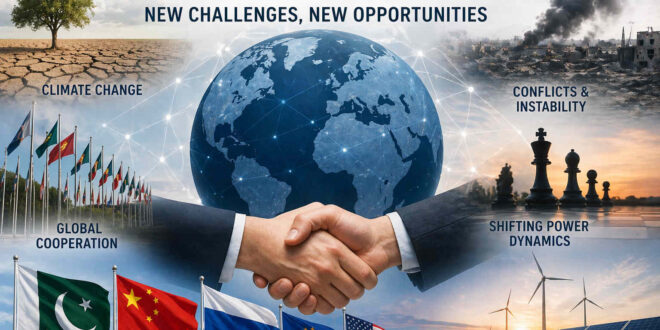
The beginning of the 21st century brought with it a growing awareness of climate change. A major milestone was reached in 2015, when world leaders gathered in Paris to address the global climate crisis. Important decisions were made, including commitments to reduce emissions and establish financial mechanisms to combat environmental challenges.
However, global politics has since taken a more complex turn. In recent years, major geopolitical events have shaken the foundations of international relations. Conflicts, shifting alliances, and economic uncertainty have pushed the world into a new and uncertain phase.
Middle East Tensions and New Realities
One of the most significant developments has been the escalation of tensions involving Iran. Military actions by major powers have not only impacted the Middle East but have also sent shockwaves across the world.
This situation has forced countries in the region to rethink their strategies. Nations like Saudi Arabia, UAE, Qatar that once relied heavily on global powers for security are now reconsidering their positions. There is a growing realization that dependence on external forces can lead to instability. As a result, new efforts toward regional cooperation and self-reliance are emerging.
Shifting Relations Between Europe and the United States
At the same time, the traditionally strong alliance between Europe and the United States has shown signs of strain. Differences in policy approaches, especially in areas such as energy and defense, have become more visible.
European countries are increasingly seeking greater independence in their foreign policies. This shift suggests that the Western alliance, once seen as a unified force, is gradually evolving into a more complex and less predictable partnership.
Pakistan’s Rising Diplomatic Role
Amid these global changes, Pakistan has emerged as a country gaining renewed importance on the international stage. Not long ago, the country faced serious economic challenges, but recent developments have shown a remarkable turnaround.
Pakistan’s strategic and diplomatic positioning, particularly in comparison with regional rivals, has drawn global attention. A balanced foreign policy and improved relations with key global powers have strengthened its standing.
Leadership at multiple levels has played an important role in this shift. Pakistan has actively engaged in diplomacy, even facilitating dialogue between major powers such as the United States and Iran, in cooperation with countries like China and Russia.
The Global Energy Crisis
Another major factor shaping the current world order is the ongoing energy crisis. Rising energy costs are affecting economies worldwide, leading to inflation, industrial slowdowns, and reduced employment opportunities.
In many countries, the situation has become so severe that basic services are under pressure. This has made it clear that the search for alternative and sustainable energy sources is no longer optional—it is essential for survival.
The Rise of China and Russia
China’s role in global politics has grown significantly in recent years. Its economic strength, technological progress, and diplomatic initiatives have elevated it to the status of a major global power.
Projects like the Belt and Road Initiative are expanding China’s influence across continents, connecting economies and strengthening its global reach.
At the same time, Russia remains a key player in this evolving order. Its strategic alignment with China presents a significant challenge to traditional Western dominance. Together, these countries are working toward a more balanced global system.
A World Moving Toward New Alliances
The world today is undergoing a period of transformation. Old alliances are weakening, while new partnerships are taking shape. The balance of power appears to be gradually shifting from the West toward the East.
This transition brings both risks and opportunities. There is a growing possibility of the world dividing into competing blocs, but there is also a chance for greater cooperation and balance.
Challenges and Opportunities
In this changing global landscape, countries that act with wisdom, balance, and foresight will be better positioned to succeed. The current situation is not only filled with challenges but also offers opportunities for growth and cooperation.
The need of the hour is for nations to move away from confrontation and toward dialogue. Efforts such as ongoing diplomatic engagements, including upcoming negotiations in Islamabad between global powers, offer hope for a more peaceful and stable world.
