Dost Pakistan Journeys Tours and safaris in the North & South Pakistsn
Related Articles



“`html
Khyber Pakhtunkhwa’s FY27 Budget: A Political Statement Amidst Economic Strain
The News
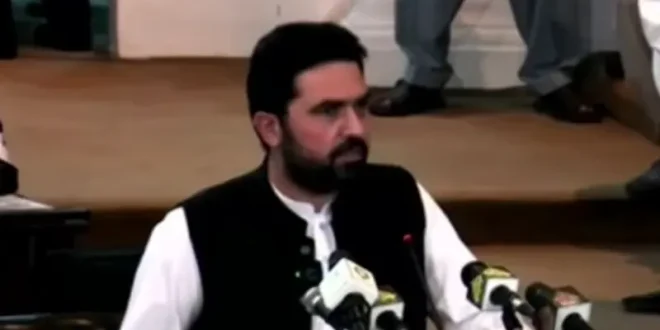
Khyber Pakhtunkhwa (KP) Chief Minister Sohail Afridi recently unveiled the provincial budget for the fiscal year 2026-27, proposing an outlay of Rs2.17 trillion. The budget document projects an estimated fiscal deficit of Rs48 billion. Notably, CM Afridi declared that this deficit would be met through the province’s “own resources,” explicitly stating KP would not seek external loans for this amount.
The budget presentation itself was steeped in political drama, with initial doubts about its submission, reportedly linked to PTI founder Imran Khan. During his speech, Afridi, representing the PTI government, asserted that the decision to present the budget was “unanimously decided” by PTI parliamentarians. He then leveraged the platform to raise a series of demands concerning Imran Khan, including restoration of fundamental rights, access to personal physicians, phone calls with family, and access to media. Crucially, Afridi linked any potential provision of grants from KP to the Centre—an arrangement proposed to help the federal government manage its finances—to consultations with the incarcerated PTI leader.
Economically, the budget aims for “progress and prosperity” under the vision of “Khushaal Pakistan.” It anticipates Rs1.59 trillion from federal transfers and sets a target of Rs182.4 billion for provincial receipts. Key allocations include Rs1.64 trillion for current expenditure and Rs524.2 billion for the annual development programme. The budget also proposes a 7% increase in salaries and pensions for government employees and a reduction in the infrastructure development cess from 2% to 0.75%, with no new taxes for the coming fiscal year.
Background
Understanding the KP budget requires a look at Pakistan’s broader political and economic landscape. The nation has been grappling with persistent economic challenges, including high inflation, a significant national debt, and a recurring need for International Monetary Fund (IMF) assistance. These pressures often lead the federal government to seek fiscal consolidation, which can include asking provinces to contribute more to national coffers.
- Federal-Provincial Fiscal Relations: Pakistan operates under a federal system where revenues are distributed between the Centre and provinces primarily through the National Finance Commission (NFC) Award. This constitutional mechanism determines the share of federal tax revenues (the divisible pool) that each province receives. Currently, provinces typically get a substantial share, leading to situations where the Centre, despite being the primary revenue collector, faces its own budgetary constraints.
- The “Grants to Centre” Proposal: The reference to provinces freezing their share from the federal tax divisible pool and returning any surplus receipts to the Centre as grants is a recent proposal. It’s an attempt by the federal government to bolster its own finances and manage the national fiscal deficit, especially in light of ambitious Federal Board of Revenue (FBR) tax collection targets (Rs15.2 trillion for FY2026-27) that are crucial for overall economic stability.
- Political Landscape: The PTI (Pakistan Tehreek-e-Insaf) government in KP is operating amidst a highly charged national political environment. The party’s founder, Imran Khan, remains incarcerated, and the PTI alleges widespread suppression of its political activities and violations of its leadership’s fundamental rights. The budget speech, therefore, becomes a powerful platform to voice these grievances and assert political defiance against the federal government.
- Merged Districts: The mention of grants for merged districts (erstwhile FATA – Federally Administered Tribal Areas) highlights a specific fiscal responsibility for KP. These areas were integrated into KP in 2018, bringing with them a need for significant development and administrative funding, often supported by special federal grants and foreign assistance.
- Public Sector Development Programme (PSDP): This is the federal government’s primary instrument for financing development projects across the country, including in provinces. Federal development grants mentioned in the budget are part of this larger national programme.
Impact on Pakistan
The KP budget, particularly its political undertones, carries significant implications for Pakistan’s federal structure, economic stability, and political dynamics:
- Strained Federal-Provincial Relations: KP’s explicit refusal to contribute grants to the Centre from its divisible pool share, especially linking it to political demands, will inevitably escalate tensions between the provincial and federal governments. This could set a precedent, potentially encouraging other provinces to adopt similar stances or fueling further demands for provincial autonomy over fiscal matters.
- Challenges to National Fiscal Consolidation: The federal government is under immense pressure to control its own fiscal deficit and meet IMF targets. If provinces, particularly large ones like KP, refuse to cooperate on fiscal arrangements like the proposed grants, it complicates the Centre’s ability to manage national debt and maintain macroeconomic stability. This could impact the FBR’s ability to meet its ambitious revenue targets and, by extension, affect the national economy.
- Political Polarization and Instability: Using the budget presentation as a platform for political demands concerning Imran Khan deepens the existing political divide. It transforms a crucial economic exercise into a political battleground, making consensus-building on national issues more difficult and potentially contributing to political instability.
- Uncertainty over KP’s Fiscal Plan: CM Afridi’s pledge to cover the Rs48 billion deficit from “own resources” without external loans, while admirable in intent, raises questions about its feasibility. If KP struggles to generate these resources, it could lead to increased internal borrowing, delayed project execution, or ultimately, a reliance on federal assistance despite the current stance, further complicating national fiscal planning.
- Impact on Development: While the budget emphasizes “progress and prosperity,” a strained relationship with the Centre could impact the flow of federal development grants and foreign assistance tied to national programs. This, in turn, could affect the timely completion of critical projects within KP, despite the substantial allocation to the Annual Development Programme.
Analysis
The Khyber Pakhtunkhwa budget for FY2026-27 is less a mere financial statement and more a powerful political manifesto from the PTI government. It strategically intertwines provincial fiscal management with national political grievances, reflecting the deep-seated tensions currently permeating Pakistan’s governance.
The Budget as a Political Assertion: The core message is clear: KP, under PTI, is willing to assert its provincial autonomy and use its fiscal leverage to press for political demands, particularly those concerning Imran Khan. Linking the refusal of federal grants to the ability to consult with Khan is an unprecedented move that elevates the budget from a routine financial exercise to a direct confrontation with the federal establishment. The “unanimous decision” to present the budget, after initial doubts, further underscores the strategic intent behind its contents and presentation.
Fiscal Realism vs. Political Rhetoric: CM Afridi’s declaration to cover the Rs48 billion deficit from “own resources” without loans is a bold statement. While reducing the infrastructure development cess and not imposing new taxes might provide relief to citizens and businesses, it simultaneously reduces potential revenue streams. The specifics of how this Rs48 billion will be generated internally, beyond standard federal transfers and provincial receipts, remain largely unaddressed. This raises questions about the fiscal realism of this pledge and whether it is sustainable in the long run without either significant austerity measures or tapping into other, undisclosed “own resources.” A failure to meet this self-financing goal could lead to significant financial pressure on the province.
Challenges to Federalism and National Unity: KP’s stance on the federal grants arrangement poses a direct challenge to the spirit of cooperative federalism, which is essential for a country facing severe economic headwinds. While provinces have legitimate concerns about their financial autonomy and the terms of the NFC Award, unilaterally rejecting a national fiscal consolidation effort, especially on political grounds, risks fragmenting national economic policy and exacerbating inter-governmental distrust. This could undermine collective efforts to stabilize Pakistan’s economy and present a fragmented front to international financial institutions.
In essence, the KP budget for FY27 is a dual-purpose document. On one hand, it outlines the financial allocations and economic vision for the province, focusing on development and public welfare. On the other, and perhaps more prominently, it serves as a potent political instrument, signaling PTI’s defiance, loyalty to its incarcerated leader, and its willingness to use provincial fiscal powers to advance its national political agenda. This approach, while politically impactful, introduces significant uncertainty into both KP’s financial future and Pakistan’s broader federal-provincial relations and economic stability.
“`