Dost Pakistan Journeys Tours and safaris in the North & South Pakistsn
Related Articles

US Backs Pakistan’s Self-Defence Amidst Fractured Global Counterterrorism Consensus
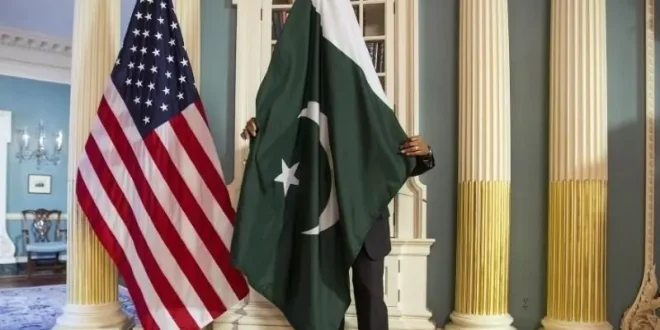
WASHINGTON/UNITED NATIONS: In a significant diplomatic development, the United States has reaffirmed its support for Pakistan’s inherent right to defend itself against the burgeoning threat of terrorism. This reiteration comes as Pakistan intensifies its operations against militant groups along its western border with Afghanistan and as the international community grapples with profound disagreements over the United Nations Global Counterterrorism Strategy (GCTS).
The News: A Dual Narrative Unfolds
The US State Department underscored its commitment, stating that “The Pakistani people have suffered greatly at the hands of terrorists,” and affirming Washington’s backing for Pakistan’s self-defence. This diplomatic gesture follows Pakistan’s recent targeted actions against terrorist infrastructure near the Afghan border, undertaken in response to a violent attack on a Pakistan Rangers Sindh headquarters in Karachi.
Concurrently, the global stage witnessed a notable divergence at the UN General Assembly. The ninth review of the GCTS, a pivotal framework guiding international anti-terrorism efforts since 2006, was adopted by a recorded vote of 140 in favour—including Pakistan—despite strong opposition from the United States, Israel, and Argentina. This break from the traditional consensus-based adoption highlighted deep-seated divisions among member states regarding the strategy’s scope, priorities, and language.
Background: Shifting Sands of Geopolitics and Terrorism
US-Pakistan Counterterrorism Axis
The US endorsement of Pakistan’s right to self-defence is not an isolated event but rather a reflection of evolving geopolitical realities. Historically, the US and Pakistan have shared a complex but critical counterterrorism partnership, particularly in the aftermath of 9/11. While the relationship has seen periods of strain, Washington continues to view a stable and secure Pakistan as crucial for regional stability, especially given the resurgence of militant groups like the Tehrik-i-Taliban Pakistan (TTP). The current statement signals a renewed recognition of Pakistan’s frontline role and the severe internal security challenges it faces, which include persistent cross-border attacks originating from Afghanistan.
The Volatile Pakistan-Afghanistan Frontier
The “intermittent conflict” along the Pakistan-Afghanistan border is a direct consequence of the Afghan Taliban’s return to power. Pakistan asserts that the Afghan Taliban has not adequately addressed the presence of anti-Pakistan militant groups, particularly the TTP, operating from Afghan soil. These groups exploit the porous border to launch attacks within Pakistan before retreating. Pakistan’s recent actions, therefore, represent a proactive stance aimed at neutralizing threats it perceives as directly emanating from its neighbour, highlighting a deepening crisis of trust and security in the region.
The UN Global Counterterrorism Strategy (GCTS): A Fractured Consensus
The GCTS serves as the UN’s overarching framework for coordinated global action against terrorism. Its periodic reviews are meant to adapt the strategy to new threats and challenges. However, the ninth review unveiled stark ideological and policy cleavages. The US, describing the draft as “bloated, outdated, and lacking focus,” argued it diluted core counterterrorism priorities and ignored specific “redlines.” This position was echoed by Israel and, in part, by Argentina. On the other hand, Pakistan, along with other Organisation of Islamic Cooperation (OIC) members like Egypt, Iran, and Turkiye, expressed strong disappointment that their proposals – particularly those concerning state actions against populations under foreign occupation, the distinction between terrorism and legitimate struggles for self-determination, and the condemnation of Islamophobia and targeting of Muslims – were not adequately incorporated. This fractured consensus underscores the difficulty in forging a unified international approach when national interests and definitions of terrorism diverge so significantly.
Impact on Pakistan: Validation and Persistent Challenges
The US’s unequivocal support provides a significant diplomatic boost for Pakistan. It validates Islamabad’s long-standing narrative about the severe human and economic cost it bears in the global fight against terrorism, highlighted by the tragic loss of over 1,200 Pakistani lives in the past year alone. This backing offers critical diplomatic cover for Pakistan’s ongoing and future security operations against militant groups, particularly along its volatile western border.
Domestically, the US statement can bolster public confidence in the government’s security policies and its efforts to protect national sovereignty. Internationally, while securing a key ally’s support, Pakistan’s disappointment with the GCTS review reveals persistent challenges. Islamabad seeks to shape the global counterterrorism discourse to reflect its unique experiences, including concerns about state terrorism, the principle of self-determination, and the growing threat of xenophobia and far-right extremism impacting Muslim communities globally. Pakistan’s strong advocacy for reforms in the UN counterterrorism architecture, stricter regulation of social media and digital finance, and the impartiality of bodies like the Financial Action Task Force (FATF), all reflect a desire for a more equitable and effective international framework informed by its own hard-won lessons.
Analysis: Geopolitical Realignments and a Disintegrating Global Front
The US Balancing Act
The US endorsement of Pakistan’s self-defence right is a testament to the intricate dance of international relations. Washington’s primary concern remains preventing Afghanistan from reverting to a sanctuary for global terror networks. Supporting Pakistan, a nuclear-armed state bordering Afghanistan, is seen as essential for regional stability and counterterrorism efforts. This doesn’t necessarily signify a complete diplomatic embrace but rather a strategic alignment on a critical security issue. The US seeks to maintain influence and ensure that Pakistan remains a partner in counterterrorism, even as it navigates the complex dynamics with the Afghan Taliban.
A Fractured Global Consensus on Terrorism
The GCTS vote is a stark illustration of the disintegration of a unified global front against terrorism, a phenomenon largely established post-9/11. The “bloated, outdated” critique from the US and Israel suggests a desire for a narrower, more focused strategy primarily targeting established transnational terrorist organizations. Conversely, Pakistan and the OIC states advocate for a broader, more inclusive definition that acknowledges state oppression, addresses the root causes of radicalization, distinguishes between terrorism and self-determination movements, and tackles new forms of hate-motivated violence, including Islamophobia and far-right extremism. This fundamental divergence in perspectives makes meaningful global cooperation increasingly difficult.
The Evolving Threat and Inadequate Responses
Ambassador Asim Iftikhar Ahmad’s characterization of terrorism as an “increasingly interconnected yet decentralised” threat, manifesting across physical and virtual domains, highlights a critical point: the nature of terrorism is constantly evolving, while international responses appear stuck in an ideological quagmire. The calls for stricter regulation of social media, digital financial systems, virtual assets, and cryptocurrencies by Pakistan are not merely procedural; they reflect an understanding that modern terrorist networks leverage technology and global finance in ways that traditional counterterrorism frameworks struggle to address effectively. The GCTS’s failure to adequately integrate these contemporary challenges and diverse viewpoints represents a missed opportunity.
The “Wake-Up Call” and Its Implications
Pakistan’s description of the GCTS impasse as a “wake-up call” is profoundly apt. It underscores a dangerous reality: without a shared understanding and a universally acceptable strategy, international efforts against terrorism risk becoming fragmented, inefficient, and potentially counterproductive. States may increasingly prioritize unilateral actions, leading to further regional instability and a diminished capacity for collective defence against a truly global threat. The challenge for the international community is to bridge these divides, not by imposing one narrative over another, but by fostering a more inclusive dialogue that genuinely adapts to the multifaceted and evolving nature of terrorism in the 21st century. The path forward demands renewed diplomacy, empathy for diverse national experiences, and a pragmatic recognition that no single nation can defeat terrorism alone.