 Dost Pakistan Journeys Tours and safaris in the North & South Pakistsn
Related Articles



“`html
Mohmand Attack: Analyzing Pakistan’s Enduring Counter-Terrorism Challenge
The News
In a grim reminder of Pakistan’s persistent security challenges, two police officers, including an Additional SHO, were martyred in a terrorist attack in Khyber Pakhtunkhwa’s Mohmand district. The incident, which occurred near the Warsak Lift Canal in the Machni area, saw a police mobile patrol ambushed by armed terrorists, identified by the state as “Fitna al Khawarij” – a term used for terrorists associated with the banned Tehreek-i-Taliban Pakistan (TTP).
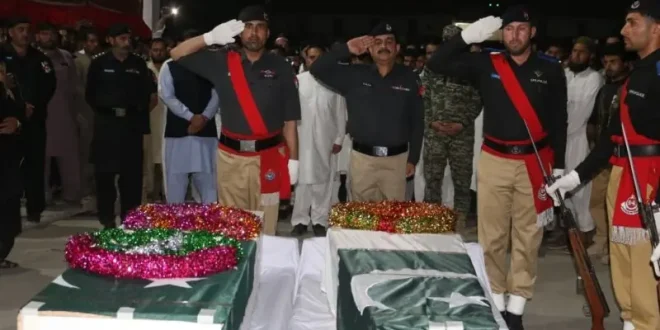
Additional SHO Zaitullah and Elite Force constable Noor Zeb embraced martyrdom in the exchange, while the driver sustained serious injuries. Police reported a swift and effective response, forcing the attackers to retreat and reportedly killing several terrorists who abandoned weapons at the scene. A search operation is underway, and authorities reiterated their resolve to eliminate the threat, honoring the sacrifices of the fallen officers who were laid to rest with full state honours.
Background: Understanding the Resurgent Threat
The Mohmand attack is not an isolated incident but rather a stark manifestation of a concerning resurgence in militant activity across Pakistan, particularly in its western regions bordering Afghanistan. Mohmand district, part of the erstwhile Federally Administered Tribal Areas (FATA) and now integrated into Khyber Pakhtunkhwa (KP), holds significant strategic importance. Its rugged terrain and proximity to the porous Afghanistan border have historically made it a sanctuary and transit route for various militant groups.
The perpetrators, “Fitna al Khawarij,” represent the Tehreek-i-Taliban Pakistan (TTP). This term, translating roughly to “discord of the Khawarij,” is a deliberate narrative by the Pakistani state to delegitimize the TTP by associating them with an early Islamic sect known for its extreme ideology and rebellion against established authority. The TTP itself is a conglomerate of various Pakistani militant groups formed in 2007, aiming to overthrow the Pakistani government and implement their version of Sharia law. Their activities often involve targeting security forces, law enforcement, and civilian infrastructure.
Since the Taliban’s takeover of Afghanistan in August 2021, the TTP has found renewed operational space and sanctuary across the border, leading to a significant uptick in cross-border attacks and internal insurgencies within Pakistan. Khyber Pakhtunkhwa, sharing a long and difficult-to-manage border with Afghanistan, bears the brunt of this resurgence, facing daily threats to its security apparatus and civilian population.
Impact on Pakistan: A Multi-faceted Challenge
The Mohmand attack, like countless others, carries profound implications for Pakistan on multiple fronts:
Human Cost and Morale:
The immediate impact is the tragic loss of brave police personnel. These sacrifices, while lauded with state honors, represent not just a personal tragedy for their families but also a blow to the morale of law enforcement agencies operating in high-threat environments. The relentless targeting of police and security forces is designed to instil fear and undermine state authority.
Security Implications:
Such attacks highlight critical vulnerabilities in border management and intelligence-gathering. They challenge Pakistan’s counter-terrorism efficacy and signal the TTP’s continued capacity to plan and execute sophisticated ambushes. The presence of well-armed militant groups, capable of engaging in sustained firefights and abandoning military-grade weapons like M4 rifles, underscores the serious nature of the threat.
Economic and Developmental Setbacks:
Persistent insecurity in regions like Mohmand hinders economic development, discourages investment, and disrupts daily life. The resources diverted towards counter-terrorism operations could otherwise be used for improving education, healthcare, and infrastructure, perpetuating a cycle of underdevelopment in already marginalized areas.
Regional Stability and Diplomacy:
The TTP’s activities strain Pakistan’s already complex relationship with Afghanistan. Islamabad consistently accuses Kabul of not doing enough to dismantle TTP sanctuaries on Afghan soil, while Afghanistan often denies these claims or points to its own internal challenges. This diplomatic friction complicates efforts to forge a unified regional strategy against terrorism.
Analysis: Towards a Comprehensive Counter-Terrorism Strategy
The Mohmand incident underscores that Pakistan’s fight against terrorism is far from over. The TTP’s strategy appears to involve a protracted low-intensity conflict, leveraging its cross-border sanctuaries and local networks to chip away at state control.
Pakistan’s response, as evidenced by the quick retaliatory action and subsequent search operation, demonstrates a commitment to confront the threat directly. However, an enduring solution requires a multi-pronged and holistic strategy:
Enhanced Border Management:
Despite extensive fencing, the rugged Pak-Afghan border remains challenging to secure. Continuous investment in surveillance technology, increased troop deployment, and intelligence-sharing mechanisms are crucial to interdict militant movement and prevent cross-border incursions.
Intelligence-Led Operations:
Proactive, intelligence-based operations are vital to dismantle militant cells, preempt attacks, and target their leadership. This requires robust human intelligence, advanced technical capabilities, and seamless coordination among all security agencies.
Socio-Economic Development:
Long-term stability in areas like Mohmand depends heavily on socio-economic uplift. Addressing poverty, unemployment, and lack of educational opportunities can reduce the appeal of extremist ideologies and foster local support for the state. Integrating the erstwhile FATA regions fully into the national mainstream is a critical component of this strategy.
Strategic Communication and Counter-Narrative:
The use of terms like “Fitna al Khawarij” is part of a broader ideological battle. It’s imperative to effectively counter extremist narratives by promoting a moderate interpretation of Islam and highlighting the state’s efforts for peace and development. Winning the ‘hearts and minds’ of the local populace is as crucial as military operations.
Regional Cooperation:
Despite diplomatic challenges, persistent engagement with Afghanistan is necessary to address the issue of militant sanctuaries. A regional approach involving intelligence sharing and coordinated operations, however difficult to achieve, remains the ideal.
The sacrifices made by officers like Zaitullah and Noor Zeb are a grim reminder of the price of peace. Pakistan’s resolve, as reiterated by the Mohmand police, must be matched by a robust, adaptable, and comprehensive strategy that combines security force resilience with sustained socio-economic development and effective diplomatic engagement to truly eliminate the “Fitna al Khawarij” threat and secure a stable future for its citizens.
“`
