 Dost Pakistan Journeys Tours and safaris in the North & South Pakistsn
Related Articles


“`html
Balochistan Under Siege: Analyzing the Hanna Urak Clashes and Pakistan’s Security Dilemma
The News: A Surge in Violence Near Quetta
The peaceful outskirts of Quetta, specifically the Hanna Urak area, were recently plunged into chaos following a violent confrontation between armed assailants and local residents. This deadly incident, occurring overnight, resulted in the tragic loss of three civilian lives and left at least nine others wounded. Disturbingly, seven individuals were also abducted by the attackers, underscoring the severe threat posed to community safety.
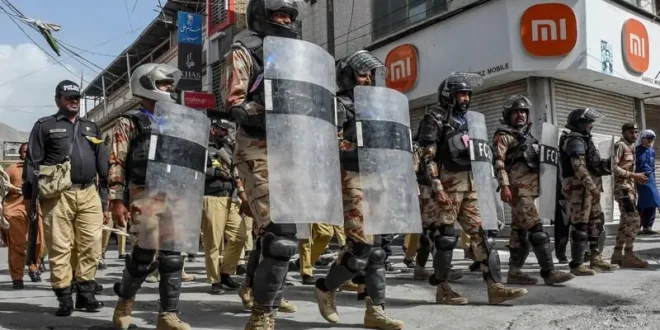
Authorities responded swiftly, launching an extensive sanitization operation. This security crackdown led to the elimination of four suspected attackers and injuries to several law enforcement personnel, with initial reports indicating nine policemen were hurt during the intense exchanges. Provincial Home Minister Ziaullah Langove and the Chief Minister’s media aide have pointed fingers at the banned Tehrik-i-Taliban Pakistan (TTP), alleging their involvement in orchestrating the violence.
In the wake of these unsettling events, Chief Minister Sarfraz Bugti convened a high-level meeting, approving not only the ongoing security operation but also the establishment of joint checkposts to enhance surveillance and prevent militant infiltration. Furthermore, a committee has been formed to engage with affected protesters and ensure prompt assistance for the victims’ families, signaling a multi-pronged approach to both security and community appeasement.
Background: Balochistan’s Enduring Security Challenges
The Hanna Urak incident is not an isolated event but rather a stark reminder of the complex and persistent security landscape in Balochistan, Pakistan’s largest yet least populated province. Situated strategically at the crossroads of Iran and Afghanistan, Balochistan has long grappled with a multifaceted insurgency. This includes Baloch ethno-nationalist groups seeking greater autonomy or independence, sectarian outfits targeting specific communities, and increasingly, a resurgent presence of global and regional terrorist organizations.
The TTP, a militant umbrella group with roots in Pakistan’s tribal areas and strong ties to the Afghan Taliban, has seen a significant resurgence in its operational capacity and territorial influence, particularly since the Taliban’s takeover of Kabul in August 2021. Their objective remains the imposition of a stringent interpretation of Islamic law in Pakistan and the overthrow of the state, often employing asymmetric warfare tactics like ambushes, kidnappings, and bombings.
Quetta, as the provincial capital, represents a critical strategic target for these groups. Attacks in or near Quetta demonstrate their reach and ability to disrupt normal life, sowing fear and undermining state authority. The rugged terrain and porous borders of Balochistan further complicate counter-terrorism efforts, providing militants with potential sanctuaries and routes for movement.
Impact on Pakistan: A Widening Web of Instability
The escalating violence in regions like Hanna Urak carries profound implications for Pakistan’s internal stability and national security. Such incidents directly contribute to a deteriorating law and order situation, particularly in Balochistan and Khyber Pakhtunkhwa, demanding an increased allocation of resources towards security, often at the expense of vital socio-economic development initiatives.
Economically, the persistence of terrorism acts as a major deterrent to both domestic and foreign investment. Critical projects, including those under the China-Pakistan Economic Corridor (CPEC) which has significant presence in Balochistan, face heightened security risks, potentially delaying their execution and impacting Pakistan’s economic growth trajectory. The environment of fear and uncertainty also disrupts daily commerce and normal life for citizens.
Socially, the human cost is immeasurable. The loss of innocent lives, the trauma of kidnappings, and the constant threat of violence erode public confidence in state institutions and can lead to societal fragmentation. It also tests the credibility of the government to effectively protect its citizens and maintain peace, fueling discontent and potentially widening existing grievances. Regionally, the alleged TTP involvement brings into sharp focus the cross-border dynamics with Afghanistan and the challenge of managing militant activities emanating from across the frontier.
Analysis: Towards a Comprehensive Counter-Terrorism Strategy
The Balochistan government’s swift response, involving immediate security operations, the establishment of joint checkposts, and the formation of a committee to engage with protesters, demonstrates a multi-faceted approach to address the Hanna Urak crisis. While the killing of suspected attackers and tightened security measures are crucial for immediate threat mitigation, the long-term effectiveness hinges on addressing both the symptoms and the root causes of extremism.
The alleged TTP involvement underscores a strategic shift by militant groups to challenge state authority not only in their traditional strongholds but also in politically sensitive areas like Quetta’s periphery. This necessitates a robust, intelligence-led counter-terrorism strategy that goes beyond kinetic operations. It must include enhanced border management, disrupting militant financing networks, and dismantling their ideological infrastructure.
However, military action alone is insufficient. The complexities of Balochistan’s security environment demand a holistic approach that integrates law enforcement efforts with political dialogue and socio-economic development. Engaging with local communities, addressing their legitimate grievances, and ensuring justice for victims are paramount to building trust and isolating militants. The formation of a committee to negotiate with protesters is a positive step, acknowledging the need for community engagement and redressal.
The Hanna Urak clashes serve as a somber reminder that Pakistan’s battle against terrorism is far from over. It calls for sustained national resolve, inter-agency coordination, and a comprehensive strategy that combines robust security measures with political wisdom, economic empowerment, and a commitment to justice for all citizens, particularly those in vulnerable regions like Balochistan.
“`

