Dost Pakistan Journeys Tours and safaris in the North & South Pakistsn
Related Articles


US-Iran Tensions Escalate in Strait of Hormuz: A Deep Dive into Regional Stability and Global Implications
The strategic Strait of Hormuz, a critical maritime chokepoint, has once again become the epicenter of heightened tensions between the United States and Iran. Recent days have witnessed a worrying exchange of direct military strikes, effectively signaling the collapse of any prior de-escalation efforts and pushing the region to the brink of a broader conflict. This analysis delves into the immediate events, underlying geopolitical factors, the global ramifications, and the specific impact on Pakistan.
The News: A Reciprocal Spiral of Strikes
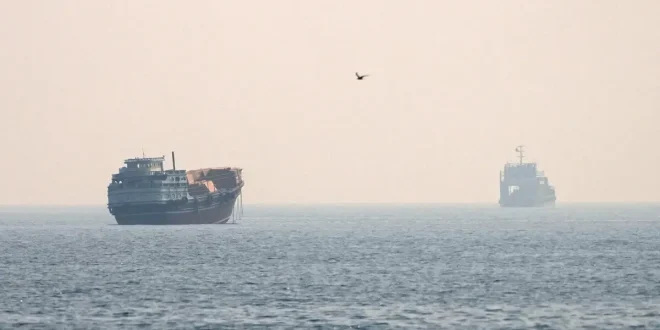
The recent escalation unfolded over two consecutive days, commencing with what the US described as retaliatory strikes against Iran. These actions followed an assault on three cargo ships transiting the Strait of Hormuz, an act for which Iran has not claimed responsibility but which the US attributed to Tehran. The American military declared its targets were aimed at degrading Iran’s capacity to impede freedom of navigation in the vital waterway, hitting approximately 90 military targets across Iran’s southern coast, including key port facilities in Bandar Abbas and Chabahar, as well as infrastructure in cities like Iranshahr and Aqqala. The intensity of these strikes reportedly led to power outages in some Iranian areas and resulted in casualties.
In response, Iran’s Revolutionary Guards (IRGC) swiftly launched its own wave of attacks, targeting US military bases in allied Gulf states – specifically Arifjan and Ali Al Salem in Kuwait, and Juffair and Sheikh Isa in Bahrain. These counter-strikes utilized missiles and drones, confirming the readiness and capability of Iran to project power across the region. Kuwait and Qatar reported intercepting incoming projectiles and issuing temporary security alerts, underscoring the immediate risk to regional stability.
Significantly, US President Donald Trump stated that an “interim ceasefire” with Iran was now “over,” expressing distrust in Iranian leadership and hinting at a much stronger response if further aggressions occurred. This declaration, coupled with Iran’s explicit warning of expanding its retaliatory scope if US attacks persisted, effectively dismantled any diplomatic headway made and solidified a new, dangerous phase of direct confrontation.
Background: Decades of Distrust and a Strategic Chokepoint
The current hostilities are not isolated incidents but rather the latest chapter in a long-standing, complex, and often adversarial relationship between the United States and Iran. Following the 1979 Islamic Revolution, diplomatic ties severed, giving way to decades of mistrust. The 2015 Iran nuclear deal (Joint Comprehensive Plan of Action – JCPOA), which aimed to curb Iran’s nuclear program in exchange for sanctions relief, offered a brief period of rapprochement. However, the US withdrawal from the JCPOA in 2018 under the Trump administration and the subsequent “maximum pressure” campaign reignited deep-seated tensions, leading to a series of escalatory actions, including attacks on oil tankers, drone incidents, and cyber warfare.
Central to this geopolitical chessboard is the Strait of Hormuz. This narrow waterway, connecting the Persian Gulf to the Arabian Sea, is arguably the world’s most critical oil transit chokepoint. An astonishing one-fifth of the world’s total petroleum liquids consumption and a significant portion of its liquefied natural gas (LNG) flows through here daily. For Iran, its geographic control over this strait grants it immense strategic leverage, allowing it to threaten the disruption of global oil supplies as a deterrent against external pressure. Conversely, the US and its allies, committed to ensuring freedom of navigation, view any threat to this passage as a direct challenge to global energy security and economic stability. The presence of numerous US military bases across Gulf states further underscores the commitment to protecting these vital interests, setting the stage for the precarious standoff now unfolding.
Impact on Pakistan: Navigating the Regional Tempest
Pakistan, as a neighbor to Iran and a key player in the wider Middle Eastern region, is particularly vulnerable to the fallout from escalating US-Iran tensions. The implications for Islamabad span economic, security, and diplomatic spheres:
- Economic Vulnerability: Pakistan is a net importer of oil. Any disruption in the Strait of Hormuz or sustained escalation in the Persian Gulf invariably leads to spikes in international oil prices. This directly translates to higher import bills for Pakistan, fueling domestic inflation, straining foreign exchange reserves, and potentially slowing economic growth. Furthermore, Pakistan’s trade routes, heavily reliant on maritime shipping through the Gulf, face risks of disruption, increased insurance premiums, and delays, impacting its broader trade relations.
- Energy Security Concerns: Beyond oil, the stability of the Strait affects regional energy infrastructure and potential long-term projects. Pakistan’s own energy security strategies, including potential pipeline projects like the Iran-Pakistan (IP) gas pipeline, become increasingly complex and vulnerable amidst such volatility.
- Remittances and Expatriate Safety: A substantial number of Pakistani expatriates work in Saudi Arabia, UAE, Kuwait, and Bahrain. Regional instability threatens their employment, safety, and the crucial remittances they send home, which are a vital source of foreign exchange for Pakistan.
- Border and Internal Security: Pakistan shares a long, often porous border with Iran. Escalation could lead to increased cross-border movements, smuggling, and potential spillover of extremist elements, posing significant challenges to Pakistan’s border management and internal security.
- Diplomatic Tightrope: Pakistan maintains strong diplomatic and economic ties with both Saudi Arabia/GCC countries and Iran. A direct conflict forces Islamabad into an increasingly difficult balancing act. Pakistan has historically attempted to play a mediating role in regional disputes, but heightened confrontation severely limits its diplomatic space and increases pressure to align with one side or another, a position Pakistan actively seeks to avoid to maintain its neutrality and regional influence.
- CPEC Implications: The China-Pakistan Economic Corridor (CPEC), a flagship project of China’s Belt and Road Initiative, aims to enhance regional connectivity and economic integration. Instability in the broader Middle East could deter investment, disrupt supply chains, and undermine the long-term vision of CPEC, particularly its maritime links and energy infrastructure components.
Analysis: A Dangerous Escalation and Dimming Hopes for De-escalation
The recent exchange of strikes marks a significant and dangerous escalation in US-Iran relations, moving beyond proxy conflicts or isolated incidents to direct, reciprocal military action. The explicit declaration by President Trump that an “interim ceasefire” is “over” is a critical turning point, effectively ending any semblance of a de-escalation period and opening the door to a more volatile phase.
Trump’s Contradictory Stance: Trump’s remarks reveal a complex strategy: on one hand, a hawkish posture threatening severe consequences, and on the other, a claim that he doesn’t expect a full-fledged war and that any conflict would be “over very quickly.” This could be interpreted as a strategy to project strength while trying to manage domestic and international expectations about the costs of a prolonged conflict. However, his strong distrust of Iran (“very dishonourable people”) significantly complicates any future diplomatic overtures.
Iran’s Asymmetric Response: Iran’s strategy is clear: it will not be bullied. By striking US bases in neighboring countries, Iran demonstrates its capability to inflict costs on American interests and regional allies without directly engaging the superior US military head-on. This asymmetric warfare approach, leveraging its geographic position and missile/drone capabilities, aims to deter further aggression by raising the stakes for all involved. Its firm stance on the Strait of Hormuz – that it will be reopened “only under Iranian arrangements” – reiterates its commitment to maintaining strategic leverage.
High Risk of Miscalculation: The most alarming aspect of this direct exchange is the exponentially increased risk of miscalculation. In a highly charged environment, a single misstep, an unintended casualty, or an overly aggressive interpretation of an action could quickly spiral into a full-scale regional conflict with devastating consequences far beyond the immediate belligerents. The destruction of the “MoU” (memorandum of understanding) signed just weeks prior underscores the fragility of diplomatic solutions in such a volatile climate.
Global Economic Fallout: The direct impact on global oil markets is inevitable. Continued tensions and threats to the Strait of Hormuz will maintain upward pressure on oil prices, affecting economies worldwide. Furthermore, increased insurance premiums for shipping and potential rerouting of vessels will disrupt global supply chains, leading to broader economic instability.
Regional Destabilization: The conflict is not confined to US and Iranian actions. Regional players like Saudi Arabia, UAE, and Israel are deeply invested in the outcome. Prolonged instability could embolden non-state actors, further entrench existing rivalries, and potentially draw more countries into the direct conflict, transforming localized skirmishes into a full-blown regional conflagration. The warnings from Iran’s parliament regarding potential withdrawal from the NPT or closure of the Bab-el-Mandeb Strait highlight the severe and wide-ranging implications should the conflict intensify.
In conclusion, the recent reciprocal strikes represent a dangerous new chapter in US-Iran relations. With diplomatic channels severely hampered and both sides demonstrating resolve, the Strait of Hormuz remains a critical flashpoint. The international community watches anxiously as the delicate balance of power in the Middle East teeters on the edge of a conflict that would have profound and lasting global ramifications for energy security, trade, and peace.