Dost Pakistan Journeys Tours and safaris in the North & South Pakistsn
Related Articles



“`html
Pakistan’s Privilege Predicament: KP Governor Calls for Uniform Lawmaker Perks Amid Austerity
In a significant move that underscores the persistent tension between elite privileges and public austerity, Khyber Pakhtunkhwa (KP) Governor Faisal Karim Kundi has urged federal parliamentary leaders to convene a meeting aimed at establishing a single, harmonised bill governing the salaries, privileges, and entitlements of legislators across Pakistan. This call comes in the wake of widespread public backlash against a new law passed by the KP Assembly, which significantly expanded the perks and immunities for its provincial members (MPAs).
The News: A Push for Parity Amid Controversy
The genesis of Governor Kundi’s appeal lies in the recent enactment of the KP Provincial Assembly (Powers, Immunities and Privileges) Act, 2026. Passed on April 30 and assented to by Kundi on May 6, this legislation dramatically enhanced the privileges of KP’s MPAs, including controversial provisions such as lifetime official passports for them and their spouses, blanket immunity from preventive detention, and entitlement to licenses for multiple non-prohibited-bore weapons. The swift passage and expansive nature of these perks immediately sparked public outcry, forcing KP Chief Minister Sohail Afridi to order a review of the law’s provisions.
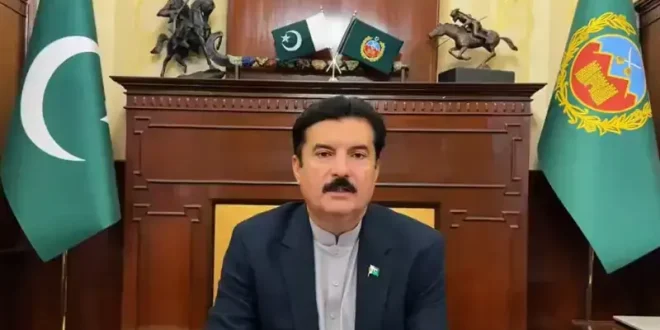
Responding to the mounting criticism, Governor Kundi took to social media, urging National Assembly Speaker Ayaz Sadiq and Senate Chairman Yousuf Raza Gilani to facilitate a dialogue among all provincial speakers. His core argument: “No province should legislate extraordinary privileges for itself while expecting the people to embrace austerity.” Kundi stressed the importance of uniform entitlements across the federation – from salaries and security to official passports and allowances – to ensure fairness, accountability, and public confidence. He also highlighted that his initial observations during the assent process were on record, indicating his concern about expanding privileges during a period of severe economic hardship for the public, particularly in KP.
Background: A Nation Grappling with Economic Hardship and Trust Deficits
To fully grasp the significance of Kundi’s intervention, it’s crucial to understand the broader context in Pakistan. The nation is currently navigating one of its most severe economic crises in decades, heavily reliant on an International Monetary Fund (IMF) bailout program that mandates strict fiscal discipline and austerity measures. Successive governments have repeatedly called upon citizens to endure economic hardship, cut back on spending, and brace for inflation.
Against this backdrop, any move to enhance privileges for the political elite is invariably met with public anger and accusations of hypocrisy. Historically, public perception in Pakistan has often viewed its ruling class as detached from the common populace’s struggles, with lavish state-funded perks being a frequent point of contention. The new KP law repealed and replaced the 1988 legislation, retaining many provisions but crucially expanding others. Most notably, the earlier law restricted immunity from preventive detention to periods immediately before and after assembly sessions or committee meetings. The new blanket immunity provision raises serious questions about accountability and the rule of law, potentially shielding legislators from legitimate legal processes at all times.
Governor Kundi’s public distancing from the law, despite his initial assent, reflects the immense political pressure generated by public opinion. His earlier ‘observations on record’ suggest a bureaucratic expression of dissent, indicating an awareness of the controversial nature of the bill even before the public backlash erupted. This move now strategically places the onus on federal parliamentary leadership to address a systemic issue that has plagued Pakistani politics for decades.
Impact on Pakistan: Eroding Public Trust and Undermining Fiscal Prudence
The implications of the KP privileges controversy, and the governor’s subsequent call, reverberate across several critical dimensions for Pakistan:
- Erosion of Public Trust: At a time when the government is urging fiscal responsibility and sacrifice from its citizens, legislating enhanced perks for elected representatives severely damages public trust in political institutions. It deepens the perception of an elite class insulated from the realities faced by ordinary Pakistanis, fostering cynicism and disengagement.
- Contradiction of Austerity Narrative: The passage of such a bill directly undermines the government’s own narrative of austerity and prudent financial management. How can leaders credibly demand expenditure cuts and sacrifices from the populace while simultaneously granting themselves lifetime official passports, extensive immunities, and weapon entitlements? This dichotomy creates a significant credibility gap.
- Challenges to Rule of Law and Accountability: Blanket immunity from preventive detention is a particularly contentious provision. It raises serious concerns about accountability for public officials, potentially creating a class of individuals who are perceived to be above the law, even for non-political offenses. This can weaken the foundational principles of a democratic state.
- Potential for Inter-Provincial Disparity: If KP’s law were to stand without federal intervention or harmonisation, it could set a dangerous precedent. Other provinces might feel compelled to follow suit, leading to a “race to the bottom” in terms of fiscal responsibility and a “race to the top” in terms of elite privileges, further exacerbating inequalities and potential inter-provincial tensions.
- Hindrance to Governance Reforms: Such incidents distract from more pressing governance reforms and economic stabilization efforts. The energy spent on defending or retracting controversial privilege laws could be better utilized in formulating policies that genuinely benefit the public.
Analysis: A Moment for Collective Leadership and Reform
Governor Kundi’s proactive stance, following the initial backlash, can be seen as a calculated move to redirect the controversy towards a broader national conversation about legislative ethics and uniform standards. By calling for a harmonised bill, he has effectively shifted the spotlight from his initial assent to a demand for collective national leadership to address a systemic issue. His insistence that his “observations were on record” offers a layer of political protection, suggesting an internal protest against the bill’s provisions even before it became public knowledge.
The swift public outrage and the KP Chief Minister’s decision to review the law underscore the growing power of public opinion, amplified by social media. This indicates a positive shift where citizens are more vocal and effective in holding their representatives accountable, at least on issues that directly impact perceived fairness and resource allocation.
However, achieving a “single, harmonised bill” across four diverse provinces, each with its own political dynamics and ruling parties, will be a formidable challenge. It requires a level of political will, consensus-building, and self-restraint that has often been elusive in Pakistan’s fragmented political landscape. The upcoming meeting of speakers, if it materialises, will be a crucial test of the political elite’s commitment to prioritizing national interest and public confidence over individual or provincial advantages.
Ultimately, this episode is a symptom of a larger, ongoing struggle within Pakistan to foster a culture of accountability, fiscal discipline, and equitable governance. The debate over lawmakers’ privileges is not merely about perks; it’s about the very credibility of democratic institutions and the perceived disconnect between those who govern and those who are governed. It presents a critical opportunity for Pakistan’s political leadership to demonstrate genuine commitment to reform, bridge the trust deficit, and ensure that legislative actions align with the nation’s pressing economic realities and the aspirations of its citizens for fairness and justice.
“`