Dost Pakistan Journeys Tours and safaris in the North & South Pakistsn
Related Articles


“`html
Pakistan’s Fuel Price Tightrope: Navigating Global Shocks Amidst Regional Hostilities
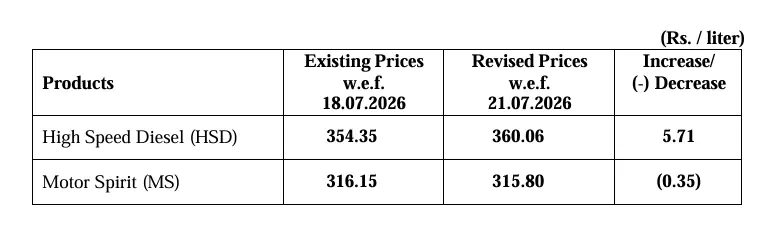
Pakistan’s government has announced a seemingly contradictory adjustment to fuel prices, decreasing petrol by a nominal Rs0.35 per litre while significantly hiking high-speed diesel (HSD) by Rs5.71 per litre. Effective July 21, these changes set the new petrol price at Rs315.80 and HSD at Rs360.06 per litre. This move, a direct consequence of volatile global oil markets influenced by escalating tensions in the Persian Gulf, marks a critical juncture in the nation’s energy policy, particularly with the transition to daily price revisions.
The News: A Dual Adjustment and a Policy Shift
The recent fuel price notification by Pakistan’s Petroleum Division reflects a delicate balancing act. While the minimal reduction in petrol offers scant relief, the substantial increase in diesel prices is poised to have broader economic ramifications. This decision comes as global crude oil prices experience renewed instability, largely attributable to the intensified geopolitical climate in the Persian Gulf, particularly the ongoing tensions between the United States and Iran.
Notably, this announcement also formalizes a significant policy shift: fuel prices will now be determined on a daily basis by the Oil and Gas Regulatory Authority (OGRA), moving away from the previous weekly revision cycle. This directive, sanctioned by the cabinet and Prime Minister, aims to immediately reflect international market fluctuations. However, this change has already drawn criticism, with the All Pakistan Dealers Association indicating a potential protest against the daily pricing mechanism.
It’s important to contextualize these figures against recent historical peaks. Just a few months ago, on April 3, petrol had soared to Rs458.41 and diesel to an unprecedented Rs520.35 per litre, both experiencing upward trajectories since late February and early March following the initial outbreak of the US-Iran conflict.
Background: Understanding Pakistan’s Vulnerability to Global Oil Dynamics
Pakistan, as a net importer of crude oil and refined petroleum products, is inherently susceptible to the volatility of international energy markets. The nation’s energy security and economic stability are deeply intertwined with global oil prices, making external geopolitical events particularly impactful.
Geopolitical Flashpoints: The Persian Gulf’s Crucial Role
The Persian Gulf region, home to some of the world’s largest oil reserves and a vital transit route for a significant portion of global oil supply through the Strait of Hormuz, is a perpetual geopolitical hotspot. Renewed hostilities between the US and Iran inject a substantial “risk premium” into oil prices. Any perceived threat of supply disruption from this region, whether due to sanctions, military actions, or maritime incidents, immediately sends ripples through global energy exchanges. Traders react by bidding up prices, anticipating potential shortages, regardless of actual supply shortfalls. This direct link explains why Pakistan’s fuel prices are now directly correlated with these international tensions.
Global Oil Pricing and Local Translation
International crude oil prices serve as the foundation for local fuel costs. After crude is purchased, it undergoes refining, incurring processing and transportation costs. Various taxes, levies (like the Petroleum Levy), and dealer commissions are then added, culminating in the retail price consumers pay at the pump. When global crude prices surge, the entire chain’s cost base rises, inevitably leading to higher domestic fuel prices. Historically, governments in Pakistan have employed various mechanisms, including subsidies or adjustments in taxes, to cushion consumers from sharp price hikes, though such measures often strain public finances.
The Shift to Daily Pricing and OGRA’s Mandate
The decision to move to daily pricing, entrusting OGRA with this responsibility, marks a significant departure from past practices. OGRA (Oil and Gas Regulatory Authority) is a statutory body tasked with regulating the oil and gas sector in Pakistan. Its mandate includes ensuring fair competition, protecting consumer interests, and determining prices based on specific formulas. The shift to daily revisions aims to achieve greater transparency and a more immediate reflection of global market movements, preventing accumulated impacts that led to large, sudden jumps under weekly or bi-weekly revisions. It also seeks to reduce instances of hoarding or artificial shortages by dealers anticipating price changes.
Impact on Pakistan: Economic Ripples and Social Consequences
The recent fuel price adjustments, particularly the hike in diesel, carry profound implications for Pakistan’s economy and its citizens. While petrol primarily fuels private vehicles and smaller transport, diesel is the lifeblood of the heavy transport, agriculture, and industrial sectors, making its price increase a far more potent inflationary trigger.
Inflationary Pressures and Cost of Living
The immediate and most significant impact will be on inflation. Higher diesel prices directly translate to increased operational costs for cargo haulage, public transport (buses, trucks), and agricultural machinery (tractors, tube wells). These elevated costs are then passed on to consumers in the form of higher prices for essential goods, including food items, which rely heavily on road transport for distribution. The minor decrease in petrol price is unlikely to offset this broader inflationary wave, disproportionately affecting middle and lower-income households already grappling with rising living costs.
Economic Stability and Fiscal Strain
For the broader economy, a surge in fuel prices exacerbates existing challenges. Pakistan’s import bill will swell, putting further pressure on its already stretched foreign exchange reserves. Businesses, especially in manufacturing, logistics, and agriculture, will face increased input costs, potentially affecting their profitability and competitiveness. The government, while aiming for market-reflective pricing, must also balance its revenue objectives (through petroleum levies and sales tax) with the need to provide relief to citizens, often a delicate and politically charged tightrope walk.
Sectoral Repercussions
- Transport & Logistics: Expect higher fares for public and commercial transport. This directly impacts commuters and the cost of moving goods across the country.
- Agriculture: Farmers will bear the brunt of increased diesel costs for machinery, impacting crop production costs and potentially leading to higher food prices.
- Manufacturing & Industry: Sectors relying on diesel generators for backup power or heavy machinery will see their operating expenses rise, potentially affecting production output and prices of manufactured goods.
- Power Generation: Although major power plants primarily use other fuels, some smaller or backup units may run on diesel, contributing to higher electricity generation costs.
Public Sentiment and Dealer Concerns
The general public is likely to view the minimal petrol decrease as insufficient in the face of the substantial diesel hike, leading to potential frustration and discontent. The All Pakistan Dealers Association’s rejection of daily pricing highlights operational concerns, such as frequent adjustments to pump prices, inventory management, and potential profit margin volatility, which could lead to supply chain disruptions or protests if not addressed effectively.
Analysis: The Unfolding Dynamics of Pakistan’s Fuel Policy
The government’s latest fuel price decision and policy pivot are indicative of Pakistan’s deep exposure to global energy market volatility and its inherent vulnerability to geopolitical shifts in the Middle East. The move to daily pricing, while promoting transparency, ushers in a new era of constant flux for consumers and businesses alike.
The Double-Edged Sword of Daily Pricing
The rationale behind daily pricing is sound: it prevents the accumulation of price differences, leading to sudden, large price shocks, and reduces opportunities for hoarding. It also aligns Pakistan’s market with more developed economies where fuel prices fluctuate frequently. However, for a developing economy like Pakistan, this can introduce significant budgeting challenges for households and businesses that thrive on predictability. Daily changes, especially if predominantly upward, can erode consumer confidence and make long-term financial planning difficult. It also places a substantial administrative burden on dealers.
Disproportionate Impact: The Diesel Dilemma
The contrast between the negligible petrol decrease and the substantial diesel increase underscores the government’s current dilemma. While petrol sales are significant, diesel is a far more critical economic input. The decision reflects the harsh reality of global market movements where diesel, a refined product with diverse industrial demand, can experience sharper price spikes than petrol, particularly during periods of supply uncertainty or increased demand from heavy industries and logistics. This disproportionate impact means the recent adjustments will likely fuel inflation rather than curb it.
Geopolitical Vulnerability and Long-Term Strategies
Pakistan’s energy policy is increasingly held hostage by external geopolitical forces. The renewed hostilities in the Persian Gulf are a stark reminder that as long as Pakistan relies heavily on imported fossil fuels, its economic stability will remain fragile. This situation necessitates a robust long-term energy strategy focused on:
- Diversification of Energy Sources: Investing in renewable energy (solar, wind, hydro) to reduce reliance on imported oil and gas.
- Enhanced Energy Efficiency: Implementing measures across all sectors to reduce overall energy consumption.
- Public Transport Infrastructure: Promoting and expanding efficient public transportation networks to lessen dependence on private vehicles.
- Exploration of Domestic Reserves: Intensifying efforts to discover and extract indigenous oil and gas resources to achieve greater energy self-sufficiency.
In the immediate future, the government faces the arduous task of managing public expectations, mitigating inflationary pressures, and ensuring the smooth implementation of the daily pricing mechanism. While transparency is a laudable goal, the challenge lies in cushioning the economic shocks for a population already under strain, without resorting to fiscally unsustainable subsidies. Pakistan’s journey through this volatile global energy landscape requires not just responsive pricing policies, but also a strategic vision for energy resilience.
Disclaimer: This article provides an analysis based on the provided news summary and general economic principles. Fuel prices and economic conditions are subject to change.
“`