Dost Pakistan Journeys Tours and safaris in the North & South Pakistsn
Related Articles


Pakistan-China Friendship: A Steadfast Alliance in a Shifting World Order
The News
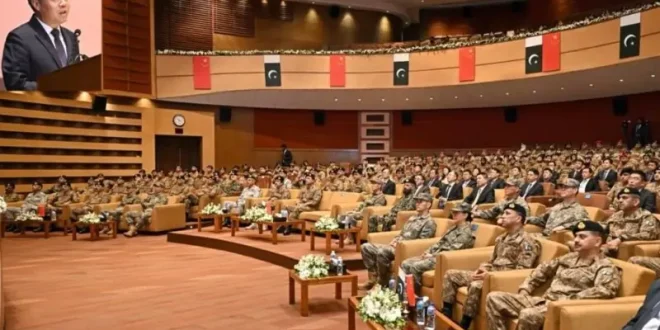
In a significant reaffirmation of their enduring bilateral ties, Pakistan’s Chief of Defence Forces (CDF) and Chief of Army Staff, Field Marshal Asim Munir, lauded the Pakistan-China friendship as “unique, time-tested, and steadfast” amidst evolving regional and global dynamics. His remarks came during a ceremony at the General Headquarters (GHQ) in Rawalpindi, commemorating the 99th anniversary of the founding of the People’s Liberation Army (PLA).
The event, attended by China’s Ambassador to Pakistan, Jiang Zaidong, and other high-ranking military and diplomatic officials from both nations, underscored the deep-rooted strategic partnership. Field Marshal Munir extended congratulations to the PLA, acknowledging its vital contributions to China’s defense, national development, and international peace. He further articulated that the armed forces of both countries are “true partners,” united by mutual trust, unwavering support, and a shared commitment to regional peace, stability, and safeguarding common strategic interests.
Ambassador Zaidong, in turn, expressed profound appreciation for Pakistan’s hospitality and its significant sacrifices in the global fight against terrorism. He reiterated China’s steadfast support for Pakistan, pledging to further strengthen their “all-weather strategic cooperative partnership.” This latest exchange echoes similar sentiments from last year’s commemoration, where Field Marshal Munir emphasized the partnership’s pivotal role in regional stability.
The recent ceremonial affirmations are consistent with ongoing robust cooperation, as evidenced by recent agreements totaling $850 million in the pharmaceutical sector, enhanced collaboration on immigration and border management, and intensified counter-terrorism efforts between Islamabad and Beijing.
Background: Forging an ‘All-Weather’ Bond
The strategic alliance between Pakistan and China, often termed an “all-weather strategic cooperative partnership,” dates back to the 1950s, evolving from a nascent diplomatic relationship into a comprehensive geo-economic and geopolitical axis. Rooted in mutual trust and a shared vision, this bond has consistently transcended changes in international politics and leadership within both nations.
Historically, the relationship was forged in the crucible of Cold War geopolitics, with China emerging as a crucial ally for Pakistan amidst regional rivalries. This early alignment laid the groundwork for extensive defense cooperation, which has seen Pakistan acquire significant military hardware and technology from China, alongside joint military exercises and intelligence sharing. This defense synergy remains a cornerstone, bolstering Pakistan’s security architecture and contributing to regional balance.
In the modern era, the relationship has expanded significantly into the economic sphere, most notably through the China-Pakistan Economic Corridor (CPEC). A flagship project of China’s Belt and Road Initiative (BRI), CPEC is far more than a collection of infrastructure projects. It symbolizes a shared vision for connectivity and prosperity, encompassing energy projects, Gwadar Port development, industrial zones, and road networks. While facing its own set of challenges, CPEC aims to transform Pakistan’s economic landscape, creating jobs, alleviating energy crises, and positioning the country as a vital trade hub connecting China to the Arabian Sea.
Beyond defense and economics, the partnership encompasses close diplomatic coordination on international forums, cultural exchanges, and a growing convergence on regional security issues, including counter-terrorism. This multifaceted engagement solidifies the ‘all-weather’ nature of their bond, indicating a relationship built on deep strategic alignment rather than transient interests.
Impact on Pakistan: Stability, Development, and Strategic Depth
The enduring partnership with China offers Pakistan a multitude of benefits, critical for its national development, security, and diplomatic standing in a complex global environment.
Economically, CPEC has injected vital investment into Pakistan’s infrastructure and energy sectors, which were long overdue. The construction of power plants has helped mitigate chronic energy shortages, while improved road networks enhance connectivity and facilitate trade. Future phases of CPEC, focusing on industrial cooperation and special economic zones, hold the potential for significant job creation and export growth, contributing to Pakistan’s economic stability and fostering industrialization.
From a security perspective, China’s consistent support is invaluable. Access to Chinese military technology and joint training enhances the operational capabilities of Pakistan’s armed forces. China’s recognition of Pakistan’s sacrifices in counter-terrorism and its commitment to further cooperation in this domain is crucial, especially as Pakistan continues to grapple with security challenges and aims to secure CPEC projects. This collaboration provides critical strategic depth and a reliable source of defense modernization.
Diplomatically, China acts as a steadfast advocate for Pakistan on the international stage, offering support on sensitive issues and bolstering its position in global forums. This diplomatic backing provides Pakistan with crucial leverage and enhances its international credibility, helping to balance external pressures and navigate complex geopolitical currents. The recent agreements in diverse sectors like pharmaceuticals and border management further exemplify the broadening scope of impact, moving beyond traditional areas to foster comprehensive institutional and economic collaboration.
Analysis: A Partnership Resilient to Global Flux
Field Marshal Asim Munir’s strong articulation of the Pakistan-China friendship at the PLA anniversary event is far more than mere diplomatic courtesy; it represents a strategic reaffirmation of a core foreign policy pillar for Pakistan and a clear signal to the international community. The emphasis on the friendship being “steadfast in the face of evolving regional and global challenges” is particularly telling.
In an era characterized by geopolitical realignments, great power competition, and regional instabilities (including tensions in the Middle East, the rise of a multipolar world, and ongoing challenges in Afghanistan), both Pakistan and China find common ground in maintaining a stable and robust alliance. For Pakistan, this alliance offers a critical counter-balance to regional power dynamics and provides a reliable partner for economic development and security at a time when its traditional Western alliances are perceived to be shifting.
For China, Pakistan remains a vital strategic partner for its Belt and Road Initiative, providing access to the Arabian Sea via Gwadar and enhancing its regional influence. The security of CPEC projects, which have faced threats from militant groups, is paramount for China. Therefore, Ambassador Zaidong’s reiteration of support for Pakistan’s counter-terrorism efforts directly links to China’s own strategic and economic interests in the region.
The “all-weather” nature of this partnership underscores its resilience. Unlike transactional relationships, the Pakistan-China bond has proven capable of withstanding shifts in leadership, economic downturns, and external pressures. The recent expansions into areas like pharmaceutical manufacturing, immigration, and advanced counter-terrorism cooperation highlight a deepening and diversifying relationship that transcends traditional defense and infrastructure. This evolution suggests a mature partnership that continues to adapt to contemporary challenges and opportunities.
Ultimately, Munir’s address serves as a powerful testament to the enduring strategic alignment between Islamabad and Beijing. It reinforces the narrative of a deeply intertwined future, where shared strategic interests, mutual economic benefits, and a common vision for regional stability continue to bind the two nations, positioning their alliance as a significant factor in shaping the future dynamics of South Asia and beyond.
“`