Dost Pakistan Journeys Tours and safaris in the North & South Pakistsn
Related Articles


“`html
SPSC Exam Protests: A Crisis of Meritocracy in Sindh’s Bureaucracy
The streets of Hyderabad, and indeed across Sindh, have become a focal point of widespread discontent following the announcement of the Combined Competitive Examination (CCE) 2024 results by the Sindh Public Service Commission (SPSC). Thousands of aspiring civil servants, primarily young graduates, are up in arms, alleging gross irregularities, manipulation, and a blatant disregard for merit in the recruitment process. This unfolding saga is more than just a protest; it represents a deep-seated crisis of trust in state institutions and the very concept of meritocracy in Pakistan’s most populous province.
The Disputed Results and Escalating Protests
The core of the current unrest stems from the shockingly low pass rate for the CCE 2024. Out of over 4,300 candidates who sat for ten rigorous written papers, only a mere 70 were declared successful. These coveted positions, ranging from Assistant Commissioners to Section Officers at Grades 16 and 17, represent entry into the provincial bureaucracy – a pathway to stability, influence, and public service. Historically, the SPSC has often cleared a significantly higher number of candidates per available seat for interviews, making the 2024 outcome an immediate red flag for many.
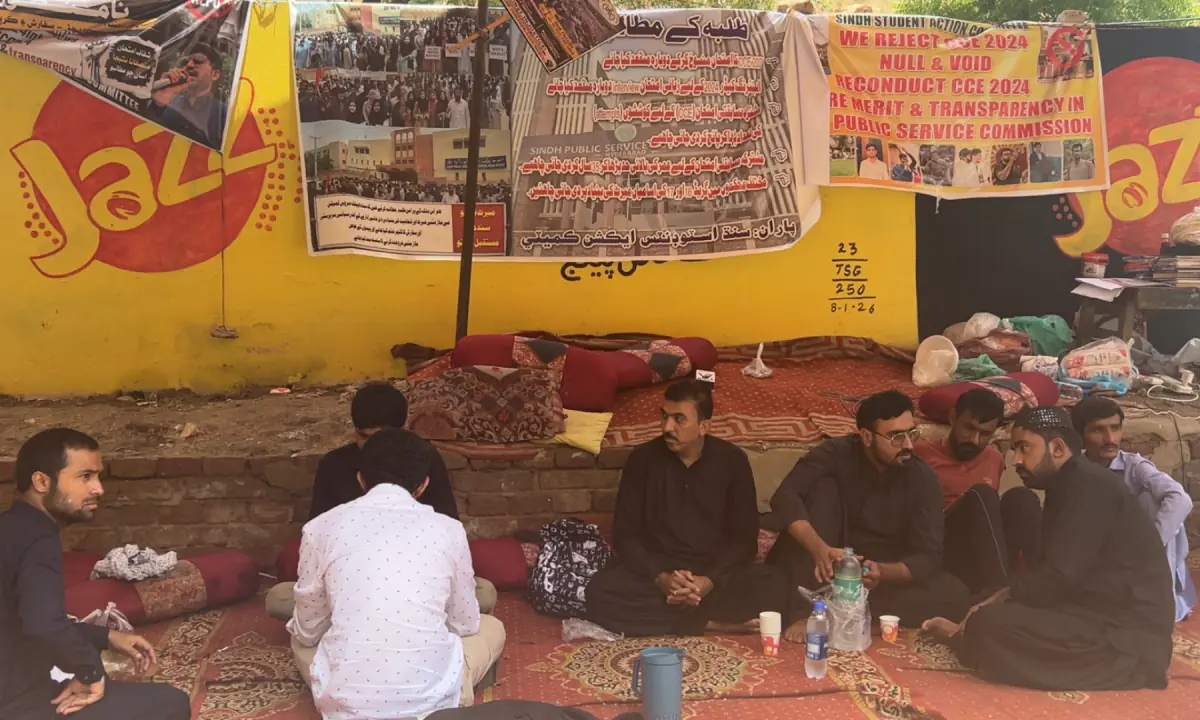
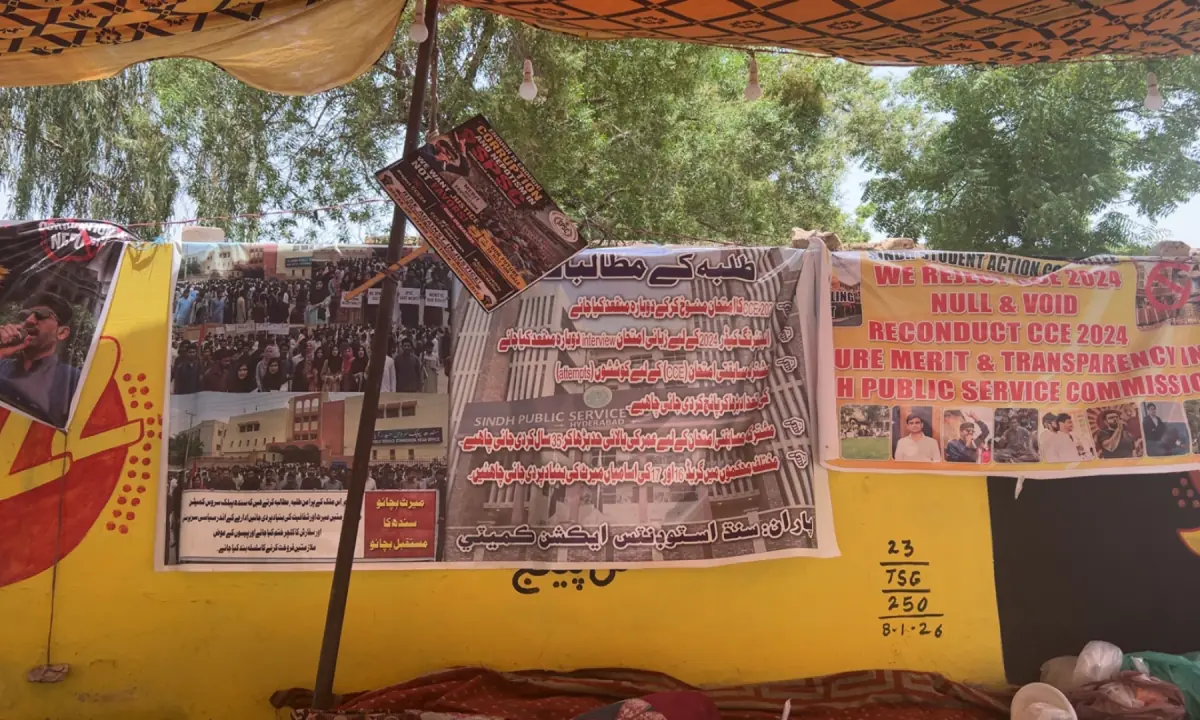
Alarm bells intensified when detailed marks certificates were uploaded, revealing glaring inconsistencies. Candidates for optional subjects like Criminology and Environmental Science found their 100-mark papers inexplicably graded out of 200 marks. This fundamental discrepancy fueled suspicions of procedural errors or deliberate manipulation. Social media quickly became a platform for aggrieved candidates to voice their frustrations, leading to the swift organisation of the Sindh Students Action Committee and sustained protests outside the SPSC head office in Hyderabad.
The SPSC’s response has only further inflamed the situation. Instead of addressing the allegations transparently, the commission resorted to filing charges under anti-terrorism laws against a US-based journalist and social media activists for allegedly spreading “false propaganda.” This heavy-handed approach to stifle dissent has been widely criticised as an attempt to intimidate rather than engage. Political pressure has mounted, with an MQM-P lawmaker submitting a resolution in the Sindh Assembly demanding an immediate suspension of results and an independent forensic audit by an impartial institution.
The protests evolved into the “Movement for Restoration of Meritocracy” (MRM), a poignant nod to the historic Movement for the Restoration of Democracy (MRD) of the 1980s. This renaming underscores the deep-seated belief among the youth that the very foundations of fair public recruitment are under threat. Despite legal challenges and the courts taking up the matter, including the Sindh High Court initially suspending the results and ordering the sealing of records, the SPSC controversially appealed to the newly formed Federal Constitutional Court, which subsequently suspended the SHC’s inquiry orders. This legal tug-of-war has allowed the SPSC to proceed with interviews for the initially successful 70 candidates, further solidifying the protesters’ resolve.
Understanding the Background: A History of Doubt
The current outcry over the SPSC’s CCE 2024 results is not an isolated incident but rather the latest chapter in a long history of controversies surrounding the commission. The SPSC, like its provincial counterparts and the Federal Public Service Commission, is constitutionally mandated to ensure transparent and merit-based recruitment for civil service positions. However, for decades, the SPSC has faced persistent allegations of nepotism, corruption, and political interference.
Experienced journalists covering the SPSC for years have painted a grim picture, suggesting that genuine merit has gradually diminished in appointments. Claims indicate that a significant percentage of positions have historically been filled through political patronage or monetary considerations, leaving a dwindling fraction for truly deserving candidates. This environment cultivates deep mistrust, where candidates who excel in written exams allegedly find themselves inexplicably failed at the interview stage, while less qualified individuals with connections somehow secure higher scores in the viva voce.
The stakes for these government jobs are exceptionally high in Pakistan, particularly in Sindh. In a region grappling with high youth unemployment and limited private sector opportunities, a stable, well-paying government job is not just a career path but often a lifeline for entire families. The allure of job security, pensions, and social prestige associated with civil service roles makes competition fierce. When the process meant to select the best is perceived as compromised, it generates immense frustration, despair, and a sense of betrayal among the youth who invest years in preparation.
Profound Impact on Pakistan’s Future
The ramifications of these alleged irregularities extend far beyond the disappointed candidates. The crisis at the SPSC has profound implications for governance, social stability, and the democratic fabric of Pakistan:
- Erosion of Public Trust: A perception of widespread corruption and lack of merit in public appointments severely damages public trust in state institutions. When recruitment bodies meant to be impartial are seen as compromised, it undermines faith in the entire system, including the judiciary, executive, and even the political leadership.
- Compromised Governance: The civil service forms the backbone of government, responsible for policy implementation, service delivery, and maintaining law and order. If individuals are appointed based on connections rather than competence, it inevitably leads to a less efficient, less effective, and potentially more corrupt bureaucracy. This directly impacts public service delivery, development projects, and overall governance quality in Sindh.
- Demoralization and Brain Drain: Talented and dedicated youth, facing a system perceived as rigged, are likely to become deeply disillusioned. This can lead to a sense of hopelessness, disengagement from civic life, or, for those with the means, a decision to seek opportunities abroad, contributing to a significant brain drain.
- Social and Political Instability: Sustained protests, especially when met with heavy-handed state responses, can escalate into broader movements, potentially leading to social unrest. The “Movement for Restoration of Meritocracy” itself signals a deeper political and societal yearning for justice and fairness, echoing historical movements that challenged authoritarian rule.
- Rule of Law and Judicial Integrity: The legal battle between the Sindh High Court and the Federal Constitutional Court highlights potential challenges to the rule of law and judicial independence. The perception that one court’s orders can be easily overturned or circumvented by another, especially in a matter of such public importance, can erode confidence in the justice system itself.
Analysis: A Systemic Challenge Requiring Fundamental Reform
The SPSC controversy is a microcosm of a larger systemic issue that plagues public recruitment in various parts of Pakistan. The extremely low pass rate of 70 out of over 4,300 candidates, when compared against the SPSC’s own stated practice of passing multiple candidates per seat, immediately invites skepticism. It suggests either an unprecedentedly poor performance by thousands of candidates or, as alleged, a flawed or manipulated evaluation process.
The specific discrepancies in the detailed marks certificates, such as a 100-mark paper being graded out of 200, are not minor clerical errors. They point to either gross negligence in the examination and marking system or deliberate attempts to alter results. The SPSC’s silence, coupled with its use of anti-terrorism laws against critics, is a troubling tactic that undermines transparency and fuels suspicions rather than allaying them. It suggests a commission more interested in silencing dissent than in addressing legitimate grievances.
The judiciary’s role in this crisis has been complex. The Sindh High Court’s prompt action to suspend results and order records sealed offered a glimmer of hope for justice. However, the SPSC’s subsequent move to the Federal Constitutional Court and the latter’s suspension of the SHC’s inquiry orders have created an impression of judicial obstruction or a struggle for jurisdiction, potentially delaying justice and allowing the SPSC to proceed with controversial appointments. This legal maneuvering adds another layer of complexity and distrust.
At its heart, this crisis is about the failure to uphold meritocracy. Without a genuine merit-based system, the state sacrifices competence for connections, resulting in a bureaucracy that is less effective and less accountable to the public it serves. The protesters’ demands—scrapping the CCE-2024 results, the resignation of the SPSC chairman and members, and an independent judicial commission to investigate past recruitment—are not merely calls for a re-examination but for a fundamental cleansing of an institution perceived as deeply compromised.
Moving Forward: Paths to Restoration of Trust
Restoring public trust in the SPSC and other public service commissions will require more than just addressing the immediate CCE 2024 results. It necessitates a comprehensive and unwavering commitment to transparency and accountability:
- Independent Forensic Audit: A thorough, independent audit of the CCE 2024 examination process, marking, and result compilation, preferably by a body with no vested interests, is paramount. This was rightly demanded by political parties and protesters.
- Enhanced Transparency: The SPSC must adopt greater transparency in its processes. This could include publishing detailed mark sheets for all candidates (with privacy considerations), possibly video recording interviews, and clearly communicating marking criteria and procedures.
- Robust Complaint Mechanism: An independent and effective mechanism for candidates to lodge and have their grievances addressed, without fear of reprisal, is crucial.
- Depoliticization of Commissions: Efforts must be made to shield public service commissions from political influence in appointments of their members and in the recruitment process itself.
- Accountability for Malpractice: Any individuals found responsible for corruption, manipulation, or gross negligence must be held accountable through stringent legal and administrative actions.
- Legal Clarity: The judicial system needs to swiftly and decisively resolve the jurisdictional dispute and ensure that justice is not delayed or perceived to be circumvented.
The protests in Sindh are a powerful expression of the aspirations and frustrations of a generation seeking a fair chance. The future of effective governance in Sindh, and indeed the broader stability of Pakistan, hinges on the state’s ability to address these grievances authentically and commit to building institutions that truly champion merit and uphold the public trust.
Header image: Protesters camp outside SPSC head office on Hyderabad’s Thandi Sarak. — All photos by Yumna Khan
“`