 Dost Pakistan Journeys Tours and safaris in the North & South Pakistsn
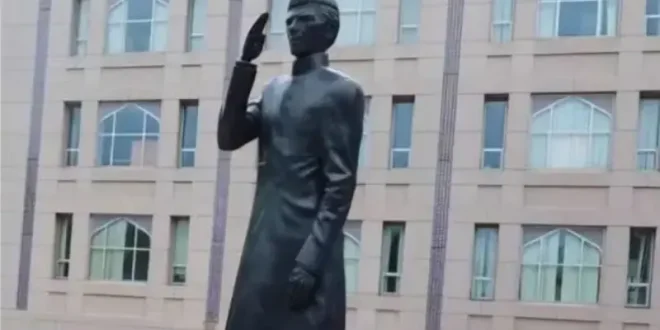
Unveiling History and Diplomacy: Quaid-i-Azam’s Statue in Washington Redefines Pakistan-US Ties
More than just a monument, the recent unveiling of Quaid-i-Azam Mohammad Ali Jinnah’s statue at the Pakistan Embassy in Washington D.C. signals a strategic pivot in Pakistan’s global narrative and its evolving relationship with the United States.
The News: A Beacon of Heritage in Washington
In a significant diplomatic and cultural event, the Pakistan Embassy in Washington D.C. proudly unveiled a statue of Quaid-i-Azam Mohammad Ali Jinnah, the founder of Pakistan. The ceremony, held on Friday, August 14, 2026, coincided with Pakistan’s Independence Day celebrations, imbuing the occasion with profound historical resonance. Pakistan’s Ambassador to the US, Rizwan Saeed Sheikh, led the unveiling, attended by a diverse gathering of Pakistani-Americans, diplomats, and media. This permanent addition to the embassy grounds, generously donated by the Quaid-i-Azam Foundation of Houston, comes as Pakistan gears up to commemorate Jinnah’s 150th birth anniversary later this year. Ambassador Sheikh paid tribute to Jinnah’s “constitutional struggle and tireless efforts,” urging Pakistanis worldwide to uphold his guiding principles of “Unity, Faith and Discipline.”
Beyond the historical commemoration, the event served as a platform to underscore the multifaceted nature of the Pakistan-United States relationship. Ambassador Sheikh’s remarks echoed sentiments from US Secretary of State Marco Rubio, highlighting areas of cooperation spanning regional mediation, critical minerals, energy, counterterrorism, cultural heritage, and trade. Notably, Pakistan’s ongoing diplomatic efforts to facilitate dialogue between Washington and Tehran received specific mention, showcasing its crucial role in regional stability. The ceremony also recognized Waqar Ali Khan with the President’s Award for Pride of Performance, honoring his extensive service to the Pakistani-American community.
Background: Jinnah’s Legacy and Evolving Diplomacy
The placement of Quaid-i-Azam Mohammad Ali Jinnah’s statue in the heart of Washington D.C. carries layers of historical and geopolitical significance. Jinnah, a visionary leader, championed the cause for a separate homeland for Muslims in British India, leading to the creation of Pakistan in 1947. His enduring legacy is built upon his commitment to a democratic, pluralistic state founded on principles of justice and equality. For Pakistanis globally, Jinnah remains an icon of national identity and sovereignty.
This unveiling transcends mere cultural homage; it is a strategic projection of Pakistan’s rich heritage and soft power on the global stage. Diplomatic missions frequently use such symbols to represent their national identity and values to host countries. For the Pakistani diaspora in the United States, a vibrant and influential community, the statue serves as a tangible link to their roots and a source of national pride.
The timing is particularly pertinent given the long and often complex history of US-Pakistan relations. From Cold War alliances and counter-terrorism partnerships to recent efforts to re-calibrate bilateral engagement, the relationship has seen many phases. The renewed emphasis on economic cooperation, critical minerals, and regional mediation signals a deliberate shift towards a more diversified partnership, moving beyond a security-centric narrative. Pakistan’s unique geopolitical position has often positioned it as a bridge for dialogue, notably in facilitating interactions between the US and Iran, underscoring its potential as a regional stabilizer rather than merely a recipient of aid or a security partner.
Impact on Pakistan: National Pride, Global Reach
The Quaid-i-Azam statue’s unveiling in Washington D.C. holds multifaceted implications for Pakistan’s national identity and its global standing. Internally, it serves as a powerful reminder of the nation’s founding principles and a renewed call for unity, faith, and discipline, particularly crucial in times of domestic challenges. For the vast Pakistani diaspora, it reinforces their connection to their homeland and strengthens their role as cultural ambassadors, projecting a positive image of Pakistan abroad.
Externally, this initiative is a significant exercise in cultural diplomacy and soft power. It positions Pakistan as a nation with a profound historical lineage and a commitment to its foundational ideals, countering simplistic or negative portrayals. By placing its founder’s image in a prominent international capital, Pakistan asserts its sovereign identity and cultural richness, inviting greater understanding and appreciation from the global community.
In the context of US-Pakistan diplomatic ties, the event is a symbolic gesture of strengthening bonds beyond traditional security partnerships. The explicit mention of cooperation in critical minerals, energy, trade, and cultural heritage signifies a deliberate pivot towards a more comprehensive and economically-driven engagement. Pakistan’s active role in regional mediation, particularly its efforts to de-escalate tensions between the US and Iran, further bolsters its image as a responsible and constructive player in international affairs, enhancing its regional and global influence.
Analysis: Beyond Symbolism – A Strategic Rebranding
The unveiling of Quaid-i-Azam Jinnah’s statue is far more than a mere ceremonial act; it represents a strategic and nuanced effort by Pakistan to redefine its international narrative and deepen its engagement with key global partners, particularly the United States. This move is not just about celebrating history but leveraging it to shape future diplomatic and economic opportunities.
Firstly, it underscores a conscious effort to broaden the scope of US-Pakistan relations. For decades, the partnership has often been characterized by a narrow focus on security and counterterrorism. The emphasis on critical minerals, energy collaboration, and cultural exchange, as highlighted by Secretary Rubio, signals a pivot towards a more diversified and mutually beneficial relationship. This reflects a global trend where nations seek multi-pronged engagements, moving beyond transactional alliances to foster deeper economic and cultural ties.
Secondly, the event serves as a powerful tool for Pakistan’s soft power strategy. In an era of intense information warfare and competing national narratives, presenting a dignified image rooted in foundational principles and rich heritage is invaluable. By showcasing Jinnah’s legacy in Washington D.C., Pakistan subtly projects an image of stability, democratic ideals, and historical depth, vital for attracting foreign investment and fostering international goodwill.
Thirdly, Pakistan’s role in regional mediation, especially between the US and Iran, positions it as a crucial diplomatic bridge. This elevates Pakistan from a regional player to a vital facilitator of global peace and stability. This particular aspect highlights a maturing foreign policy that seeks to leverage geographical position and diplomatic relationships for broader strategic influence.
Finally, the confluence of Independence Day, Jinnah’s upcoming 150th birth anniversary, and the strategic location in Washington D.C. suggests a well-orchestrated initiative. It’s a call to the Pakistani diaspora to embody Jinnah’s principles and act as conduits for Pakistan’s positive image, while simultaneously signaling to the international community that Pakistan is a confident nation, proud of its past, and strategically engaged in shaping its future. This signals a future-oriented foreign policy that strategically blends historical reverence with contemporary diplomatic imperatives, moving Pakistan towards a more self-assured and diversified role on the global stage.
