Dost Pakistan Journeys Tours and safaris in the North & South Pakistsn
Related Articles

JUI-F’s Strategic Move: Forging a United Opposition Front in Pakistan
In a significant development reshaping Pakistan’s political landscape, the Jamiat Ulema-e-Islam-Fazl (JUI-F) has taken a leading role in galvanizing a broad alliance of opposition parties. This new coalition, aiming for a potent parliamentary platform, signals a renewed push to challenge the incumbent government on a range of critical national issues, from security and economic stability to the very fabric of the rule of law.
The Latest Developments: A Unified Opposition Emerges
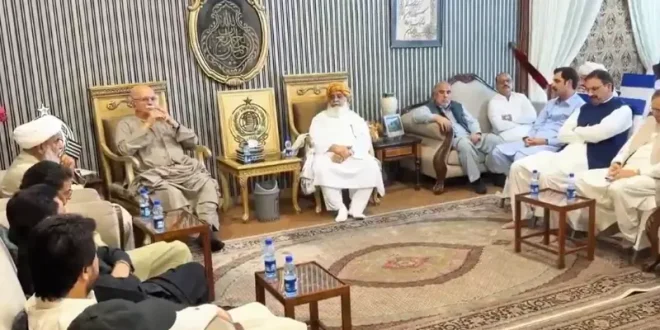
A high-stakes meeting recently brought together key figures from Pakistan’s political opposition, including JUI-F chief Fazlur Rehman, Tehreek-i-Tahafuz Ayin-i-Pakistan (TTAP) leader Mehmood Khan Achakzai, Majlis Wahdat-i-Muslimeen (MWM) head Allama Raja Nasir Abbas, and prominent leaders from the Pakistan Tehreek-e-Insaf (PTI) such as Asad Qaiser and Salman Akram Raja. The core agenda was to establish a unified parliamentary front, enabling more impactful collective action on critical national issues.
Addressing the media post-meeting, Maulana Fazlur Rehman articulated grave concerns over the country’s escalating law and order crisis, describing “war-like conditions” in two provinces and a systemic challenge to governmental writ. He highlighted widespread public insecurity, the economic distress of tribal area traders due to western border closures, and what he perceived as damaged confidence with China, contributing to Pakistan’s increasing international isolation. Rehman also dismissed the government’s narrative as mere “political distractions” and rejected calls for dialogue, asserting that genuine engagement requires reciprocal effort.
Echoing these sentiments, Mehmood Khan Achakzai issued a stark warning against attempts to seize control of national resources, even contemplating recourse to international courts if political forces are unduly marginalized. Allama Raja Nasir Abbas criticized a perceived disregard for the rule of law, pointing to instances of defiance towards the Supreme Court, specifically referencing the controversial handling of PTI founder Imran Khan’s medical transfer. PTI representatives further condemned governmental overreach and the recent controversies surrounding their leader.
The alliance has decided to consult with their respective party leaderships before reconvening to finalize their strategic roadmap, signaling an intent to take their collective position directly to the populace.
Navigating Pakistan’s Tumultuous Political Landscape
To fully grasp the significance of this developing opposition front, it’s essential to contextualize it within Pakistan’s volatile political environment. The nation has recently undergone a period of intense political upheaval, including a highly contentious general election, leading to a coalition government formation. The Pakistan Tehreek-e-Insaf (PTI), despite facing significant challenges including the incarceration of its founder Imran Khan, continues to command substantial public support, making its inclusion in any broad opposition alliance strategically crucial.
The JUI-F, led by the seasoned politician Fazlur Rehman, traditionally represents a powerful religious-political force, particularly influential in Khyber Pakhtunkhwa (KP) and Balochistan. Rehman has a history of leading potent opposition movements and leveraging street power, often challenging successive governments. His willingness to align with PTI, a party he has previously opposed, underscores the strategic depth of the current move and a shared objective to confront the current power structure.
The concerns raised by the opposition leaders are deeply rooted in contemporary Pakistani challenges. The “law and order” crisis often refers to persistent militant insurgencies in regions like Balochistan and parts of KP, including activities by groups like the Tehrik-i-Taliban Pakistan (TTP). These security issues directly impact trade, particularly with Afghanistan across the western border, and raise questions about the security of crucial projects like the China-Pakistan Economic Corridor (CPEC).
Pakistan’s economy remains a significant vulnerability, plagued by chronic inflation, a spiraling national debt, and high unemployment. These economic pressures provide fertile ground for opposition narratives, allowing them to tap into widespread public discontent. Furthermore, the debate around the “rule of law” and judicial independence has been intensified by recent controversies, particularly those involving high-profile political figures and perceived executive interference in judicial matters, as highlighted by the references to Imran Khan’s medical treatment.
The mention of “new provinces” points to an ongoing, often ethnically and administratively charged, debate within Pakistan about re-carving provincial boundaries to address demands for better governance or greater representation (e.g., South Punjab, Hazara). Such discussions are often contentious and require careful political navigation.
Potential Ramifications: Reshaping Pakistan’s Political Trajectory
The formation of a unified opposition front, spearheaded by JUI-F and involving diverse political entities, holds significant implications for Pakistan’s political landscape:
- Increased Political Instability: A consolidated and vocal opposition is likely to intensify political pressure on the ruling coalition. This could manifest in heightened parliamentary deadlocks, nationwide protests, and a general climate of political uncertainty, potentially hindering governance and policy implementation.
- Policy Paralysis and Economic Repercussions: Constant political wrangling can divert governmental focus from urgent economic reforms. Heightened instability often deters foreign investment and negatively impacts credit ratings, exacerbating Pakistan’s existing economic woes. The opposition’s concerns about “damaged confidence” with China, a key economic partner through CPEC, are particularly sensitive.
- Shift in Public Discourse: By taking their collective stance “directly to the people,” the opposition aims to galvanize public sentiment against the government. This strategy could amplify public anger over economic hardships, security failures, and rule of law concerns, potentially leading to a broader anti-government movement and increased public mobilization.
- Heightened Security Focus: The emphasis on deteriorating law and order by a united opposition forces the government and security apparatus to address these concerns more directly, potentially leading to shifts in internal security policy or increased operations in affected regions.
- International Perception: Prolonged internal political turbulence could project an image of instability on the global stage, impacting Pakistan’s diplomatic relations, its ability to secure international aid, and its overall standing. Achakzai’s mention of approaching international courts, while perhaps rhetorical, underscores a deep level of dissatisfaction that could draw international attention.
- Strengthening of Democratic Checks and Balances: Paradoxically, a robust and united opposition is a fundamental component of a healthy democracy. If sustained, this alliance could compel the government to be more accountable and responsive to public demands, fostering a more effective system of checks and balances within the parliamentary framework.
Decoding the Opposition’s Strategy: More Than Just Parliamentary Maneuvers
This emerging opposition alliance signifies a deliberate and calculated strategy to consolidate diverse anti-government forces under a single, more impactful banner. Fazlur Rehman, with his deep political experience and organizational prowess, appears to be a key architect in bringing together parties that have previously been at odds. The inclusion of PTI, a party with significant street power and a passionate base, is particularly telling, indicating a pragmatic willingness to set aside past rivalries for a shared objective: to challenge the legitimacy and efficacy of the current government.
Key Motivations Driving the Alliance:
- Perceived Governmental Weakness: The opposition seems to view the current coalition government as lacking a strong mandate and struggling with governance, making it vulnerable to a united challenge.
- Capitalizing on Public Grievances: By highlighting issues such as rampant inflation, unemployment, and the security crisis, the alliance is strategically tapping into widespread public dissatisfaction and hardship.
- Championing the Rule of Law: A central tenet of their collective criticism revolves around alleged infringements on the rule of law and judicial independence, particularly in the context of high-profile political detentions and perceived executive overreach.
- Addressing Regional Disparities: Mehmood Khan Achakzai’s strong stance on resource control reflects long-standing grievances from smaller provinces and ethnic groups concerning federal dominance and resource allocation.
- Criticizing Foreign Policy & Economic Diplomacy: The pointed remarks regarding China’s confidence and Pakistan’s increasing isolation suggest a narrative that questions the government’s competence in maintaining vital international relationships and economic partnerships.
Challenges and Outlook for the Unified Front:
Despite this initial show of unity, the alliance faces substantial challenges. Maintaining cohesion among parties with diverse ideological foundations – from JUI-F’s religious conservatism to PMAP’s Pashtun nationalism and PTI’s populist base – will require astute leadership and continuous compromise. Historical animosities and individual political ambitions could resurface, testing the alliance’s resolve.
The government’s response will also be crucial. It is likely to counter the opposition’s narrative through various means, including legislative actions, public outreach, or even attempts to sow discord within the alliance. Furthermore, while public grievances are high, there’s always a risk of public fatigue with prolonged political instability that doesn’t yield tangible solutions.
The decision to “take its collective position directly to the people” suggests that this alliance intends to move beyond mere parliamentary debates. It signals a potential strategy to combine legislative pressure with public mobilization, aiming to create sustained pressure on the government. Fazlur Rehman’s rejection of dialogue at this juncture indicates a hardened stance, implying that the opposition expects significant concessions before any meaningful engagement can occur.
In essence, this unified opposition front marks a new, potentially turbulent, chapter in Pakistan’s political saga. The coming months will be critical in determining whether this alliance can effectively leverage public discontent and parliamentary strength to force policy shifts, challenge the government’s mandate, or potentially pave the way for early elections amidst Pakistan’s complex array of internal and external challenges.