 Dost Pakistan Journeys Tours and safaris in the North & South Pakistsn
“`html
Bilawal’s Bold Vision: Safeguarding Gilgit-Baltistan’s Rights in Pakistan’s Constitutional Future
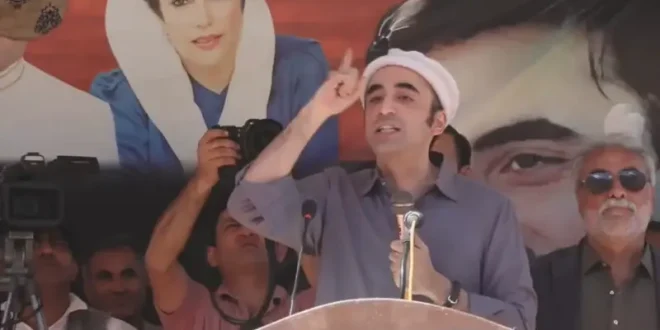
In a significant address at an election rally in Shigar, Gilgit-Baltistan (GB), Pakistan Peoples Party (PPP) Chairperson Bilawal Bhutto-Zardari has forcefully articulated a vision for the region’s constitutional future. His impassioned plea for the protection of GB’s rights under any forthcoming constitutional amendment and greater devolution of power signals a critical juncture for the politically sensitive region and Pakistan’s federal structure.
What Happened: A Call for Rights and Autonomy in GB
During his campaign ahead of the June 7 elections in Gilgit-Baltistan, Bilawal Bhutto-Zardari laid out several key demands for the region. Central to his address was the insistence that any new constitutional amendment in Pakistan must explicitly safeguard the rights of GB’s populace. He advocated for simultaneous elections in GB and the rest of Pakistan, seeing it as a crucial step towards realizing the region’s “right of rule” (haq-i-hakimiyat).
Bhutto-Zardari pledged to secure for GB the same rights and resources enjoyed by other provinces under the 18th Amendment. He criticized other political parties for their alleged desire to control regions like Gwadar, Karachi, and GB from Islamabad, asserting the people of GB’s “right to ownership” (haq-i-malkiyat) over their land and resources. Furthermore, he called for the abolition of the federal Ministry of Kashmir Affairs and GB, proposing the transfer of all political, financial, and administrative authority to the local assemblies in Gilgit and Muzaffarabad.
Beyond constitutional changes, Bilawal emphasized the “right to livelihood” (haq-i-rozgar), linking local control over resources to economic prosperity and employment opportunities. He also touched upon electoral integrity, urging voters to secure Form-45 (polling station results) while implying the PPP would ensure Form-47 (consolidated results) accurately reflects the mandate, thereby protecting against “stolen seats.” He strongly advocated for free and fair elections, rejecting any notion of being “selected.”
In a broader economic context, Bilawal highlighted the global financial challenges, attributing some to the “US-Israeli war on Iran,” and positioned the PPP as the sole party capable of protecting the poor through programs like the Benazir Income Support Programme (BISP). He accused other parties of attempting to “sabotage” BISP by proposing its devolution to provinces, a move he argued would cripple the program in regions like GB.
Background: GB’s Unique Constitutional Limbo
To fully grasp the weight of Bilawal’s statements, it’s essential to understand the complex status of Gilgit-Baltistan. Historically part of the broader Kashmir dispute, GB is administered by Pakistan but does not hold full provincial status within the federation. This unique position stems from Pakistan’s commitment to the UN resolutions on Kashmir, which consider the region’s final status as undecided. Consequently, GB enjoys a degree of self-governance through its elected assembly but lacks full representation in Pakistan’s parliament and the constitutional protections afforded to its four provinces.
The 18th Amendment to Pakistan’s Constitution (2010) was a landmark reform that significantly enhanced provincial autonomy, devolving substantial powers and resources from the federal government to the provinces. However, GB, not being a full province, could not directly benefit from these changes, fueling a persistent demand among its people for a clearer constitutional identity, greater self-rule, and control over their vast natural resources, including minerals and hydropower potential.
The concepts of Haq-i-Hakimiyat (right of rule or sovereignty) and Haq-i-Malkiyat (right to ownership) are deeply resonant in GB, encapsulating the desire for local decision-making and economic empowerment. The federal Ministry of Kashmir Affairs and GB acts as a liaison and oversight body, a role that many in GB view as an impediment to true autonomy. Furthermore, Pakistan’s electoral history is often marred by allegations of manipulation, making Bilawal’s reference to Form-45 and Form-47 a potent reminder of the need for transparent and credible electoral processes.
The Benazir Income Support Programme (BISP), a flagship social safety net program launched during a previous PPP government, provides crucial financial assistance to millions of impoverished families across Pakistan. Its potential devolution to provinces raises concerns about its uniformity, funding, and reach, particularly in areas like GB with limited independent financial capacity.
Why It Matters: A Bid for Integration and Empowerment
Bilawal’s pronouncements matter immensely for several reasons. Firstly, they directly address the long-standing constitutional ambiguity surrounding Gilgit-Baltistan. A constitutional amendment protecting GB’s rights would be a profound step towards resolving this status, potentially integrating the region more deeply into Pakistan’s federal framework without necessarily prejudicing the broader Kashmir dispute – a delicate balancing act.
Secondly, his advocacy for the spirit of the 18th Amendment for GB is a powerful call for enhanced devolution and autonomy. Empowering local assemblies in Gilgit and AJK (Azad Jammu and Kashmir) by abolishing the federal ministry would fundamentally alter the governance landscape, giving the people of these regions a greater say in their destiny and control over their resources. This could unlock significant economic potential and foster a greater sense of ownership among the local populace.
Thirdly, the emphasis on electoral integrity, through the proper safeguarding of Form-45 and Form-47, is crucial for public trust in the democratic process. In a region where political marginalization has been a concern, credible elections are vital for legitimizing local governance.
Finally, Bilawal’s defense of BISP highlights the importance of federal social welfare programs in addressing poverty and inequality, particularly in vulnerable and remote regions like GB. Any attempt to dilute or devolve such programs could have severe socio-economic consequences for the poorest segments of society.
Impact on Pakistan: Redefining Federalism and Regional Dynamics
Should the PPP’s proposals gain traction, the impact on Pakistan could be far-reaching. Granting GB a clearer constitutional status would inevitably reignite national debates on federalism, provincial rights, and the equitable distribution of resources across all administrative units. It could set a precedent for other regions with unique statuses and strengthen the overall federal structure by addressing historical grievances.
Politically, Bilawal’s stance positions the PPP as a champion of regional rights and decentralization, contrasting with parties often perceived as more centralist. This narrative could reshape political alliances and electoral strategies, particularly in regions striving for greater autonomy. If implemented, the abolition of the Ministry of Kashmir Affairs and GB would represent a significant restructuring of federal governance, signaling a genuine commitment to empowering regional assemblies.
Economically, greater control over GB’s resources, coupled with direct federal support through programs like BISP, could spur local development and alleviate poverty. However, such changes would require careful planning and a robust financial framework to ensure sustainability and equity. On the international front, any alteration to GB’s constitutional status would be closely watched, particularly by India, given the region’s inextricable link to the Kashmir dispute.
Analysis: Strategic Populism and a Push for Genuine Federalism
Bilawal Bhutto-Zardari’s rally in Shigar was a masterclass in strategic populism, expertly blending local grievances with broader national principles. By invoking the 18th Amendment, a cornerstone of Pakistani federalism spearheaded by his party, he effectively positioned the PPP as the natural custodian of devolution and autonomy for GB. This move is designed to resonate deeply with a populace that has long felt sidelined and deprived of full constitutional rights.
His critique of other parties’ “Islamabad-centric” approach for regions like Gwadar, Karachi, and GB is a potent political weapon. It aims to draw a clear ideological distinction, portraying the PPP as the advocate for local decision-making and resource ownership (Haq-i-Malkiyat), directly addressing the aspirations of GB residents who feel their fate is often decided far from their mountains. The demand for simultaneous elections, under the banner of Haq-i-Hakimiyat, is a symbolic gesture towards integrating GB’s political process more fully into the national fabric, even if full provincial status remains a complex constitutional and geopolitical challenge.
The strong emphasis on electoral integrity, particularly the Form-45 and Form-47 narrative, is a recurring theme in Pakistani politics. Bilawal’s promise to protect the people’s vote serves to mobilize supporters, instill confidence in their ballot, and implicitly challenge any potential interference, a strategic move often employed by opposition parties to ensure a fair playing field. This also positions the PPP as a champion of democratic fairness, contrasting with perceived past practices of “selection.”
Finally, the spirited defense of BISP is not merely about social welfare; it’s a powerful political statement. By accusing opponents of attempting to “sabotage” or devolve the program, Bilawal reinforces the PPP’s legacy as a pro-poor party and attempts to discredit rivals, particularly the PML-N, in the eyes of a significant beneficiary base. His argument that devolution would effectively end the program in regions like GB highlights the unique vulnerabilities of these areas and positions the PPP as the sole protector of these vital lifelines.
In essence, Bilawal Bhutto-Zardari’s campaign in Gilgit-Baltistan is more than just an election pitch. It is a calculated attempt to redefine GB’s relationship with the Pakistani federation, championing principles of autonomy, resource control, and democratic fairness, while simultaneously consolidating the PPP’s image as the party of the people and regional empowerment in a challenging political and economic climate.
“`
