 Dost Pakistan Journeys Tours and safaris in the North & South Pakistsn
Related Articles

“`html
Pakistan’s Urgent Plea: Elevating Mediation as the Bridge to Global Peace and Stability
The Renewed Call for Diplomacy at the UN
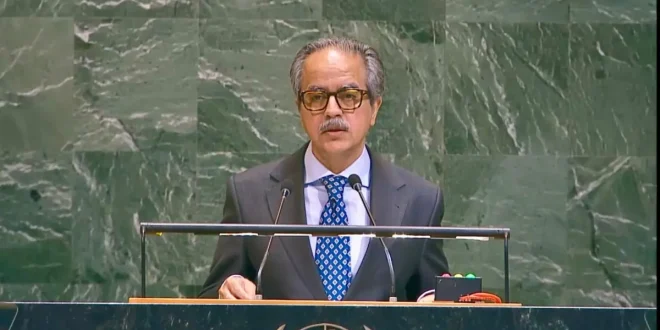
In a period marked by escalating global tensions, Pakistan has emphatically renewed its call for a proactive, rather than reactive, approach to international conflicts. Addressing the United Nations General Assembly and later the Security Council, Pakistan’s Permanent Representative, Ambassador Asim Iftikhar Ahmad, championed mediation and preventive diplomacy as the only viable path to sustainable peace. His statements underscored a consistent foreign policy stance advocating for dialogue, de-escalation, and adherence to international law in resolving disputes, from the simmering Middle East crisis to the protracted conflict in Ukraine.
Ambassador Ahmad’s key message was clear: conflicts are not inevitable; they are often the product of delayed diplomacy and unresolved grievances. He urged a pivot towards early-warning mechanisms, quiet diplomacy, and the Secretary-General’s good offices, emphasizing that the UN’s primary responsibility lies in prevention, not merely post-conflict intervention. This commitment was highlighted by Pakistan’s initiative in the unanimous adoption of Security Council Resolution 2788 in July 2025, which reaffirmed the critical role of UN Charter Chapter VI principles in peaceful dispute settlement.
A Global Landscape Ripe for Mediation
Pakistan’s impassioned plea for enhanced mediation efforts comes at a particularly fraught moment in international relations. The Middle East, in particular, remains a tinderbox, with recent escalations between Iran and the United States highlighting the region’s fragility. The conflict in Ukraine, now in its third year, continues to exact a heavy toll, demonstrating the limitations of military solutions and the urgent need for a negotiated settlement. These ongoing crises underscore a worrying trend of disputes festering into full-blown conflicts, consuming lives and destabilizing entire regions.
The concept of preventive diplomacy, enshrined in the UN Charter, has long been recognized as a cost-effective and humane alternative to armed conflict. However, its application has often been overshadowed by the exigencies of crisis management. Pakistan’s advocacy seeks to recalibrate this balance, urging the international community to invest more in stopping conflicts before they start. As a nation situated in a complex geopolitical neighbourhood, with deep-seated ties across multiple blocs – notably as a “friendly neighbour of Iran, a brotherly partner of the Gulf countries, and a country with longstanding ties of amity with the United States” – Pakistan views a stable global environment as intrinsically linked to its own security and prosperity.
Why This Diplomatic Stance Matters
The significance of Pakistan’s push for stronger mediation extends beyond mere rhetoric. It represents a principled stand for international order and justice in a fragmented world. By emphasizing that mediation must be anchored in international law and address the root causes of conflicts – including the denial of rights, foreign occupation, and aggression – Pakistan aligns its diplomatic efforts with core UN principles. This approach challenges the notion that peace can be built on the normalization of injustice or the mere management of consequences, instead advocating for comprehensive solutions that tackle underlying grievances.
This initiative is critical for several reasons:
- Mitigating Human Cost: Proactive mediation saves lives, prevents displacement, and protects vulnerable populations from the devastating impacts of war.
- Economic Stability: Conflicts disrupt global trade, fuel inflation, and divert resources from development, making peace an economic imperative for all nations.
- Reinforcing International Law: Championing mediation based on international law strengthens the rules-based global order, which is increasingly under strain.
- Preventing Escalation: Unresolved conflicts carry an inherent risk of miscalculation and spillover effects, potentially drawing in more actors and widening confrontations, as seen in various regions today.
Impact and Implications for Pakistan
Pakistan’s vocal advocacy for mediation serves multiple strategic objectives for the nation itself. Diplomatically, it positions Islamabad as a responsible global actor and a credible voice for peace and stability, enhancing its soft power and influence on the international stage. By consistently promoting dialogue in volatile regions like the Middle East, Pakistan leverages its unique relationships to foster understanding and de-escalation, potentially paving the way for its own role as a facilitator.
Furthermore, given Pakistan’s own historical experience with unresolved disputes and its geographic proximity to several conflict zones, a global commitment to preventive diplomacy directly contributes to its national security interests. A more peaceful and stable regional and international environment is conducive to Pakistan’s economic development, attracting foreign investment, and focusing on its domestic challenges. The initiative for Security Council Resolution 2788 also demonstrates Pakistan’s capacity for impactful multilateral diplomacy, showcasing its ability to translate its foreign policy principles into concrete global actions.
Analysis: The Road Ahead for Mediation
While the benefits of mediation are clear, its implementation faces formidable challenges. The effectiveness of mediation often hinges on the political will of conflicting parties, trust deficits, and the willingness of powerful states to genuinely engage rather than pursue unilateral interests. Deep-seated grievances, ideological divides, and the involvement of non-state actors further complicate efforts to find common ground. Pakistan’s call for greater investment in the UN Mediation Support Unit and stronger partnerships between the UN and regional organizations is a practical step, but adequate funding and consistent political backing remain perennial hurdles.
For Pakistan, sustaining its role as a “bridge between confrontation and peace” requires navigating complex geopolitical realities. Its ability to be perceived as a neutral and effective mediator will depend on its own consistent adherence to the principles it advocates, including those related to international law and the right to self-determination. The successful adoption of Resolution 2788 is a testament to its diplomatic prowess, but the true test lies in translating such initiatives into tangible outcomes in ongoing and future conflicts. The global community, weary of endless cycles of violence, watches closely, hoping that calls for diplomacy can indeed pave the path to lasting peace, one dialogue at a time.
“`
