Dost Pakistan Journeys Tours and safaris in the North & South Pakistsn
Related Articles



Analysis: Panama’s 7.7 Magnitude Quake – A Test of Resilience and Preparedness
A powerful 7.7 magnitude earthquake recently rattled Panama, causing significant alarm and local damage, yet leaving the globally critical Panama Canal operations unscathed. This event offers a compelling case study in disaster preparedness, infrastructure resilience, and the immediate challenges faced by communities in seismically active regions.
The News: A Jolt Across Panama’s Pacific Coast
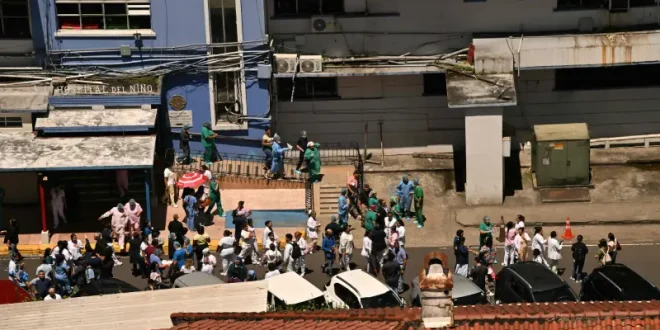
On a recent Friday, a formidable 7.7 magnitude earthquake struck off Panama’s southern Pacific coast, originating at a relatively shallow depth of 12.6 kilometers (7.8 miles). The tremor, centered near the rural community of La Pitaloza in Herrera province, caused considerable shaking that extended as far as San Jose, Costa Rica. While the vital Panama Canal reported no disruption to its trade operations, the quake inflicted damage on numerous homes, particularly in the Herrera and Los Santos provinces. Images depicted distressed elderly residents and visible cracks in structures, with reports of a historic building’s tower and residential balconies collapsing in Penonome.
In response to the seismic event, Panama City temporarily suspended two metro lines as a safety precaution, and the Ministry of Education ordered a nationwide closure of schools. The earthquake also triggered extensive tsunami warnings for coastal areas across Central and South America, including Panama, Colombia, Costa Rica, Ecuador, Peru, Nicaragua, Guatemala, El Salvador, Mexico, and extended to Hawaii and Chile, highlighting the broad potential for catastrophic secondary events.
Background: Panama’s Position on the Seismic Map
Panama, situated within the complex tectonic interplay of the Cocos, Nazca, Caribbean, and Panama Microplate, is no stranger to seismic activity. However, earthquakes of this specific magnitude (7.7) are relatively rare for the nation, making this event particularly noteworthy and alarming for its populace. The region’s geological setting, part of the larger Pacific Ring of Fire, explains the potential for such powerful quakes, often originating from subduction zones or complex strike-slip faults.
The resilience of the Panama Canal is a point of critical global interest. As one of the world’s most strategic waterways, facilitating roughly 5% of global maritime trade, any disruption to its operations carries immense economic consequences. Its engineering, designed to withstand significant seismic events, is regularly tested by nature. The fact that its operations remained normal underscores the robust construction and stringent safety protocols in place for this irreplaceable infrastructure.
Furthermore, the issuance of widespread tsunami warnings following an offshore earthquake is standard procedure for large magnitude events. Shallow quakes in marine environments have the potential to displace massive volumes of water, generating destructive waves that can travel across entire ocean basins, posing threats to distant coastlines.
Impact on Panama and the Region: Beyond the Epicenter
The immediate impact within Panama was a mix of structural damage and public disruption. The cracked homes and collapsed sections of buildings, particularly affecting vulnerable communities in Herrera, underscore the varying levels of building resilience and potentially outdated construction standards in some areas. The emotional toll on residents, particularly the elderly, as depicted by tears and fear, highlights the psychological shock waves that accompany such unexpected and powerful natural phenomena.
Beyond the direct physical damage, the suspension of metro services and nationwide school closures exemplify proactive safety measures, prioritizing human life over daily routine. While inconvenient, these decisions are crucial in preventing potential casualties from aftershocks or compromised structures.
Regionally, the extensive tsunami warnings painted a stark picture of interconnected vulnerability. The potential threat to multiple Pacific-facing countries, from Central America down to Chile and even across to Hawaii, illustrates the far-reaching consequences of a significant seismic event. While hazardous waves did not materialize to the most destructive extent, the system’s rapid response and alerts demonstrated a functional, albeit frequently tested, international disaster communication network.
Analysis: Lessons from the Tremor
The 7.7 magnitude earthquake in Panama offers several key insights into disaster preparedness and infrastructure resilience. Firstly, the unwavering operation of the Panama Canal stands as a testament to world-class engineering and proactive seismic design. Its ability to absorb such a powerful shock without faltering is crucial, not just for Panama, but for the global supply chain, preventing an economic ripple effect that could have dwarfed local damages.
Secondly, the widespread impact on residential structures, in contrast to the Canal, points to a clear disparity in building codes and enforcement. While critical infrastructure is often built to the highest seismic standards, older homes and less regulated constructions in rural or less developed areas remain highly vulnerable. This event serves as a stark reminder for Panama and other seismically active nations to reassess and upgrade general building codes and invest in retrofitting programs for existing vulnerable structures.
Thirdly, the timing of the quake, just days before a planned national evacuation drill, presents a unique “real-world test” scenario. While tragic, the event offered immediate lessons on the actual effectiveness of emergency response mechanisms — from rapid school closures and metro suspensions to the swift dissemination of tsunami warnings. This involuntary stress test can provide invaluable data for refining future drills and actual disaster protocols, highlighting both strengths and areas needing improvement in communication, public awareness, and rapid deployment.
Finally, the emotional distress reported by residents, especially in areas where such strong quakes are rare, underscores the importance of continuous public education. Even in regions with infrequent powerful tremors, a well-informed populace, familiar with safety protocols and evacuation routes, can significantly mitigate panic and potential harm during an actual event. This incident reinforces the idea that preparedness is not just about robust infrastructure, but also about building a resilient and informed community ready to react effectively when the earth moves.