Dost Pakistan Journeys Tours and safaris in the North & South Pakistsn
Related Articles



Yemen’s Escalating Conflict: A Deep Dive into Saudi-Houthi Tensions and Regional Ramifications
The Latest Flare-Up: A Dangerous Cycle of Retaliation
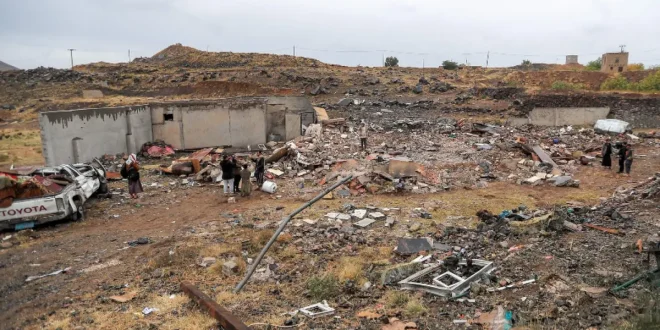
The long-running conflict in Yemen has recently witnessed a severe escalation, marked by a deadly exchange of fire between the Saudi-led coalition and Houthi forces. Reports from Houthi media indicate that coalition airstrikes targeted residential areas in Yemen’s capital, Sanaa, and the port city of Hodeida, resulting in at least 16 civilian casualties. Specific incidents included strikes on homes for cement factory workers and a family residence, highlighting the tragic toll on non-combatants.
In a swift and extensive retaliatory move, Houthi forces launched a barrage of ballistic missiles and drones deep into Saudi territory. Targets reportedly included vital oil installations such as an Aramco facility in Yanbu and the Rabigh refinery, as well as several key airports in Riyadh, Dammam, Najran, and Khamis Mushait. Saudi defense systems successfully intercepted two ballistic missiles aimed at Taif and Yanbu, with debris reported to have fallen near the holy cities of Makkah and Madina – a significant security concern for the Kingdom. Further Houthi attacks also struck coalition positions in Aden, the interim seat of Yemen’s internationally recognized government.
The heightened threat prompted the United States to update its travel advisories for Saudi Arabia and the UAE, warning of increased risks of Houthi attacks. Internationally, Saudi Arabia has garnered pledges of support, with Egypt offering troops and both Britain and France extending military assistance for defense.
Understanding the Quagmire: A Decade of Conflict
To fully grasp the gravity of the recent events, it’s essential to understand the complex origins and evolution of the Yemen civil war. The conflict effectively began in late 2014 when the Houthi movement, a Zaidi Shia group from northern Yemen, seized control of Sanaa, displacing the internationally recognized government of President Abdrabbuh Mansur Hadi. This move prompted a Saudi-led military intervention in March 2015, supported by a coalition of Arab states, with the stated aim of restoring Hadi’s government and curbing what they perceive as growing Iranian influence in their backyard.
The war quickly devolved into a brutal proxy conflict, characterized by widespread humanitarian suffering. Both sides have been accused of war crimes, and Yemen now faces one of the world’s worst humanitarian crises, with millions on the brink of famine and critical infrastructure decimated. The Houthis, despite facing a powerful air coalition, have demonstrated remarkable resilience and an increasing capacity to launch sophisticated cross-border attacks using drones and ballistic missiles, often attributed to Iranian support.
Geopolitically, Yemen’s location is strategically vital. It borders Saudi Arabia, sits at the mouth of the Bab-el-Mandeb strait – a critical chokepoint for global oil shipments – and overlooks the Red Sea. The conflict is thus not merely an internal struggle but a significant arena for regional power projection, primarily between Saudi Arabia and Iran, shaping the broader security architecture of the Middle East.
Pakistan’s Delicate Balance: Navigating Regional Instability
For Pakistan, the renewed escalation in Yemen presents a complex set of challenges and considerations, particularly given its historical and strategic ties with Saudi Arabia. As a significant non-NATO ally, Pakistan maintains strong economic, religious, and defense cooperation with the Kingdom. However, it also seeks to avoid direct entanglement in regional sectarian conflicts.
Economically, Pakistan, a net importer of oil, is vulnerable to any disruption in global energy markets. Attacks on Saudi oil facilities, even if unsuccessful in causing long-term damage, can trigger spikes in international oil prices, directly impacting Pakistan’s import bill and contributing to domestic inflation. Furthermore, any significant disruption to shipping lanes through the Bab-el-Mandeb strait could affect broader international trade routes that Pakistan relies upon.
From a security perspective, while Pakistan has previously declined to send troops for direct combat operations in Yemen, it has provided military training and equipment to Saudi forces and has a stated commitment to defending Saudi Arabia’s territorial integrity. The increasing regional instability creates a precarious situation, requiring careful diplomatic maneuvering to balance traditional alliances with the imperative of maintaining national interests and preventing sectarian divisions from spilling over. The presence of Pakistani expatriates in Saudi Arabia, while not directly threatened by these specific attacks, adds another layer of concern regarding regional security.
Analysis: A Vicious Cycle and Diminishing Hopes for Peace
The latest exchange of hostilities underscores a grim reality: the Yemen conflict is trapped in a devastating cycle of escalation with no clear end in sight. The Houthi’s ability to launch increasingly sophisticated and far-reaching attacks, even in the face of relentless coalition air superiority, demonstrates their evolving military capabilities and strategic resolve. Their targeting of Saudi Arabia’s economic backbone and holy sites is a deliberate tactic to exert pressure and demonstrate their enduring threat.
For Saudi Arabia and its allies, the repeated breaches of their air defenses, despite significant investments in missile defense systems, highlight persistent vulnerabilities. While intercepts prevent greater catastrophe, the sheer frequency and scale of Houthi attacks impose significant costs and strategic dilemmas. The offers of military assistance from Egypt, Britain, and France reflect growing international concern over the security of the Kingdom and the stability of global energy supplies.
The current trajectory significantly dims any prospects for a diplomatic resolution. UN-backed peace efforts have repeatedly faltered, often due to deep mistrust and irreconcilable demands from both sides. With both the coalition and the Houthis seemingly committed to achieving objectives through military means, the humanitarian crisis in Yemen is only set to deepen. The civilian death toll from the latest airstrikes is a stark reminder of who bears the brunt of this protracted conflict.
Ultimately, the latest flare-up serves as a potent illustration of regional instability. It solidifies the narrative of a protracted proxy war, with devastating consequences for the Yemeni people and significant implications for global energy security and regional power dynamics. Without a genuine commitment from all parties to de-escalation and a renewed, inclusive political process, the cycle of violence is likely to continue, perpetuating suffering and posing a continuous threat to broader Middle Eastern stability.
“`