Dost Pakistan Journeys Tours and safaris in the North & South Pakistsn
Related Articles
Peshawar-Torkham Highway Reopens: A Glimpse into Pakistan’s Tribal Security Challenges
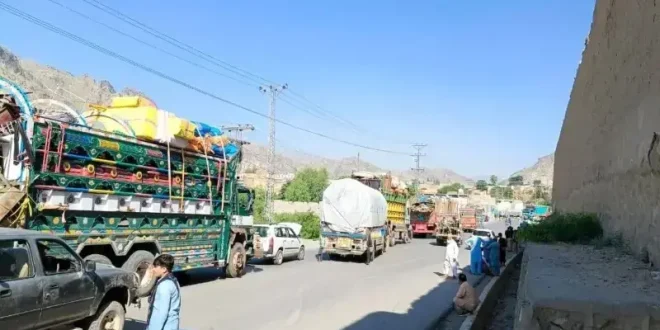
The vital Peshawar-Torkham Highway, a crucial artery connecting Pakistan with Afghanistan, has resumed operations after a temporary closure sparked by local protests. Residents from the Sultan Khel subtribe within the larger Zaka Khel community in Khyber district blocked the highway following a spate of “targeted killings” in the Landi Kotal area. The immediate trigger was the assassination of two Sultan Khel individuals on Friday, compounding anger already simmering from previous attacks on law enforcement personnel in the same vicinity. This recent unrest not only disrupted a key trade route but also temporarily halted the repatriation of Afghan families via the Torkham border, highlighting the volatile security situation.
A newly formed committee, primarily comprising younger Sultan Khel tribesmen, engaged with government officials to address their demands for enhanced security and peace. Among their immediate proposals were a complete ban on pillion riding or strict registration requirements for motorcyclists on the main road, measures aimed at curbing the anonymity often exploited by assailants. In a significant move demonstrating their leverage, the committee also agreed to end a local boycott of the polio vaccination drive and ensure the reopening of educational institutions, linking critical public services to their security demands.
Background: Khyber’s Strategic, Yet Volatile, Landscape
The Khyber district, nestled in Pakistan’s Khyber Pakhtunkhwa (K-P) province, holds immense strategic importance. It’s home to the legendary Khyber Pass, a historic gateway for trade and invasions linking Central Asia with the Indian subcontinent. The Torkham border crossing, a bustling commercial and transit point, further underscores its geopolitical significance. This region, once part of the Federally Administered Tribal Areas (FATA), underwent a monumental merger with K-P in 2018, a move intended to bring these historically semi-autonomous territories into the national mainstream and extend formal governance structures.
However, the transition has been fraught with challenges. The region’s complex tribal dynamics, where traditional jirga systems often coexisted with, or superseded, state authority, are slowly adapting to new administrative frameworks. Post-merger, the expectation was improved law and order and socio-economic development. Yet, the area continues to grapple with security threats, including a resurgence of militant activities, often attributed to groups operating from across the porous border with Afghanistan. The Zaka Khel, a prominent Pashtun tribe in Khyber, along with its various subtribes like the Sultan Khel, have historically played a crucial role in maintaining local order, but now find themselves at the forefront of demanding protection from the state.
Why it Matters: Erosion of Trust and Regional Instability
The closure of the Peshawar-Torkham Highway, even for a short duration, sends ripples far beyond the immediate vicinity. Firstly, it underscores a severe deficit in public trust. The community’s decision to block a national highway reflects a deep-seated frustration with the authorities’ perceived inability or unwillingness to protect lives from targeted violence. The fact that younger tribesmen felt compelled to form their own negotiating body, bypassing traditional elders who they felt hadn’t adequately represented their concerns, signals a significant shift in local power dynamics and a demand for greater accountability.
Secondly, the recurring nature of these “targeted killings” in a strategically vital area like Landi Kotal indicates a persistent security threat that impacts both civilian life and the state’s writ. Such incidents not only breed fear and instability among residents but also threaten the fragile peace and development efforts in the merged tribal districts. The temporary suspension of Afghan repatriation, a sensitive humanitarian and diplomatic undertaking, further illustrates the tangible consequences of insecurity along this critical border corridor. The demands concerning pillion riding are not trivial; they point to a local understanding of how assailants operate, suggesting a need for intelligence-led, practical security measures rather than broad, ineffective actions.
Impact on Pakistan: A Test of Governance and Security Strategy
For Pakistan, the situation in Khyber is a critical test of its post-FATA merger governance strategy and its broader national security posture. The Peshawar-Torkham Highway is not just a road; it’s a lifeline for cross-border trade, a conduit for regional connectivity under initiatives like the China-Pakistan Economic Corridor (CPEC), and a crucial route for managing the Pakistan-Afghanistan border. Disruptions to this highway directly impact Pakistan’s economic interests, its regional trade ambitions, and its ability to manage the influx and outflow of people across the border.
The inability to curb targeted killings in these areas also reflects broader internal security challenges, particularly the struggle against militant groups and their proxies. It puts immense pressure on security forces and local administration to not only conduct operations but also to build intelligence networks and foster community cooperation. The erosion of public confidence, particularly among the youth in these historically marginalized regions, poses a significant threat to long-term stability and could hinder the successful integration of these areas into Pakistan’s mainstream political and economic fabric.
Analysis and Way Forward: Beyond Temporary Truces
The reopening of the highway following negotiations is a positive step, but it represents a temporary truce rather than a lasting solution. The emergence of a “young Sultan Khel tribesmen” committee is particularly noteworthy. It underscores a generational shift, where traditional tribal structures are being challenged by younger voices demanding more direct engagement with the state and immediate, tangible results on security. This new dynamic presents both an opportunity and a challenge for the government: an opportunity to engage with a more results-oriented segment of the population, but also a challenge to navigate evolving tribal politics while asserting its authority.
The demands themselves—such as regulating pillion riding and linking the polio drive to security—are indicative of a community seeking practical solutions and using what leverage they have. For sustained peace and stability, the government must move beyond reactive measures. This requires a multi-pronged approach: robust intelligence gathering and counter-terrorism operations, coupled with meaningful socio-economic development programs that address the root causes of discontent. Crucially, it demands transparent and consistent dialogue with local communities, particularly with the newly vocal youth, to rebuild trust and ensure that security provisions are responsive to local needs and realities. Without a comprehensive strategy that combines effective security with inclusive governance and development, the Peshawar-Torkham Highway and the communities it serves will remain vulnerable to recurring cycles of unrest.