Dost Pakistan Journeys Tours and safaris in the North & South Pakistsn
Related Articles


North Korea’s Nuclear Stance: A Non-Negotiable Challenge to Global Stability and Diplomacy
Kim Yo Jong’s Firm Declaration Ahead of Xi Jinping’s Visit
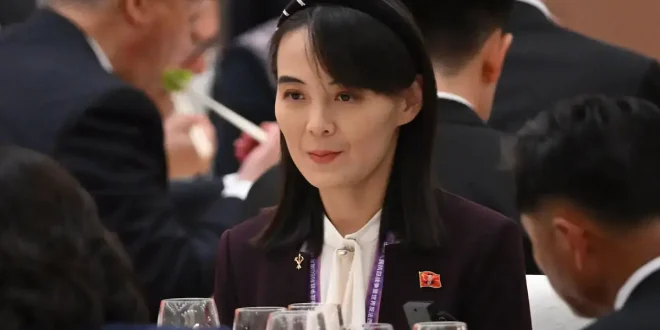
In a bold and unequivocal statement that reverberated across diplomatic circles, Kim Yo Jong, the influential sister of North Korean leader Kim Jong Un, recently asserted that Pyongyang’s nuclear weapons program is “absolutely non-negotiable.” This powerful declaration, broadcast via state media, arrived at a pivotal moment: on the eve of Chinese President Xi Jinping’s highly anticipated visit to Pyongyang. Beyond merely reiterating North Korea’s long-held position, Kim Yo Jong directly challenged Washington, dismissing its claims of a shared US-China denuclearization goal for North Korea during recent summits as “false information” and an “anachronistic dream.” Her words underscore a hardening of North Korea’s position, signaling a defiant stance that seeks to reshape international perceptions and diplomatic realities.
Pyongyang’s Enduring Nuclear Ambition: A Historical Overview
North Korea’s journey toward becoming a nuclear power is deeply entrenched in its strategic calculus, spanning decades of defiance against international norms and sanctions. Despite numerous UN Security Council resolutions explicitly forbidding its nuclear and ballistic missile programs, Pyongyang has persistently pursued these capabilities, viewing them as indispensable deterrents against external threats. This commitment culminated in the formal enshrinement of its nuclear status within the country’s constitution in 2023, solidifying its identity as a nuclear-armed state.
Past diplomatic overtures, including the high-stakes summits between Kim Jong Un and then-US President Donald Trump in 2018 and 2019, ultimately failed to bridge the fundamental chasm between North Korea’s demand for sanctions relief and Washington’s insistence on complete denuclearization. In the years since, Pyongyang has strategically leveraged evolving geopolitical landscapes. The ongoing conflict in Ukraine, for instance, has fostered a deepening strategic partnership between North Korea and Russia, with Pyongyang reportedly providing crucial military support to Moscow. This alliance, alongside China’s long-standing role as North Korea’s primary economic and political lifeline, provides a vital buffer against international isolation and sanctions pressure, enabling North Korea to continue advancing its military capabilities, as evidenced by Kim Jong Un’s recent push to boost missile production.
Geopolitical Ripples: Why North Korea’s Stance Matters
Kim Yo Jong’s emphatic statement carries profound implications for regional stability in Northeast Asia and the broader international non-proliferation regime. Firstly, it sends an unequivocal message to the United States, South Korea, and Japan: North Korea’s nuclear arsenal is a permanent fixture of its national security architecture, not a bargaining chip to be traded. This stance further entrenches a dangerous military balance in the region, making any future diplomatic pathways toward denuclearization appear increasingly improbable.
Secondly, the precise timing of the declaration, coinciding with President Xi Jinping’s rare visit, is a calculated diplomatic maneuver by Pyongyang. It aims to preempt any potential discussions or agreements on denuclearization that Beijing might have with Washington on North Korea’s behalf. By publicly drawing a red line, Pyongyang asserts its sovereign independence on core security matters, even to its most crucial ally. This bold move complicates China’s balancing act between its alliance with North Korea and its efforts to manage relations with the United States. Furthermore, the public rejection of US claims regarding denuclearization talks underscores the significant divergence in strategic objectives and perceptions between Washington and Pyongyang, complicating efforts to de-escalate tensions and manage the nuclear threat in the Indo-Pacific.
Indirect Implications for Pakistan: A Broader Nuclear Discourse
While North Korea’s actions unfold in a distant theater, its defiant nuclear posture contributes to a global discourse on nuclear weapons and non-proliferation that holds indirect relevance for Pakistan. Pakistan, as a responsible nuclear state, maintains its nuclear program as a minimum credible deterrent for national security, a decision rooted in distinct historical and geopolitical contexts. However, North Korea’s persistent insistence on the “irreversibility” of its nuclear status and its ability to advance these capabilities despite severe international sanctions adds complex layers to the international community’s struggle with non-proliferation.
Pyongyang’s case can fuel debates about the efficacy and fairness of existing non-proliferation frameworks. For nations like Pakistan, which advocate for a non-discriminatory and equitable approach to nuclear disarmament and non-proliferation, the challenges posed by North Korea underscore the inherent complexities of global nuclear governance. It reinforces the critical need for consistent international norms and robust diplomatic mechanisms to prevent proliferation, while simultaneously acknowledging the legitimate security concerns of sovereign states in a complex world.
Analysis: A Strategic Power Play Amidst Shifting Geopolitical Sands
Kim Yo Jong’s statement is more than just rhetoric; it’s a strategic power play. It serves as a pre-emptive strike, solidifying North Korea’s nuclear status in the international arena before critical diplomatic engagements. By setting a definitive boundary ahead of Xi’s arrival, Pyongyang effectively limits Beijing’s capacity to negotiate or make concessions regarding denuclearization on its behalf. This move signals that while North Korea values its alliances, its core national security policies are domestically driven and impervious to external pressures.
Moreover, the aggressive debunking of US claims about denuclearization discussions serves several strategic aims: it undermines Washington’s diplomatic narrative, reinforces North Korea’s image as an unyielding sovereign nation, and bolsters domestic support for the leadership’s “byungjin” policy – the dual pursuit of economic development and nuclear armament. With the global geopolitical landscape shifting rapidly due to conflicts like the war in Ukraine, North Korea perceives a strategic window to solidify its nuclear state status, leveraging its newfound significance to both Russia and, implicitly, China. This hardening of Pyongyang’s stance suggests that diplomatic breakthroughs on denuclearization will remain profoundly challenging, if not entirely unattainable. The world is increasingly being compelled to contend with a nuclear-armed North Korea as a permanent fixture on the global stage, necessitating a fundamental recalibration of strategic approaches from all major powers.