Dost Pakistan Journeys Tours and safaris in the North & South Pakistsn
Related Articles



Irrigation Water Shortage in Sindh Reaches Alarming Level: An Economic and Agricultural Catastrophe Looms
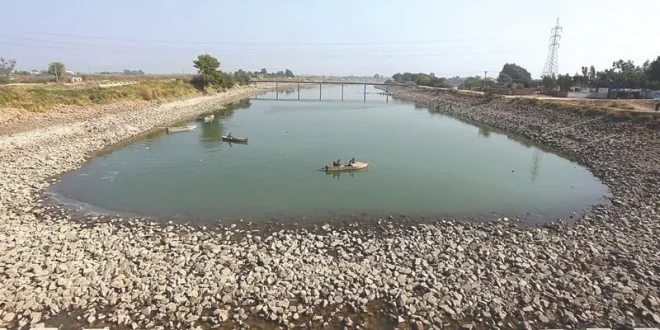
The lifeblood of agriculture in Pakistan’s lower riparian province of Sindh is under severe threat. As the crucial Kharif crop season peaks, the region faces a critical irrigation water shortage, reaching alarming levels across its key canal systems. This impending crisis not only jeopardizes the livelihoods of millions but also poses a significant risk to national food security and economic stability.
What Happened: A Deepening Crisis at Peak Season
Sindh’s Right Bank Canal System, fed by the Sukkur Barrage, is currently grappling with an acute water deficit. Areas critical for agriculture, including Larkana, Qambar-Shahdadkot, Dadu, Sukkur districts, and lands in Balochistan served by the North West Canal (NWC), are experiencing unprecedented shortfalls. Official data reveals a staggering depletion in canal flows: the NWC is down by 64.1%, the Rice Canal by 38.0%, and the Dadu Canal by a drastic 82.0%.
This severe scarcity at the tail-ends of the irrigation network is reportedly exacerbated by significant over-withdrawals upstream. Punjab, the upper riparian province, is accused of drawing approximately 21.35% more water than its allocated share from the Indus River System, with similar excesses observed at the Taunsa Barrage. Further complicating the situation is the continued operation of the controversial Chashma-Jhelum (CJ) Link Canal, diverting a substantial volume of water that Sindh argues should flow downstream. While Sindh has indented for 130,000 cusecs, only 100,000 cusecs are being released, creating a massive disparity that local farmers and officials describe as an “economic massacre.”
Background: Pakistan’s Water Economy and Inter-Provincial Disputes
Pakistan’s economy is heavily reliant on agriculture, with a vast network of canals, stemming from the Indus River System, forming its backbone. Water distribution among its four provinces – Punjab, Sindh, Khyber Pakhtunkhwa, and Balochistan – is governed by the Water Apportionment Accord of 1991. This landmark agreement aimed to ensure equitable sharing of water resources, taking into account historical usage and provincial needs, particularly during critical crop seasons like Kharif and Rabi.
The Indus River System Authority (IRSA) was established to implement and monitor this accord, mediating disputes and regulating water flows. However, as a lower riparian province, Sindh has historically voiced concerns over perceived unfair distribution and upstream over-withdrawals, especially during periods of low river flows. These inter-provincial water disputes are a recurring feature of Pakistan’s political landscape, often flaring up when water scarcity intensifies.
Beyond these disputes, Pakistan faces a broader challenge of increasing water scarcity, driven by rapid population growth, climate change impacting glacier melt and rainfall patterns, and inefficient water management practices. This confluence of factors places immense pressure on an already strained resource, making adherence to agreed-upon distribution mechanisms more critical than ever.
Why It Matters: Devastating Consequences for Farmers and Food Security
The immediate repercussions of this water crisis are catastrophic for Sindh’s agricultural sector. Farmers are unable to prepare their fields or transplant paddy nurseries, signalling a potential widespread failure of the Kharif crop, particularly rice. Sindh is a major contributor to Pakistan’s agricultural output, producing 5.5 million tonnes of rice annually and generating $1.4 billion in rice exports. Any significant disruption translates directly into:
- Agricultural Devastation: Loss of vital cash crops and staple foods, leading to reduced yields and widespread crop failure.
- Economic Ruin for Farmers: Loss of income, increased debt, and deepened poverty for millions of agrarian households. This directly impacts rural livelihoods and social stability.
- Food Security Threat: A substantial reduction in domestic agricultural production would necessitate increased food imports, straining national reserves, and could lead to inflationary pressures on food prices across the country.
- Regional Economic Impact: The “economic massacre” described by political leaders underscores the potential for severe regional economic contraction, eroding Sindh’s significant contribution (67% of national agricultural output) to the national economy.
- Heightened Inter-Provincial Tensions: The crisis exacerbates long-standing grievances between Sindh and Punjab, potentially undermining national cohesion and trust in federal institutions like IRSA.
Impact on Pakistan: National Implications and Economic Strain
The water crisis in Sindh is not merely a provincial issue; its ripple effects are felt nationwide:
- National Food Basket Stress: As a significant contributor to Pakistan’s food supply, Sindh’s agricultural distress directly threatens the country’s overall food security and nutritional status.
- Economic Instability and Inflation: Reduced agricultural output fuels inflation, particularly in food prices, impacting household budgets nationwide. A decline in agricultural exports also impacts precious foreign exchange reserves, further straining the national economy.
- Political Unrest: Persistent water disputes, if unaddressed, can lead to widespread protests, social unrest, and instability, distracting from other critical national challenges.
- Long-Term Climate Vulnerability: The crisis underscores Pakistan’s extreme vulnerability to climate change and the urgent need for a robust, long-term national water strategy that accounts for fluctuating water availability and increasing demand.
- International Image: The inability to manage vital shared resources effectively can reflect poorly on Pakistan’s governance and stability on the global stage.
Analysis: Policy Failures, Systemic Challenges, and the Way Forward
The current crisis in Sindh is a stark reminder of the complex interplay between resource management, inter-provincial politics, and economic stability in Pakistan. At its core, the issue appears to stem from a perceived failure in the strict implementation of the Water Apportionment Accord of 1991 by IRSA, with accusations of preferential treatment and upstream over-withdrawals during periods of scarcity. The operational status of the controversial Chashma-Jhelum Link Canal during low flows remains a significant point of contention, seen by Sindh as a direct violation of its water rights.
Beyond the immediate allocation disputes, systemic challenges plague Pakistan’s water sector. Decades of underinvestment in modern irrigation infrastructure, significant water losses due to seepage and inefficient flood irrigation techniques, and a lack of real-time, transparent water flow data contribute to the fragility of the system. Pakistan’s limited water storage capacity exacerbates the problem, meaning excess monsoon waters are often lost, leaving the country vulnerable during dry spells.
To avert an unfolding catastrophe and ensure sustainable water management, urgent, multi-faceted intervention is required:
- Strict Adherence to the 1991 Accord: IRSA must rigorously enforce the Water Apportionment Accord, ensuring equitable distribution based on technical data rather than political expediency. Transparency in water flow data at all barrages is paramount to build trust among provinces.
- Review of Link Canal Operations: The federal government needs to facilitate a transparent and consensus-based review of the Chashma-Jhelum Link Canal’s operation, especially during critical low-flow periods, ensuring it aligns with the accord’s spirit and letter.
- Modernization of Irrigation Infrastructure: Long-term investment in rehabilitating and modernizing aging canals, lining channels to prevent seepage, and promoting water-efficient irrigation technologies (drip, sprinkler systems) is essential.
- Inter-Provincial Dialogue: Federal authorities must proactively mediate and foster constructive dialogue between provinces to resolve disputes amicably and build consensus on future water management strategies.
- National Water Strategy: A comprehensive, long-term national water policy is desperately needed. This strategy must integrate climate change adaptation, enhance water storage capacity, promote water conservation, and ensure sustainable use across all sectors.
The current irrigation water shortage in Sindh is a grave challenge demanding immediate, decisive action. Failure to address this crisis effectively and equitably will not only devastate Sindh’s agriculture and rural livelihoods but will also inflict severe damage on Pakistan’s overall economic stability, food security, and inter-provincial harmony. The time for urgent high-level intervention and robust policy implementation is now, before irreversible damage takes hold.