Dost Pakistan Journeys Tours and safaris in the North & South Pakistsn
Related Articles

“`html
Pakistan’s Rule of Law Under Scrutiny: The Imran Khan Health Crisis and Judicial Imperative
The Latest Development: A Direct Appeal to Justice
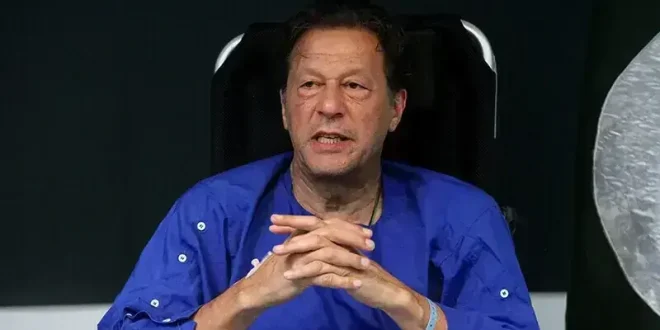
In a significant move, prominent opposition figures in Pakistan have directly appealed to the nation’s highest judicial authorities concerning the alarming health conditions and alleged denial of fundamental rights for former Prime Minister Imran Khan and his wife, Bushra Bibi. Mahmood Khan Achakzai, Leader of the Opposition in the National Assembly, and Allama Raja Nasir Abbas, Leader of the Opposition in the Senate, have formally written to the Chief Justices of the Supreme Court, the Islamabad High Court, and what they referred to as the Federal Constitutional Court. Their urgent plea calls for these letters to be immediately converted into petitions for the enforcement of fundamental human rights, demanding judicial intervention to ensure humane treatment and compliance with existing court orders and international obligations.
Context: A Politically Charged Detention and Alleged Defiance
The detention of Imran Khan, founder of the Pakistan Tehreek-e-Insaf (PTI) party, since August 2023, has been a focal point of intense political debate and legal contestation in Pakistan. Following his removal from power through a no-confidence vote, Khan faced numerous legal proceedings, culminating in his arrest. Since then, his access to family, legal counsel, and personal physicians has reportedly been severely restricted, often in defiance of explicit court directives.
Concerns over Khan’s health have escalated, with his legal team citing cardiac, blood pressure, and vision issues, alongside prolonged solitary confinement. A pivotal moment occurred on August 18, when the Supreme Court directed his transfer to Shifa International Hospital for independent medical evaluation. However, this order was allegedly circumvented, with Khan briefly taken to a state-run facility before being returned to jail, and the crucial independent medical board never constituted. This incident, highlighted by the opposition, underscores a pattern of alleged executive non-compliance with judicial mandates.
Further exacerbating the situation is the condition of Bushra Bibi, who was arrested in January 2024. She reportedly suffers from a serious retinal condition requiring a second eye operation, yet access to specialists of her choice and comprehensive medical records has allegedly been denied. The opposition’s letter emphasizes that the protracted solitary confinement of both individuals, reportedly for nearly eleven months, directly contravenes the United Nations Standard Minimum Rules for the Treatment of Prisoners (the Mandela Rules), which stipulate a maximum of 15 consecutive days for solitary confinement.
Impact: Erosion of Trust and International Scrutiny
This evolving crisis presents a multifaceted challenge to Pakistan’s foundational institutions and its global standing. The opposition’s powerful assertion that “the rights at stake are not privileges of a prisoner” frames the issue as a critical test of the state’s commitment to constitutional guarantees for all citizens.
- Undermining Judicial Authority: The persistent allegations of state bodies defying the Supreme Court’s orders pose a serious threat to the judiciary’s authority and credibility. If judicial directives can be ignored with impunity, it risks eroding public trust in the justice system and undermining the delicate balance of power essential for a functioning democracy.
- Exacerbating Political Instability: The continued incarceration and alleged mistreatment of a former Prime Minister and his wife, particularly amid ongoing political and economic volatility, can fuel public discontent. Such developments deepen societal polarization and potentially destabilize the already fragile political landscape.
- Damaging International Reputation: The case has attracted considerable international attention, notably from the UN High Commissioner for Human Rights, Volker Türk, who has called for Khan’s fair treatment and release. Pakistan is a signatory to key international human rights treaties, including the International Covenant on Civil and Political Rights (ICCPR) and the Convention against Torture (CAT). Non-adherence to these commitments, especially in a high-profile case, can severely tarnish the nation’s image on the global stage, impacting diplomatic relations, foreign investment, and its standing within the international human rights community.
The letter explicitly warns that “the reputation of Pakistan’s institutions, including its courts, is now being judged by how this case is handled,” highlighting the far-reaching implications beyond domestic politics.
Analysis: A Litmus Test for Pakistan’s Rule of Law
The appeal from opposition leaders marks a crucial moment, transforming what might be seen as individual grievances into a profound constitutional question. By urging the chief justices to treat their communication as a petition for the enforcement of fundamental rights and to issue a writ of mandamus, the opposition is directly challenging the judiciary to assert its constitutional supremacy and compel executive authorities to comply with the law.
The demands are precise and comprehensive, reflecting a deep concern for both the immediate well-being of the incarcerated couple and the broader principles of justice:
- Immediate Medical Care: Demanding Khan’s transfer to Shifa International Hospital within 24 hours, under the supervision of an independent medical board including his personal physicians, Dr. Faisal Sultan and Dr. Uzma Khan.
- Humane Detention Conditions: Calling for an immediate end to solitary confinement and the restoration of fundamental rights such as weekly meetings, regular calls with family, unhindered access to lawyers, and access to books, newspapers, and recreation.
- Bushra Bibi’s Treatment: Insisting on her transfer to a specialized eye hospital for her second operation, performed by specialists of her family’s choice, with full transparency of medical records.
- Accountability and Oversight: Advocating for the appointment of a court officer to oversee compliance and the urgent hearing of contempt petitions against those who allegedly defied previous court orders.
- International Compliance: Directing the federal government to bring all detention conditions into conformity with Pakistan’s obligations under the ICCPR and CAT.
This legal and political maneuver forces the judiciary into a critical position. Upholding previous orders and ensuring fundamental rights for all, including prisoners, is paramount for its institutional credibility and the nation’s democratic health. Conversely, inaction risks perpetuating the perception of judicial impotence against executive overreach and further tarnishing Pakistan’s image globally.
The fate of Imran Khan and Bushra Bibi now rests heavily on the shoulders of Pakistan’s chief justices. Their response will be meticulously observed, not only by Pakistani citizens but by the international community, serving as a definitive indicator of the strength of the nation’s rule of law and its commitment to human rights in a deeply polarized political environment.
“`