Dost Pakistan Journeys Tours and safaris in the North & South Pakistsn
Related Articles
“`html
PTI’s Stance: Navigating National Government Proposals, New Provinces, and Internal Dissent
The News
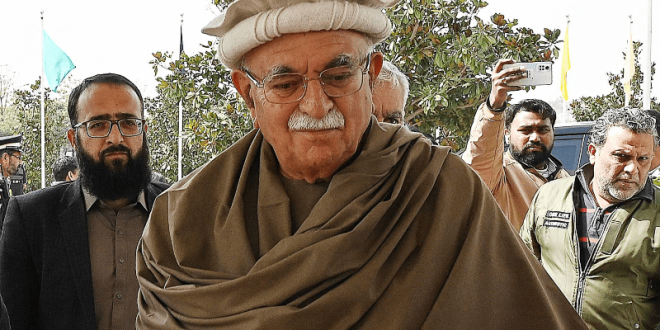
The Pakistan Tehreek-e-Insaf (PTI) has officially distanced itself from a proposal by Opposition Leader Mehmood Khan Achakzai (of the Pakhtunkhwa Milli Awami Party – PkMAP) for the formation of a national government in Pakistan. Following a joint parliamentary meeting, PTI members overwhelmingly rejected the idea, clarifying that it belonged solely to Achakzai’s party and would not receive PTI’s endorsement. This decision underscores the PTI’s continued skepticism towards collaborative governance arrangements in the current political climate.
Simultaneously, the party has adopted a cautious approach regarding the sensitive issue of new provinces. PTI parliamentarians have decided against issuing any premature policy statements until the government presents its draft proposal. This stance was reportedly influenced by directives from PTI’s founding chairman, Imran Khan, communicated from Adiala jail. The party plans for an internal discussion next week to finalize its position and has opted to form a coordination committee to ensure unified decision-making across its parliamentary wings.
Adding to the day’s events, the meeting was marked by a heated exchange between PTI’s Secretary General, Salman Akram Raja, and its parliamentary leader in the Senate, Barrister Ali Zafar. The argument reportedly flared over concerns about party members not adhering to official policy statements, hinting at internal communication challenges and potential disunity within the ranks, especially with much of its leadership operating under difficult circumstances.
Background and Context
The PTI’s recent decisions are set against a backdrop of significant political turbulence in Pakistan. Since the general elections, the country has been grappling with allegations of widespread rigging, leading to a fragmented mandate and an atmosphere of mistrust between political blocs. The PTI, despite claiming a popular victory, finds itself in opposition, with its top leadership, including Imran Khan, incarcerated and many key figures underground or facing legal challenges.
Achakzai’s call for a “national government” is typically floated during times of national crisis or profound political instability. Such a government, often comprising representatives from major political parties, aims to create a consensus-based administration to steer the country through challenging periods, sometimes even necessitating constitutional reforms. However, for a party like PTI, which alleges that the current government lacks legitimacy due to electoral manipulation, supporting a national government might be perceived as legitimizing the very system it contests.
The debate over “new provinces” is a long-standing and complex issue in Pakistan. Proponents argue that creating smaller administrative units can lead to better governance, more equitable resource distribution, and address the specific cultural and developmental needs of distinct regions (e.g., South Punjab, Seraikistan, Hazara). Opponents often raise concerns about ethnic fragmentation, financial viability, and the potential for political maneuvering behind such proposals. For any major political party, formulating a stance on new provinces requires careful consideration of its electoral base, national unity, and potential political repercussions.
The internal discord highlighted by the Salman Akram Raja and Ali Zafar exchange is emblematic of the challenges faced by PTI. With its central leadership constrained, maintaining party discipline, ensuring consistent messaging, and fostering internal cohesion become incredibly difficult. The mention of Information Secretary Sheikh Waqas Akram issuing policy statements daily from underground speaks volumes about the extraordinary circumstances under which the party is operating, further complicating internal communication and policy adherence.
Impact on Pakistan’s Political Landscape
The PTI’s explicit rejection of a national government proposal signals a continuation of the highly polarized political environment in Pakistan. Instead of moving towards a potential consensus-based approach, this decision suggests that the PTI intends to maintain its confrontational stance, challenging the legitimacy of the current government and pushing for its own narrative. This could prolong political uncertainty and hinder efforts towards broad-based reforms or stability initiatives that require cross-party cooperation.
Regarding new provinces, the PTI’s cautious approach indicates an awareness of the issue’s sensitivity and potential for political exploitation. By awaiting the government’s draft and forming a coordination committee, PTI aims to present a unified and well-thought-out response, rather than reacting impulsively. This issue, if genuinely pursued, has the potential to reshape Pakistan’s administrative and political map, impacting regional power dynamics, resource allocation, and even national identity. The PTI’s eventual stance will be crucial in shaping the national debate and could either contribute to a constructive dialogue or further deepen existing fault lines.
Furthermore, the public surfacing of internal friction within PTI, particularly between prominent leaders, could have broader implications. While typical in any large political party, such disagreements, especially at this critical juncture, might be perceived as a sign of weakening internal discipline or a struggle for influence in Imran Khan’s absence. This could potentially diminish the party’s effectiveness as an opposition force and create an impression of disarray, impacting public perception and the morale of its vast support base.
Analysis: PTI’s Strategic Maneuvers Amidst Adversity
PTI’s decision to disown Achakzai’s national government proposal is a calculated strategic move. For the party, which has consistently argued that the recent elections were rigged, participating in a national government would be tantamount to legitimizing what it considers an unconstitutional and manipulated political setup. By rejecting this proposal, PTI reinforces its narrative of a stolen mandate and maintains its position as the primary opposition force, unwilling to compromise on its core principles or concede to the current political arrangement. This rigid stance might limit avenues for dialogue but solidifies its base’s trust in its uncompromising fight for what it perceives as justice.
The party’s measured approach to the new provinces issue reflects a more pragmatic engagement with policy. Under direct instruction from Imran Khan, PTI is carefully studying the government’s proposal rather than immediately rejecting or embracing it. This suggests that while the party maintains a confrontational political posture, it is also prepared to engage with specific governance issues that have significant public interest. The formation of a coordination committee highlights an attempt to centralize decision-making and project a unified front, essential for navigating a complex issue without exposing internal divisions.
The heated exchange between Salman Akram Raja and Ali Zafar, however, lays bare the immense internal pressures and structural challenges facing PTI. With its charismatic leader incarcerated and many key members operating in secrecy, the party struggles with effective communication and maintaining a cohesive narrative. Such public displays of discord could weaken the party’s ability to present a united front against its opponents and raise questions about its long-term stability and leadership succession. It underscores the difficulty of leading a mass movement when its core figures are systematically sidelined.
In essence, PTI is attempting to walk a tightrope: maintaining a principled and confrontational stance against the perceived illegitimacy of the current government, while simultaneously engaging cautiously with policy matters like new provinces, all while battling internal communication and discipline issues under extreme duress. The outcomes of these strategic choices will not only define PTI’s future trajectory but also profoundly influence the stability and democratic health of Pakistan’s political system in the coming months.
“`