Dost Pakistan Journeys Tours and safaris in the North & South Pakistsn
Related Articles


India’s Afghanistan Objectives: Destabilizing Pakistan, Envoy Tells UNSC Amid Rising Regional Tensions
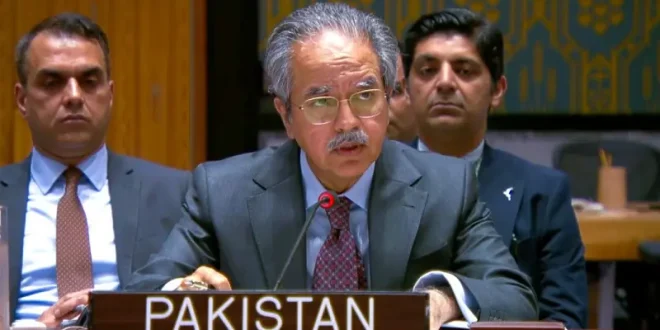
A heated exchange at a recent UN Security Council (UNSC) meeting on Afghanistan laid bare the simmering tensions and deep-seated mistrust between regional rivals India and Pakistan. Pakistan’s Permanent Representative to the UN, Ambassador Asim Iftikhar Ahmad, leveled a forceful accusation against India, asserting that its activities in Afghanistan are “solely driven by the singular goal of destabilizing Pakistan,” a claim that underscores the complex geopolitical chessboard of South Asia.
What Happened at the UN Security Council?
During the UNSC session focused on Afghanistan, Ambassador Ahmad responded sharply to remarks by Afghanistan’s representative and took aim at India. He contended that India’s purported development and humanitarian assistance in Afghanistan serves as a cover for a more insidious agenda: fostering instability in Pakistan. Specifically, he accused India of actively supporting terrorist groups such as the Tehreek-i-Taliban Pakistan (TTP) and the Balochistan Liberation Army (BLA), which Islamabad claims operate from Afghan soil.
Ambassador Ahmad also used the platform to decry the Afghan Taliban’s persistent failure to take definitive action against various militant factions—including TTP, BLA, Islamic State-Khorasan (IS-K), and the East Turkestan Islamic Movement (ETIM)—which he stated are operating with impunity from Afghanistan. He defended Pakistan’s recent counter-terrorism strikes in Afghanistan, which occurred in March, clarifying that these were “precise, deliberate and professional” operations targeting terrorist infrastructure, such as drone storage and ammunition sites, and emphatically not civilian facilities as alleged by the Afghan Taliban.
Further escalating the diplomatic broadside, Pakistan’s envoy lambasted India as a “serial violator of international law” and a “state sponsor of terrorism,” citing its record in India-occupied Kashmir, alleged breaches of the Indus Waters Treaty, and even referencing extraterritorial assassinations. He also voiced strong reservations about the reporting credibility of the UN Assistance Mission in Afghanistan (UNAMA), suggesting it underplayed the severe cross-border terrorist threats facing Pakistan and externalized blame for Afghanistan’s internal woes.
Background: A Region Embroiled in Historical Rivalries
The dramatic accusations at the UNSC are not isolated but reflect a deeply entrenched history of animosity and strategic competition between India and Pakistan, with Afghanistan often caught in the crossfire. For decades, Afghanistan has been a complex nexus of regional and international power dynamics, significantly impacting its neighbours.
- India-Pakistan Rivalry: The two nuclear-armed nations have an adversarial relationship rooted in the partition of 1947, the unresolved Kashmir dispute, and a long history of proxy allegations. Both countries have viewed Afghanistan through the lens of their bilateral rivalry, seeking influence to counter the other.
- Pakistan’s Afghanistan Conundrum: Pakistan shares a long, porous border with Afghanistan and has historically been profoundly affected by its neighbour’s instability. While Pakistan maintained ties with the Afghan Taliban in the 1990s, post-9/11, it officially aligned with the global war on terror. However, the Afghan Taliban’s return to power in 2021 complicated matters. Islamabad initially hoped for cooperation against the TTP, a domestic militant group ideologically aligned with the Afghan Taliban but determined to overthrow the Pakistani state. This hope has largely been dashed by a resurgence of TTP attacks.
- India’s Evolving Afghan Strategy: India was a significant development partner in Afghanistan during the two decades of the US-backed government, investing billions in infrastructure and aid. Its post-2021 engagement with the Taliban, including reopening its embassy, has been interpreted by Pakistan as a cynical, opportunistic shift. While India cites humanitarian concerns and safeguarding its strategic interests, Pakistan views this as a calculated move to gain leverage and further destabilize Pakistan, regardless of the Taliban’s global isolation.
- Cross-Border Terrorism: The TTP and BLA are designated terrorist organizations responsible for numerous attacks within Pakistan. Pakistan has consistently accused India of providing financial and logistical support to these groups, particularly the BLA, to disrupt its western provinces and impede projects like the China-Pakistan Economic Corridor (CPEC). The unchecked presence of such groups in Afghanistan exacerbates Pakistan’s security challenges.
Why These Allegations Matter: Implications for Regional and Global Security
The heated exchange at the UNSC carries significant weight for regional and global stability:
- Escalating Regional Tensions: Public accusations of state-sponsored terrorism on an international stage further inflame the already fraught relationship between India and Pakistan, two nuclear-armed neighbors, increasing the risk of miscalculation or overt confrontation.
- Setback for Counter-Terrorism: The Afghan Taliban’s perceived unwillingness or inability to curb terrorist groups operating from its soil undermines international counter-terrorism efforts and reinforces fears that Afghanistan could revert to being a sanctuary for global militants, reminiscent of its pre-9/11 era.
- Humanitarian Crisis: The unresolved security situation directly impacts Afghanistan’s severe humanitarian crisis. Continued conflict, cross-border tensions, and the Taliban’s governance issues hinder aid delivery and international efforts to alleviate suffering.
- Sovereignty and International Law: Pakistan’s justification of its cross-border strikes as acts of self-defense highlights a contentious area of international law concerning a state’s right to pursue terrorists across borders when the host nation fails to act.
- Credibility of UN Bodies: Pakistan’s critique of UNAMA’s reporting could weaken trust in multilateral assessments of the Afghan situation, potentially complicating coordinated international responses.
Impact on Pakistan: Bearing the Brunt of Instability
Pakistan has consistently emphasized its position as a primary victim of the prolonged instability and terrorism emanating from Afghanistan. Ambassador Ahmad’s address vividly illustrated this impact:
- Severe Human and Material Losses: Pakistan reported over 5,300 terrorist incidents and tragically lost more than 1,200 lives to terrorism in 2025 alone. Investigations often trace the planning of these attacks, such as the vehicle-borne IED in Khyber Pakhtunkhwa, back to Afghan territory.
- Intensified Security Challenges: The freedom afforded to militant groups in Afghanistan, coupled with their access to advanced weaponry left behind by foreign forces (with over 290 seizures reported by Pakistan), has significantly exacerbated Pakistan’s internal security landscape, demanding costly and extensive counter-terrorism operations.
- Economic and Social Strain: The persistent threat of terrorism, coupled with the ongoing burden of hosting millions of Afghan refugees and disruptions to border trade, places immense economic and social strain on Pakistan.
- Diplomatic Frustration and Unilateral Action: Despite extensive diplomatic efforts and mediation from friendly nations, the Afghan Taliban’s “intransigence” and refusal to publicly condemn or take action against these groups has led Pakistan to a point of profound frustration, compelling it to declare its intent to act in self-defense when necessary, in conformity with international law.
Analysis: Geopolitical Maneuvering and Unmet Expectations in a Volatile Region
Pakistan’s sharp denunciation at the UNSC underscores a fundamental divergence in regional perspectives and highlights the deepening mistrust between key players. The accusation that India’s Afghan policy is singularly focused on destabilizing Pakistan is a consistent theme in Islamabad’s foreign policy discourse, portraying its western border challenges as a product of external machinations rather than solely domestic or Afghan-originating issues.
While India’s engagement with the Taliban post-2021 can be viewed as pragmatic—aimed at securing its strategic interests, protecting its past investments, and preventing Afghanistan from becoming an exclusive hostile sphere—Pakistan frames this pragmatism as opportunistic support for anti-Pakistan elements. This narrative fuels the perception of a relentless proxy war, complicating any potential de-escalation.
The Afghan Taliban finds itself in a precarious position. While it seeks international recognition and humanitarian aid, its ideological commitments and complex relationships with various militant groups, including the TTP, appear to constrain its ability or willingness to meet international demands for counter-terrorism. This “intransigence,” as Pakistan described it, creates a fertile ground for continued instability and external intervention. The “window for course correction,” as Pakistan warns, seems to be rapidly narrowing.
The international community faces an unenviable task: how to engage with the Taliban regime, which has proven resistant to calls for inclusive governance and human rights, while simultaneously addressing the very real threat of transnational terrorism. Pakistan’s declaration of its right to self-defense, including cross-border strikes, suggests a potential for escalating military actions, which could further destabilize an already fragile region and draw in other actors. The UNSC session, therefore, was not merely a forum for diplomatic accusations but a stark warning of the volatile dynamics threatening peace and security across South Asia and beyond.