 Dost Pakistan Journeys Tours and safaris in the North & South Pakistsn
Related Articles


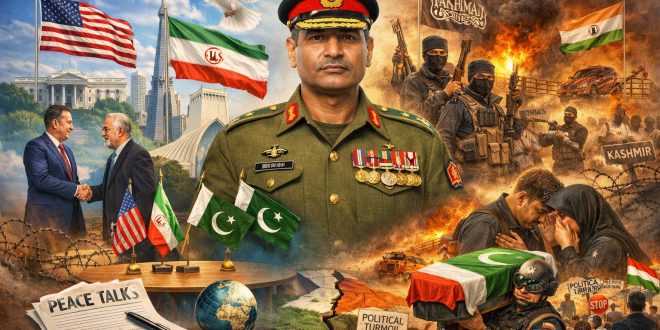
Security sources have revealed that Pakistan is handling a highly complex issue involving the United States and Iran, where its role is that of a mediator. According to senior security officials, Field Marshal Asim Munir’s only interest in the U.S.–Iran agreement is peace and stability. The world is gradually realizing the depth of Pakistan’s diplomatic efforts.
Officials emphasized that the greatest victory is one achieved without fighting. Pakistan is not interested in headline diplomacy; it has fulfilled all requirements of mediation. However, certain elements continue to create disruption, and Israel’s influence over international media remains a challenge.
Countries such as Qatar, Saudi Arabia, Türkiye, Egypt, and the UAE also deserve credit for supporting Pakistan’s peace initiative. Pakistan maintains distinct relationships with Iran, Saudi Arabia, the United States, and other nations, balancing its diplomacy with prudence and neutrality.
Regarding Abbas Araqchi’s visit to India, sources stated that it makes no difference to Pakistan. “We do not view matters through a narrow lens,” they said, reaffirming Pakistan’s confidence in its independent foreign policy.
Counterterrorism and Internal Security: Security sources disclosed that Pakistan continues to face internal challenges, particularly terrorism. Modern warfare now relies heavily on technology. Between January 2025 and June 2026, 2,170 terrorist incidents occurred—64% in Khyber Pakhtunkhwa and 34% in Balochistan. Up to June 15, 2026, 32,092 intelligence-based operations were conducted, resulting in the elimination of 1,861 terrorists. During these operations, 640 individuals, including soldiers, law enforcement personnel, and civilians, embraced martyrdom.
Of these, 862 terrorists were killed in the “Ghazab Lilhaq” operation in Afghanistan, while 999 were neutralized within Pakistan. The defense budget stands at 300 billion rupees—a 17% increase—most of which goes toward essential expenditures, leaving limited funds for development. In contrast, India’s defense budget remains significantly higher.
Kashmir and Regional Tensions: Security officials noted that Pakistan’s first Nishan-e-Haider recipient hailed from Kashmir, and nearly 40% of the army’s soldiers have Kashmiri roots. Pakistan’s issue is with the terrorist regime, not the people of Kashmir. Despite India’s heavy investment in occupied Kashmir, it has failed to suppress the sentiments of its Muslim population. Freedom of movement and expression remain restricted, and India’s frustration has led to unrest in Azad Kashmir.
Officials explained that the movement in Azad Kashmir began as a rights campaign. Pakistan’s default approach remains dialogue. The JAAC and BYC groups, once labeled terrorist organizations, have now openly revealed their agendas. The Azad Kashmir government has urged citizens to reopen shops, while JAAC has threatened arson against those who comply. The state continues to respond with patience and compassion—“first as a mother, then as a father,” as officials described.
Broader Context and Challenges: Pakistan’s mediation between the U.S. and Iran is not merely a diplomatic exercise—it is a reflection of its enduring commitment to regional peace. Yet, these efforts unfold amid internal political instability, economic strain, and divisive narratives that weaken national cohesion. Political polarization, bureaucratic inefficiencies, and power struggles often distract from strategic priorities, making governance and diplomacy more difficult.
Compounding these internal challenges are India’s persistent attempts to destabilize Pakistan through propaganda, hybrid warfare, and interference in Kashmir. India’s influence campaigns, cyber operations, and covert support for separatist elements aim to undermine Pakistan’s stability and international credibility. Despite these pressures, Pakistan’s security institutions continue to pursue peace, resilience, and regional balance.
In essence, Pakistan’s diplomatic posture—rooted in mediation, restraint, and strategic patience—illustrates its aspiration to be a stabilizing force in South Asia. The journey toward lasting peace remains arduous, but Pakistan’s resolve endures.