Dost Pakistan Journeys Tours and safaris in the North & South Pakistsn
Related Articles



Pakistan’s Economic Resilience: Navigating Geopolitical Headwinds – An Analysis
The News: A Proactive Stance Amidst Global Uncertainty
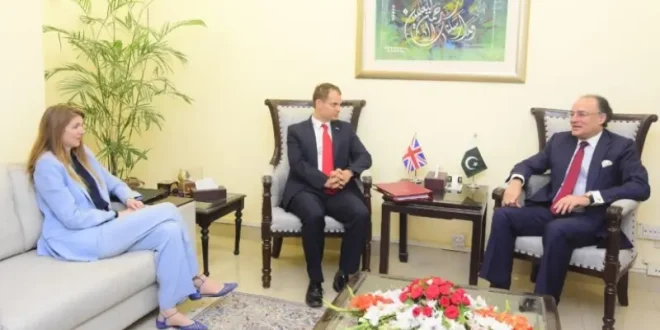
In a recent pivotal meeting in Islamabad, Pakistan’s Finance Minister, Muhammad Aurangzeb, conveyed to UK Parliamentary Under-Secretary of State for MENAP, Hamish Falconer MP, that the government’s economic planning is acutely aware of potential external and geopolitical risks. This includes anticipating “second-order impacts” from prolonged regional instability. The high-level discussion, also attended by British High Commissioner Jane Marriott and senior officials, encompassed a comprehensive exchange on Pakistan’s macroeconomic outlook, ongoing structural reforms, fiscal priorities, and avenues for strengthening Pakistan-UK economic cooperation.
The Finance Minister specifically highlighted the government’s commitment to preserving macroeconomic stability, sustaining economic recovery, and accelerating structural reforms, all while creating conditions for inclusive and durable growth. He also referenced recent positive regional developments, such as the easing of tensions following an understanding between the United States and Iran, underscoring Pakistan’s consistent advocacy for dialogue and de-escalation to mitigate economic confidence, energy market, and supply chain disruptions.
Background: Pakistan’s Economic Tightrope Walk
Pakistan finds itself at a critical juncture, grappling with deep-seated economic challenges that include persistent balance of payments issues, high inflation, and the imperative to manage a significant debt burden. The nation is currently engaged in an International Monetary Fund (IMF) program, which underscores the urgent need for stringent fiscal discipline and wide-ranging structural reforms. Against this domestic backdrop, the global economic landscape presents its own set of complexities: fluctuating commodity prices, inflation pressures in major economies, and the ripple effects of geopolitical tensions.
Regionally, Pakistan is strategically located, making it highly susceptible to developments in the Middle East, Afghanistan, and its immediate neighborhood. Conflicts or instability in these areas can have profound implications, from disrupting vital energy supply routes and increasing trade costs to affecting investor sentiment and potentially leading to increased security expenditures. Minister Aurangzeb’s comments about the US-Iran understanding highlight Pakistan’s deep interest in regional calm, as any escalation could severely impede its economic recovery trajectory.
The meeting with the UK delegation, a key bilateral partner, further emphasizes Pakistan’s reliance on international engagement and support. The UK is a significant source of foreign direct investment (FDI) and a crucial trade partner, making such diplomatic exchanges vital for fostering confidence and exploring collaborative economic opportunities.
Impact on Pakistan: Building Resilience through Foresight
The Finance Minister’s explicit acknowledgement of external and geopolitical risks signifies a maturation in Pakistan’s economic planning. This proactive approach has several critical implications for the nation:
- Enhanced Investor Confidence: By demonstrating awareness and strategic planning for external shocks, the government can project an image of prudence and foresight, potentially reassuring foreign investors and credit rating agencies. This transparency is crucial for attracting much-needed FDI into the Pakistani market.
- Informed Policy Formulation: Integrating geopolitical risk assessments directly into fiscal assumptions and budget planning allows for more robust and adaptable economic policies. This could involve contingency funds, diversification of trade partners, and strategic energy reserves to buffer against future shocks.
- Strengthened International Relations: Open dialogue with partners like the UK on shared global challenges reinforces diplomatic ties and facilitates coordinated responses. It positions Pakistan as a responsible international actor committed to regional stability and global economic well-being.
- Prioritization of Structural Reforms: The urgency to mitigate external risks further emboldens the government’s resolve to push forward with challenging structural reforms. Measures like improved revenue mobilization, modernization of tax administration, privatization, and digital governance are not just about internal efficiency but also about building the resilience required to withstand external shocks and ensure long-term stability.
- Advocacy for De-escalation: Pakistan’s consistent call for dialogue and peaceful resolution of conflicts gains added weight when framed as an economic imperative. Reduced regional tensions create a more conducive environment for trade, investment, and cross-border economic activity, directly benefiting Pakistan’s growth prospects.
Analysis: Beyond Rhetoric – A Strategic Imperative for Sustainable Growth
Minister Aurangzeb’s remarks are more than just diplomatic niceties; they represent a strategic imperative for Pakistan’s long-term economic stability. The concept of “second-order impacts” is particularly insightful. It refers to the cascading effects of a primary event – for instance, a conflict in the Middle East could first impact global oil prices (a first-order effect), then lead to broader global inflation, supply chain disruptions, reduced demand for Pakistani exports, and decreased remittances (second-order impacts). Recognizing these complex interdependencies allows for more sophisticated and comprehensive risk mitigation strategies.
This approach aligns closely with the demands of modern global economics, where national economies are inextricably linked to international developments. For Pakistan, a nation historically buffeted by both internal and external challenges, acknowledging these risks publicly and integrating them into planning is a positive evolution. It suggests a move towards a more sophisticated, data-driven approach to economic governance, crucial for breaking cycles of boom and bust and fostering sustainable growth.
The emphasis on revenue mobilization through technology, data integration, and digital invoicing is vital. An improved domestic revenue base reduces reliance on external borrowing and makes the economy less vulnerable to global financial market volatility. Similarly, privatization and rightsizing public sector entities, while politically challenging, can free up resources and improve overall economic efficiency, contributing to greater resilience.
Ultimately, while acknowledging risks is a crucial first step, the true measure of success will be in the sustained implementation of these reforms and the government’s ability to translate its strategic foresight into tangible economic benefits. The UK’s appreciation of Pakistan’s “seriousness and breadth of Pakistan’s ongoing transformation agenda” is a positive endorsement, but the path ahead remains arduous. Pakistan’s ability to navigate these complex geopolitical and economic currents will define its trajectory towards sustainable and inclusive growth in the coming years.
“`