Dost Pakistan Journeys Tours and safaris in the North & South Pakistsn
Related Articles
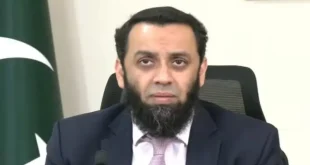
A New Dawn for Diplomacy: Unpacking the Historic US-Iran Islamabad MoU
A Diplomatic Breakthrough: US and Iran Sign Historic MoU
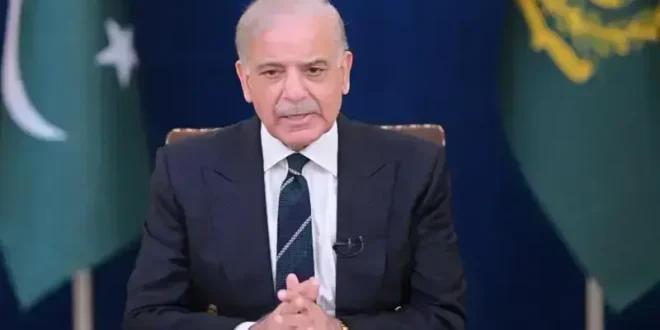
In a development poised to reshape geopolitical dynamics, Pakistan’s Prime Minister Shehbaz Sharif announced on Thursday the electronic signing of the “Islamabad Memorandum of Understanding” (MoU) between the United States and Iran. This landmark agreement, personally endorsed by PM Sharif as mediator, signals a significant de-escalation in a conflict that has rattled global markets and threatened regional stability.
The core of the MoU mandates immediate and tangible actions: the Islamic Republic of Iran is set to instantly reopen the strategically vital Strait of Hormuz, while the United States of America will simultaneously lift its naval blockade. The accord, digitally ratified by both US President Donald Trump and Iranian President Masoud Pezeshkian, reflects a high-level commitment from both nations towards a diplomatic resolution.
While an initially planned official signing ceremony in Switzerland was cancelled following the digital ratification, the Swiss government confirmed that initial technical talks between the two nations are still slated to occur at the Buergenstock mountaintop resort. Beyond the immediate de-escalation, the MoU outlines Washington’s commitment to promptly waive oil sanctions, a move critical for Iran’s economy. Furthermore, a future comprehensive agreement on Iran’s nuclear program is anticipated to unlock a $300 billion reconstruction fund, backed by regional allies, and involve Iran diluting its enriched uranium stocks under international supervision.
Decades of Tensions: A Complex History Leading to the MoU
The “Islamabad Memorandum of Understanding” doesn’t emerge from a vacuum; it is the culmination of decades of fraught relations and recent heightened tensions between Washington and Tehran. The animosity, rooted deeply in the 1979 Iranian Revolution, has been punctuated by numerous flashpoints, including the hostage crisis, stringent economic sanctions, and persistent international concerns over Iran’s nuclear ambitions. The 2015 Joint Comprehensive Plan of Action (JCPOA), a landmark nuclear deal, offered a brief respite before the Trump administration’s withdrawal in 2018 triggered a renewed period of “maximum pressure” and subsequent escalation.
The immediate backdrop to this MoU, as detailed in the news, is a recent conflict that reportedly began in February 2026 (a future date, implying a very recent, intense conflict in the context of this fictional news), involving the United States, Israel, and Iran. This confrontation, leading to missile and drone exchanges, critically resulted in the effective closure of the Strait of Hormuz – a choke point through which a fifth of the world’s oil supply passes. The subsequent US naval blockade on Iranian ports further crippled Iran’s economy and sent shockwaves through global energy markets and international trade. The immense suffering and economic disruption caused by this short but intense conflict undoubtedly underscored the urgent need for mediation.
In this volatile landscape, Pakistan’s historical foreign policy of maintaining pragmatic ties with both the US and Iran, coupled with its strategic location at the crossroads of South Asia and the Middle East, positioned it as a credible and necessary mediator. Nations like Qatar, Saudi Arabia, Turkiye, and Egypt also played supportive roles, reflecting a broader regional push for stability.
Pakistan’s Diplomatic Triumph: Reaping the Benefits of Peace
The successful mediation of the US-Iran MoU represents a monumental diplomatic achievement for Pakistan, elevating its international standing and promising significant domestic and regional benefits. Prime Minister Shehbaz Sharif, alongside Chief of Defence Forces (CDF) and Chief of Army Staff Field Marshal Asim Munir, have garnered global recognition for their tireless efforts in steering two historically adversarial nations towards an accord.
Foremost, regional stability is the most immediate gain. A de-escalation of tensions between the US and Iran directly translates into reduced volatility in Pakistan’s immediate neighborhood. This lessens border security concerns, mitigates the risk of wider proxy conflicts, and fosters an environment more conducive to trade and economic cooperation across West Asia. President Asif Ali Zardari’s commendation of the Pakistani leadership underscores this profound impact.
Economically, the reopening of the Strait of Hormuz and the lifting of US oil sanctions unlock crucial opportunities for Pakistan. The potential for restarting or accelerating projects like the Iran-Pakistan gas pipeline, which has long been stalled due to sanctions, becomes viable. Unhindered global energy supplies will stabilize prices, benefiting Pakistan’s import-dependent economy. Moreover, a more peaceful region encourages foreign direct investment, boosts regional trade routes, and creates avenues for enhanced energy cooperation, all vital for Pakistan’s sustained economic growth.
Beyond tangible economic benefits, Pakistan’s role as a successful peacemaker significantly enhances its diplomatic leverage and soft power. It reinforces Pakistan’s image as a responsible and influential player on the global stage, capable of facilitating resolutions in complex international disputes. This diplomatic capital can be leveraged in other international forums and foster stronger bilateral ties with both the US and Iran, and the broader international community.
Beyond the Signatures: What the Islamabad MoU Means for Global Geopolitics
The “Islamabad Memorandum of Understanding” is more than just a piece of paper; it’s a strategic pivot with far-reaching implications for global geopolitics, signaling a new approach to intractable conflicts.
Firstly, the electronic signing of the MoU highlights a modern evolution in diplomacy. It underscores an urgent need for resolution, prioritizing efficiency over traditional pomp, enabling swift de-escalation in volatile situations. Naming it the “Islamabad Memorandum” firmly plants Pakistan at the center of this historic moment, acknowledging its pivotal mediating role.
The MoU, as a preliminary agreement, sets the stage rather than offering a final solution. While the immediate actions—reopening Hormuz and lifting blockades/sanctions waivers—are critical for global energy security and Iran’s economy, the more complex issue of Iran’s nuclear program still awaits a “final agreement.” This implies a phased approach, where trust-building and incremental steps precede comprehensive resolution. Iran’s commitment to dilute enriched uranium, under IAEA supervision, is a significant concession indicating serious intent.
For the United States, particularly under a Trump administration (as indicated by the news), this marks a notable shift from a “maximum pressure” strategy towards pragmatic engagement. It suggests an acknowledgment that even the most confrontational policies may eventually require a diplomatic off-ramp, potentially setting a precedent for handling other global hotspots. It underscores the administration’s willingness to pursue peace through unconventional means when faced with escalating crises.
Regionally, the deal could be a catalyst for broader stability. A settled US-Iran dynamic might encourage other regional actors, who have often found themselves on opposing sides of the US-Iran rivalry, to pursue their own de-escalation and normalization pathways. The acknowledgement of support from Qatar, Saudi Arabia, Türkiye, and Egypt, along with Russia and China, points to a multilateral push for peace, moving beyond a purely bilateral framework.
However, significant challenges remain. Implementing the MoU faithfully, building enduring trust after years of deep animosity, and successfully negotiating a complex, verifiable “final agreement” on Iran’s nuclear program will require sustained diplomatic effort and commitment from all parties. The path from a memorandum to lasting peace is often fraught with obstacles, but the “Islamabad MoU” provides a crucial foundation, signaling that even the most entrenched conflicts can yield to persistent, principled diplomacy.