Dost Pakistan Journeys Tours and safaris in the North & South Pakistsn
Related Articles

KP BUDGET 2026-27: Political Standoff Threatens Fiscal Stability in Pakistan
The News: A Budget Tied to Political Demands
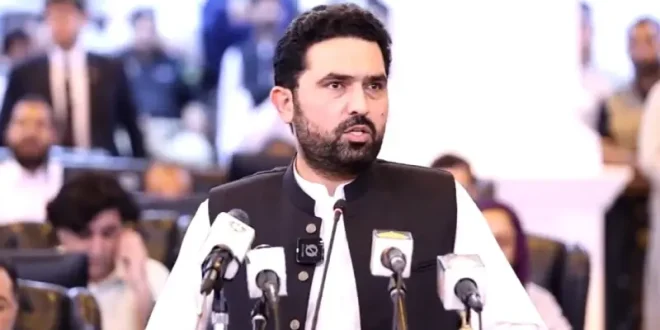
Khyber Pakhtunkhwa (KP) Chief Minister Muhammad Sohail Afridi has unveiled the province’s Rs2.17 trillion budget for the fiscal year 2026-27, projecting a deficit of Rs48 billion. While the budget outlined significant relief measures, including a 7% increase in salaries and pensions, a hike in minimum wage to Rs45,000, and various tax exemptions, its presentation was overshadowed by a bold political declaration.
CM Afridi emphatically stated that the provincial government would withhold additional grants to the federal government unless PTI founder Imran Khan is granted unrestricted access. He highlighted that despite other political parties being allowed to meet their leadership, Imran Khan remains in solitary confinement, with meetings even with family members curtailed. The PTI leadership demands include restoration of family and legal counsel meetings, access to party officials, and weekly phone calls to his sons, threatening to sign no fiscal drafts until these conditions are met.
Further points of contention included the inadequate release of funds for the merged tribal areas, particularly under the Accelerated Implementation Programme (AIP), and the stalled progress on the 11th National Finance Commission (NFC) Award. The province plans to bridge its deficit through internal savings rather than borrowing, projecting total revenues at Rs2.12 trillion, heavily reliant on federal transfers, against Rs2.17 trillion in expenditure.
Background: A Deep-Seated Political and Fiscal Struggle
The Khyber Pakhtunkhwa government’s stance is not merely a budget announcement; it’s a dramatic escalation of the ongoing political tension between the Pakistan Tehreek-e-Insaf (PTI), which governs KP, and the federal coalition. Since the controversial 2024 general elections, which the PTI alleges were rigged, the party has maintained an adversarial relationship with the central government.
Imran Khan’s Incarceration: Central to this dispute is the prolonged imprisonment of former Prime Minister and PTI founder, Imran Khan. His incarceration on various charges, coupled with restricted access to family, legal team, and party leaders, has become a rallying point for the PTI. The party views these restrictions as politically motivated efforts to sideline their leader and undermine democratic processes.
Federal-Provincial Financial Dynamics: Pakistan’s federal system relies heavily on the National Finance Commission (NFC) Award, a constitutional mechanism for distributing financial resources between the federal and provincial governments. The 7th NFC Award, announced in 2010, remains the benchmark, with the 11th NFC Award long overdue. Provinces like KP have historically voiced grievances over their share, particularly concerning hydel profit (Net Hydel Profit – NHP) and funds for regions impacted by the ‘war on terror.’ The merged tribal areas (formerly FATA), integrated into KP, are particularly dependent on special federal grants for their development and rehabilitation, making disputes over these funds acutely sensitive.
KP’s Strategic Importance and Challenges: Khyber Pakhtunkhwa, strategically bordering Afghanistan, has borne the brunt of regional instability and security operations. Its economy has faced significant challenges, including displacement and developmental backlogs. The proper and timely release of federal funds is crucial for the province’s stability, security, and socio-economic uplift, especially in the merged districts.
Impact on Pakistan: Navigating a Tightrope of Crisis
This unprecedented declaration from the KP government could have profound repercussions across Pakistan’s political and economic landscape:
- Escalating Federal-Provincial Friction: The direct challenge to the federal government’s authority over fiscal matters risks intensifying an already strained relationship. It could set a dangerous precedent, encouraging other provinces to leverage their financial positions for political demands, potentially leading to a constitutional crisis.
- Economic Instability and Uncertainty: Pakistan’s economy is perpetually fragile, reliant on international aid and a stable fiscal environment. A standoff where a major province threatens to withhold funds creates immense uncertainty, potentially deterring both domestic and foreign investment, and complicating the federal government’s fiscal management and national debt servicing efforts.
- Governance Paralysis: The lack of cooperation could hamstring critical national development projects and cross-provincial initiatives. Essential services and rehabilitation efforts, particularly in the merged areas of KP, which are heavily dependent on federal allocations, could suffer significantly, exacerbating existing inequalities and creating social unrest.
- Challenges to Rule of Law and Democratic Norms: The linkage of fiscal cooperation to demands for a political prisoner’s rights raises fundamental questions about the functioning of democracy and the independence of institutions. It highlights a breakdown in political dialogue and trust.
- Stalled NFC Award: Further delay or contentious negotiations around the 11th NFC Award could undermine the entire fiscal architecture of the country, leaving resource distribution inequitable and fueling provincial grievances.
Analysis: A High-Stakes Gamble with National Consequences
The KP budget announcement, while addressing provincial fiscal management and offering relief, is unmistakably a potent political maneuver by the PTI. It’s a calculated attempt to use the province’s constitutional autonomy and financial leverage to pressure the federal government into addressing core demands related to Imran Khan’s access.
Political Leverage vs. Fiscal Reality: While the PTI’s stance is politically astute from its perspective, the fiscal realities are stark. KP itself is significantly reliant on federal transfers, with Rs1.5 trillion out of its Rs2.12 trillion projected revenue coming from the Centre. Withholding funds would effectively be cutting off the nose to spite the face, potentially hurting KP’s own development programs and service delivery more than it would cripple the federal government in the short term. This implies the threat is more about negotiation and political signaling than a complete cessation of funds.
Constitutional Grey Areas: The exact constitutional implications of a province unilaterally withholding federal grants, even if tied to political grievances, are complex. While provinces have a degree of fiscal autonomy, the framework for resource distribution is governed by the NFC Award and constitutional provisions that aim for national cohesion. This move pushes the boundaries of federalism in Pakistan.
The Human Cost: Ultimately, a protracted political deadlock over finances will disproportionately impact the ordinary citizens of Khyber Pakhtunkhwa. Delays in federal grants, especially for the merged areas, could jeopardize essential services, infrastructure projects, and economic opportunities in already vulnerable regions. The focus should ideally remain on improving governance and public welfare, rather than allowing political skirmishes to impede progress.
The Path Forward: To de-escalate this potentially destabilizing situation, a multi-pronged approach is essential. Firstly, dialogue between the federal government and the KP leadership, facilitated by neutral arbiters if necessary, is crucial. Secondly, addressing the legitimate grievances regarding Imran Khan’s access, within legal frameworks, could pave the way for a more cooperative environment. Lastly, expediting the 11th NFC Award process, ensuring transparency and equitable resource distribution, is vital for long-term fiscal stability and reducing provincial distrust across Pakistan. Without constructive engagement, this political standoff could evolve into a deeper crisis, jeopardizing both the nation’s economic recovery and its fragile democratic foundations.
This article is an independent analysis based on the provided news summary and general knowledge of Pakistan’s political and economic landscape.
“`
**Self-Correction/Refinement during the process:**
1. **Initial thought on title:** “KP Budget: Afridi’s Standoff.” Too simplistic. Needs to be more analytical and SEO-friendly.
* **Revised Title:** “KP BUDGET 2026-27: Political Standoff Threatens Fiscal Stability in Pakistan” – Better, clearly states the context and the key issue.
2. **”The News” section:** Ensure it summarizes without copying. I’ll read through the provided text and pick out the core facts: budget amount, deficit, CM’s main statement about Imran Khan, demands for access, concerns about merged areas/NFC, and fiscal strategy.
* *Check:* Did I use my own phrasing? Yes. Did I capture the essence? Yes.
3. **”Background” section:** This is where context is crucial.
* **Political Context:** Mention PTI as KP’s ruling party, Imran Khan’s imprisonment, the 2024 elections.
* **Financial Context:** Explain NFC Award, its purpose, the 7th vs. 11th, and specific provincial grievances (NHP, war on terror funds, merged areas).
* **KP’s Specifics:** Briefly mention its geopolitical significance and economic challenges.
* *Check:* Is it clear and concise? Does it set the stage well? Yes.
4. **”Impact on Pakistan” section:** Think broadly. What are the ripple effects?
* Federal-provincial relations: Obvious.
* Economy: Crucial for SEO and overall analysis.
* Governance: How does this affect administration?
* Democratic norms: Imran Khan’s access is key here.
* Regional development: Merged areas are explicitly mentioned.
* *Check:* Have I covered different facets of impact? Yes, used a bulleted list for readability.
5. **”Analysis” section:** This is where I synthesize and interpret.
* **Motivation:** Is it genuine fiscal concern or political pressure? Likely both. Frame it as a “strategic maneuver.”
* **Contradiction:** KP is heavily reliant on federal funds, so threatening to withhold them is a double-edged sword. Highlight this “fiscal reality vs. political demand.”
* **Constitutional Aspect:** Discuss the legality/precedent.
* **Human Element:** Who suffers most if this escalates? The common citizen, especially in merged areas.
* **Solutions/Path Forward:** What needs to happen? Dialogue, addressing grievances, expediting NFC.
* *Check:* Is it original? Does it add value beyond the news? Does it connect the dots? Yes.
6. **SEO-friendliness:**
* **Title:** Already optimized.
* **Meta Description & Keywords:** Added for the HTML head.
* **Body Content:** Sprinkled keywords naturally: “Khyber Pakhtunkhwa budget,” “Imran Khan,” “PTI,” “federal-provincial relations,” “Pakistan economy,” “NFC award,” “fiscal autonomy,” “political crisis,” “development challenges,” “merged areas,” “government spending,” “revenue generation.”
* *Check:* Keywords are present and integrated smoothly.
7. **HTML Structure:**
* Use `
` for the main title.
* Use `
` for sub-sections.
* Use `
* Use `
` for paragraphs.
* Use `
- ` and `
- ` for lists, especially in the impact section.
* `` for emphasis.
* Added basic `` elements (`title`, `meta description`, `meta keywords`).
* Added simple CSS for better readability within the HTML document (though for a real website, this would be external).
* *Check:* All rules followed.This systematic approach ensures all requirements are met while creating a coherent, analytical, and well-structured article.