Dost Pakistan Journeys Tours and safaris in the North & South Pakistsn
Related Articles


Michigan Democrat’s Endorsement of Republican Ruffles Critical Senate Race
An unexpected turn in a pivotal US Senate contest highlights deep political fissures ahead of crucial midterm elections.
The Shocks and Shifts in Michigan and Alaska
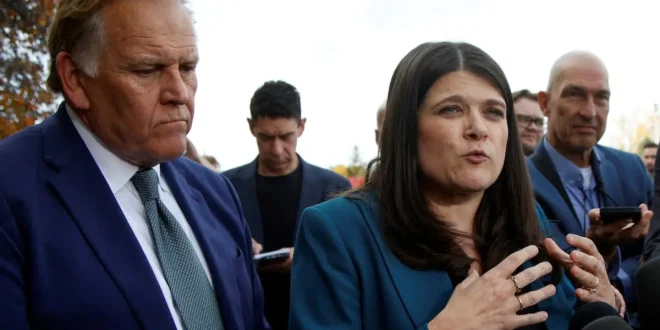
As the United States hurtles towards a fiercely contested midterm election, an unforeseen political maneuver in Michigan sent shockwaves through the Democratic Party. US Representative Haley Stevens, a Democrat, publicly endorsed Republican Mike Rogers in the critical Senate race, effectively turning against her own party’s nominee, Abdul El-Sayed, just two days before ballots are cast. This endorsement, delivered alongside Rogers at a Detroit church and followed by a social media video stating, “I don’t belong in Abdul’s campaign,” underscored profound ideological divides within the Democratic ranks.
Stevens’ rationale for her defection stemmed from a bitter primary loss to El-Sayed and her discomfort with an outside group’s advertisement, which she claimed unfairly blamed Israel for high grocery prices. She articulated a feeling that many Democrats were being alienated by the rhetoric surrounding El-Sayed’s campaign. The immediate beneficiary, unsurprisingly, was former President Donald Trump, who swiftly invited Stevens to join the Republican Party, praising her “smart” move and launching inflammatory, unsubstantiated attacks against El-Sayed.
Despite the high-profile endorsement, El-Sayed’s campaign demonstrated resilience, reporting a significant fundraising surge of $1.2 million within hours and maintaining a strong lead over Rogers, 53% to 42%, according to a recent New York Times/Siena poll. However, the internal strife was palpable, with Stevens’ congressional staff resigning and voters like Pamela Johnson, 72, expressing outright disdain, labeling her a “traitor.”
Compounding the electoral drama, another critical Senate race in Alaska also saw direct intervention from the Trump administration. The US Justice Department attempted to block the certification of results if Republican incumbent Senator Dan S. Sullivan narrowly lost, citing potential voter confusion from a similarly named challenger, Daniel J. Sullivan Jr. This lawsuit, which a federal judge dismissed, raised serious questions about electoral interference and highlighted allegations that the Democratic challenger, Mary Peltola, was involved in recruiting the spoiler candidate. While Senator Sullivan vowed to accept the results, Republican Governor Mike Dunleavy’s hesitation to certify a potential Peltola victory keeps the integrity of the election process under a microscope.
Contextualizing the Political Landscape
The events unfolding in Michigan and Alaska are more than isolated incidents; they are symptomatic of a highly polarized and intensely competitive political environment in the United States. These midterm elections are not merely about local representation but represent a pivotal battle for control of Congress. Republicans currently hold narrow majorities in both the House and Senate, and a shift in power could fundamentally alter the trajectory of the Biden administration’s agenda, potentially leading to legislative gridlock and increased oversight investigations.
The Michigan endorsement underscores a deeper ideological fault line within the Democratic Party. The primary contest between Stevens and El-Sayed likely exposed tensions between the party’s more progressive wing, often more critical of Israeli policies, and its traditional centrist elements. For a prominent Democrat to publicly cross party lines in such a crucial race reveals a failure of party unity mechanisms and deep-seated resentments that Trump and the Republicans are adept at exploiting. This phenomenon is not new, but its occurrence days before a national election amplifies its impact.
On the Republican side, Trump’s immediate and aggressive response is characteristic of his political strategy: capitalize on opponents’ weaknesses, employ strong, often inflammatory rhetoric, and frame any perceived dissent as a sign of the opposition’s dangerous extremism. His swift invitation to Stevens and the “jihadist” smear against El-Sayed are classic examples of this tactic, aimed at energizing his base and sowing further discord among Democrats.
Meanwhile, the situation in Alaska highlights growing concerns about electoral integrity and the weaponization of legal and political processes. The Justice Department’s attempt to intervene in a state election, especially under the guise of “voter confusion” allegations, sets a troubling precedent. The accusation of a “spoiler candidate” strategy, regardless of its veracity, speaks to a broader distrust in the electoral system and the lengths to which parties may go to gain an advantage.
Geopolitical Ripples: What This Means for Pakistan
While the Michigan and Alaska sagas are deeply rooted in American domestic politics, their broader implications for U.S. governance and foreign policy can have indirect, yet significant, ripple effects globally, including for countries like Pakistan.
Should the midterm elections result in a divided Congress, particularly with Democrats controlling either chamber, it could lead to increased legislative gridlock in Washington. This might translate into a more inward-looking U.S. foreign policy or, alternatively, a foreign policy driven more by executive action. For Pakistan, which has a complex and historically significant relationship with the U.S., shifts in American foreign policy priorities—regarding aid, security cooperation, or regional stability (especially concerning Afghanistan or India)—could be influenced. A U.S. administration grappling with domestic political battles might have less bandwidth or different priorities for engaging with key partners abroad.
Furthermore, Trump’s resurgence in rhetoric and influence, exemplified by his swift reaction to Stevens’ endorsement and his inflammatory comments, is a barometer for future U.S. political direction. His repeated use of derogatory and Islamophobic terms, such as “jihadist” directed at El-Sayed, contributes to a global narrative that can unfortunately fuel prejudice and misunderstanding. For Pakistan, a Muslim-majority nation, such rhetoric from a prominent global figure can resonate negatively, potentially impacting perceptions of Pakistani diaspora communities or hindering efforts to foster mutual respect on the international stage.
Finally, the Trump administration’s willingness to pursue actions without Congressional approval, such as leveraging “tariff pressure on trading partners” as mentioned in the news, suggests a potential for unilateral economic policies. While not directly aimed at Pakistan, any broader U.S. protectionist measures or trade disputes can disrupt global supply chains and economic stability, indirectly affecting Pakistan’s trade relations and economic outlook.
Deep Dive: Unity Fractures and Electoral Acrobatics
Haley Stevens’ endorsement of Mike Rogers is a striking manifestation of profound ideological and personal cleavages within the Democratic Party. Her willingness to sabotage a fellow Democrat in a pivotal Senate race, citing disagreements over campaign rhetoric and perceived alienation of voters, highlights the immense challenge the party faces in maintaining a cohesive front. This schism is particularly damaging in swing states like Michigan, where every vote counts and Republican opponents are eager to amplify any sign of division. It suggests that even the existential threat of a Republican-controlled Congress may not be enough to override deeply felt grievances from primary battles.
Conversely, Trump’s immediate embrace of Stevens’ move and his aggressive vilification of El-Sayed demonstrate his enduring and potent influence on the political landscape. Even out of office, he remains a master of narrative control, capable of instantly framing events to his advantage and mobilizing his base with incendiary language. His quick pivot to invite Stevens into the GOP showcases a strategic effort to peel off disaffected elements from the opposition, further muddying the waters of traditional party loyalty.
The financial and polling responses to Stevens’ endorsement—El-Sayed’s fundraising surge and continued lead—offer a nuanced perspective. While the endorsement certainly created a political firestorm, it did not immediately translate into a decline in support for El-Sayed, and in some ways, may have galvanized his base. This indicates that while intra-party disputes are damaging, committed voters might prioritize the broader ideological battle over personal feuds, especially in a high-stakes election.
The Alaska situation, too, speaks volumes about the current state of U.S. electoral politics. The attempt by the Justice Department to intervene, coupled with allegations of a “spoiler” candidate, points to a worrying trend of challenging election processes and results, eroding public trust in democratic institutions. Such tactics, if normalized, threaten the fundamental principles of free and fair elections and can lead to a sustained period of political instability and contentious post-election legal battles.
Ultimately, these events underscore the high stakes of the midterm elections, which are not just about legislative control but about the very soul and future direction of American governance. The intense polarization, the fragility of party unity, and the willingness to engage in electoral brinkmanship suggest a political climate marked by volatility and a relentless struggle for power.
Conclusion: A Bellwether of Political Volatility
The eleventh-hour drama in Michigan, coupled with the electoral maneuvering in Alaska, paints a vivid picture of a deeply fractured American political system. Haley Stevens’ unprecedented endorsement of a Republican opponent epitomizes the raw, personal, and ideological tensions simmering beneath the surface of both major parties. It serves as a potent reminder that even in the face of crucial national elections, the pursuit of individual political principles or grievances can override traditional party loyalty, with potentially significant consequences.
These events are a bellwether for increased political volatility, signaling that the battle for legislative control will be fiercely fought, not just between parties but often within them. As the nation grapples with its future direction, the midterms will undoubtedly leave a lasting imprint, determining not only who governs but also the very tone and integrity of American democracy.