Dost Pakistan Journeys Tours and safaris in the North & South Pakistsn
Related Articles


“`html
Pakistan Takes Helm of SCO Interbank Consortium: A New Era of Regional Financial Leadership
The News: A Dual Chairmanship Signifies Growing Influence
In a significant development reflecting its deepening commitment to regional economic integration, Pakistan has officially assumed the chairmanship of the Shanghai Cooperation Organisation Interbank Consortium (SCO-IBC) for the 2026-27 term. This strategic move coincides with Pakistan’s upcoming chairmanship of the broader SCO itself for the same period, positioning the nation at the forefront of both the organization’s political and financial agendas.
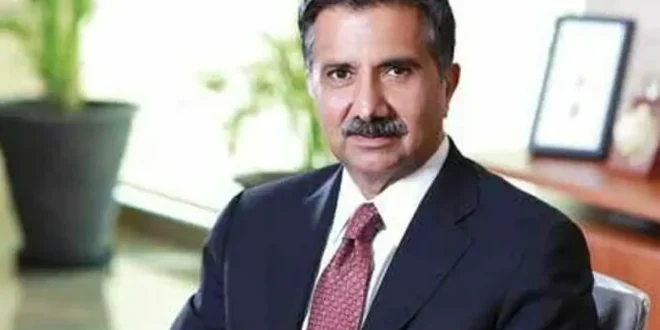
The Ministry of Finance announced that Sultan Ali Allana, Chairman of Habib Bank Limited (HBL), a prominent financial institution in Pakistan, will head the SCO-IBC during this pivotal period. This appointment underscores Pakistan’s resolve to actively steer regional initiatives aimed at bolstering trade, investment, and financial connectivity across the vast Eurasian landmass. The SCO-IBC serves as a critical platform for fostering financial collaboration, driving sustainable development through partnerships with multilateral institutions, and exploring innovative mechanisms to fund transnational mega projects that are vital for regional prosperity.
This dual leadership role follows a series of proactive engagements by Pakistan within the SCO framework. Having evolved from an observer state to a full member in 2017, Pakistan has consistently championed multilateralism and regional cooperation. This trajectory is further highlighted by its recent hosting of the SCO Council of Heads of Government meeting in October 2024 and its current chairmanship of the organisation’s Regional Anti-Terrorist Structure (RATS) for 2025-26. Furthermore, Pakistan holds the permanent chairmanship of an SCO working group dedicated to poverty alleviation, showcasing a holistic approach to regional development.
Background: Understanding the SCO and Its Financial Arm
The Shanghai Cooperation Organisation (SCO) is a powerful Eurasian political, economic, and security alliance comprising eight member states: China, India, Kazakhstan, Kyrgyzstan, Pakistan, Russia, Tajikistan, and Uzbekistan, with Iran recently joining as a full member. Established in 2001, its primary objectives include strengthening mutual trust and good-neighborliness among member states, promoting effective cooperation in politics, trade, economy, science and technology, culture, and education, and working towards regional peace, security, and stability.
The SCO Interbank Consortium (SCO-IBC), formed in 2005, acts as the financial backbone of the organization. It brings together leading banks and financial institutions from member states to facilitate economic cooperation. Its core mandate involves financing joint investment projects, providing credit support for trade, and developing mechanisms for currency settlements that can circumvent reliance on traditional global financial systems. In essence, the IBC is crucial for translating the SCO’s economic ambitions into tangible projects, particularly those related to infrastructure, energy, and cross-border connectivity. For Pakistan, a developing nation with significant infrastructure needs and a strategic geographic location, active participation and leadership in the SCO-IBC presents unparalleled opportunities.
Impact on Pakistan: A Gateway to Enhanced Regional Prosperity
Pakistan’s assumption of both the SCO and SCO-IBC chairmanships represents a monumental opportunity to significantly enhance its regional standing and unlock substantial economic benefits. The impact can be viewed through several lenses:
- Strengthened Economic Connectivity: Leading the SCO-IBC positions Pakistan to play a pivotal role in shaping financial policies that facilitate cross-border trade and investment. This could translate into easier access to financing for Pakistani businesses, smoother transactions with SCO member states, and improved mechanisms for funding large-scale infrastructure projects.
- Leveraging CPEC and BRI: With China as a founding member and key driver of the SCO, Pakistan’s enhanced role can further integrate its flagship China-Pakistan Economic Corridor (CPEC) within the broader framework of China’s Belt and Road Initiative (BRI). The SCO-IBC can become a vital conduit for attracting investment and facilitating the financing of CPEC-related projects, extending their reach into Central Asia and beyond.
- Diplomatic Influence and Soft Power: Chairing a prominent regional body and its financial arm elevates Pakistan’s diplomatic leverage. It demonstrates the international community’s confidence in Pakistan’s leadership and commitment to multilateralism, providing a platform to advocate for its regional interests and contribute to shared prosperity.
- Access to Diverse Markets and Resources: The SCO encompasses a vast economic bloc with diverse markets and abundant natural resources. Pakistan’s leadership offers direct engagement with these economies, fostering trade relationships and securing investment in critical sectors.
- Financial Sector Development: The involvement of HBL Chairman Sultan Ali Allana highlights Pakistan’s growing financial expertise and its readiness to contribute to regional financial architecture. This collaboration can also bring best practices and innovation into Pakistan’s domestic financial sector.
Analysis: Navigating Geopolitics and Seizing Economic Momentum
Pakistan’s ascending role within the SCO, particularly its dual chairmanship for 2026-27, is more than just a ceremonial position; it’s a strategic pivot with profound geopolitical and economic implications. In an increasingly multipolar world, the SCO offers an alternative framework for cooperation, often seen as a counterweight to Western-dominated blocs. Pakistan’s active engagement signals its commitment to strengthening ties with its Eastern and Central Asian neighbors, fostering a more balanced foreign policy.
Economically, the SCO-IBC chairmanship empowers Pakistan to actively shape the regional financial landscape. This is crucial for advancing shared prosperity and addressing common challenges. For instance, the emphasis on developing “transnational mega projects” directly aligns with Pakistan’s aspirations for enhanced regional connectivity, vital for unlocking the economic potential of its landlocked neighbors in Central Asia. Such projects could involve energy pipelines, railway networks, and digital infrastructure, all of which require substantial and coordinated financing efforts that the SCO-IBC is designed to facilitate.
However, this leadership role also comes with significant responsibilities. Pakistan will need to navigate complex regional dynamics, including the sometimes-divergent interests of major SCO players like China, Russia, and India. Its ability to forge consensus and drive forward initiatives will be a test of its diplomatic acumen. Domestically, effective leadership of the SCO and SCO-IBC will depend on Pakistan’s own economic stability and its capacity to implement robust policies that attract and protect foreign investment.
Ultimately, Pakistan’s dual chairmanship signifies a strategic alignment with the broader Eurasian integration agenda. By actively participating in and leading initiatives related to financial connectivity, trade facilitation, and regional security (through its RATS chairmanship), Pakistan is positioning itself as a crucial bridge, connecting South Asia with Central Asia, Russia, and China. This enhanced role promises not just economic gains but also a stronger voice in shaping the future of a significant part of the world, fostering stability and shared growth across the region.
“`