Dost Pakistan Journeys Tours and safaris in the North & South Pakistsn

Related Articles


“`html
Pakistan’s Counter-Terrorism Conundrum: Examining KP’s Role Amidst Rising Threats
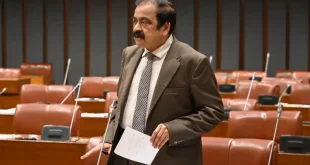
The recent public rebuke by Minister of State for Interior Tallal Chaudhry against the Khyber Pakhtunkhwa (KP) government has thrown a sharp spotlight on Pakistan’s escalating battle against terrorism. His pointed criticisms, delivered alongside Information Minister Attaullah Tarar, accuse the Pakistan Tehreek-e-Insaf (PTI)-led provincial administration of severe shortcomings in leadership, resource allocation, and the exercise of authority in combating militancy. This analysis delves into the implications of these accusations, the underlying political dynamics, and the broader context of Pakistan’s ongoing struggle with cross-border terrorism, particularly from the Afghan frontier.
The Political Blame Game: Unpacking the Allegations
Chaudhry’s statement is more than just a political attack; it underscores a deep-seated frustration within federal circles regarding the handling of security in a province that has historically borne the brunt of insurgent violence. The PTI has governed KP since 2013, a period during which the province has faced persistent security challenges, particularly in its tribal districts bordering Afghanistan, which are volatile due to porous borders and historical linkages.
The core of Chaudhry’s allegations centers on three critical pillars for an effective counter-terrorism strategy:
- Leadership Vacuum: The Minister asserted that the KP government failed to provide decisive leadership to its security forces over the past decade, effectively “creating space” for terrorists. This accusation touches on the strategic direction and resolute political will required to confront entrenched militant networks, especially in a region where tribal loyalties and extremist ideologies often intertwine.
- Resource Deficiencies: A significant portion of the criticism targeted the provincial government’s alleged failure to allocate adequate funds for counter-terrorism efforts. Chaudhry highlighted the dire state of the Counter-Terrorism Department (CTD), lack of essential equipment like bulletproof jackets and vehicles, and the absence of critical infrastructure such as Safe City projects and forensic labs across the province. He contrasted this with developments in Punjab, implying a disparity in commitment and capability despite KP being a frontline province in the war on terror.
- Undermining Authority: The recent proposed KP Police Act, aimed at curtailing the powers of the provincial Inspector General (IG), was also lambasted as an example of undermining institutional strength rather than bolstering it. Such legislative moves, Chaudhry argued, weaken the very institutions tasked with maintaining law and order, potentially politicizing critical security appointments.
These accusations are particularly potent given the resurgence of the banned Tehreek-i-Taliban Pakistan (TTP) and other militant groups, which have intensified attacks, especially in KP and Balochistan. The federal government, represented by Chaudhry, explicitly linked the “burning in the fire of terrorism” to KP’s “incompetent leadership,” suggesting a direct correlation between provincial governance and national security outcomes.
The Resource Divide: Funding, Capacity, and Accountability
A crucial element of the debate revolves around financial allocations. Chaudhry questioned the utilization of the substantial funds received by KP under the National Finance Commission (NFC) Award, amounting to an estimated Rs800 billion. The NFC Award is a constitutional mechanism for distributing revenue between the federal government and the provinces, designed to ensure equitable resource distribution and provincial autonomy. The implication is that despite significant funds, priority was not given to critical security infrastructure and operational needs in KP.
The absence of a fully functional Counter-Terrorism Department (CTD) across KP is a grave concern. The CTD plays a pivotal role in intelligence gathering, investigation, and neutralizing terrorist threats. Without adequate funding, training, and reach, the provincial police forces are left vulnerable and ineffective against sophisticated militant groups. Similarly, the lack of Safe City projects, which utilize advanced surveillance technology to monitor urban areas, and modern forensic labs, cripples law enforcement’s ability to prevent attacks, identify perpetrators, and build strong legal cases. The suggestion that potential revenue from vehicle registration could have bolstered provincial coffers and security initiatives further highlights the perceived missed opportunities.
The alleged non-attendance of KP’s Chief Minister at critical events, such as the funerals of terror victims or anti-terrorism meetings in Islamabad, further fuels the narrative of a provincial leadership disengaged from the urgent security crisis, leading to accusations of prioritizing political movements over immediate governance responsibilities.
The Afghanistan Nexus: A Persistent and Complex Threat
Beyond internal governance issues, the statements by both ministers heavily emphasize the external dimension of terrorism, specifically pointing fingers at Afghanistan. This brings to the fore the enduring challenge posed by cross-border militancy, particularly since the Taliban’s return to power in Kabul in August 2021, which emboldened the TTP and other groups operating along the Pakistan-Afghanistan border.
- TTP Sanctuaries: Pakistan has consistently alleged that the Taliban administration in Afghanistan has failed to dismantle TTP sanctuaries on its soil, which are purportedly used to plan and launch attacks into Pakistan. Chaudhry unequivocally stated that “terrorist proxies are financed by our eastern border and their hideouts are on the western border,” implicating both regional rivals and a seemingly complicit Afghan regime.
- “Soft Attitude” Allegation: Information Minister Tarar went further, accusing the PTI of a “soft attitude” towards Afghanistan and even facilitating terrorists, driven by alleged “financial interests.” This echoes long-standing concerns in federal circles about the PTI’s approach to managing the porous border and its interactions with elements perceived as sympathetic to Afghan groups, including a controversial incident involving Afghan citizens not standing for Pakistan’s national anthem.
- Escalating Tensions: The recent exchange of aerial and drone strikes between Pakistan and Afghanistan, following a spate of cross-border attacks and airspace violations, underscores the severe deterioration of relations. Pakistan’s use of its “best systems” for identifying terrorists and geolocating them to Kabul further illustrates the depth of conviction regarding Afghanistan’s complicity. The heinous attack on rescue vehicles carrying DI Khan blast victims was highlighted as a brutal demonstration of the militants’ ruthlessness, surpassing even conventional rules of war.
This external dimension adds a layer of complexity, demanding not only robust internal security measures but also firm and consistent diplomatic and, if necessary, strategic engagement with Afghanistan to secure the border and ensure non-use of Afghan soil against Pakistan.
Beyond the Blame: Towards a Cohesive National Counter-Terrorism Strategy
While the federal government’s critique of KP raises valid questions about governance and accountability, the fragmented political landscape risks undermining a unified national response to terrorism. Effective counter-terrorism requires a cohesive strategy that transcends provincial and political divides.
- Unified Command and Control: The current blame game highlights the urgent need for a unified command and control structure for counter-terrorism operations, ensuring seamless coordination between federal and provincial agencies, including intelligence sharing and joint operations.
- Capacity Building Across the Board: All provinces, especially those on the front lines like KP and Balochistan, require consistent and substantial investment in their law enforcement agencies. This includes not just funding but also advanced training, modern equipment, and robust intelligence-sharing mechanisms, along with community policing initiatives.
- National Consensus on Foreign Policy: Pakistan needs a clear, unified stance on its engagement with Afghanistan, supported by all political stakeholders, to effectively address the cross-border threat. Ambiguity only empowers militant groups and complicates diplomatic efforts.
- Accountability and Transparency: The demand for accountability regarding NFC funds and their utilization in KP is legitimate. Transparency in resource allocation and project implementation is crucial for building public trust and ensuring funds are used effectively for their intended purpose of national security.
Conclusion
Minister Chaudhry’s strong condemnation of the KP government’s counter-terrorism performance has brought critical issues to the forefront. It highlights the urgent need for effective leadership, adequate resources, and unwavering commitment from all levels of government to combat the resurgent threat of terrorism. While political accountability is essential, the gravity of the security situation demands a national approach where political differences are set aside in favor of a united front against a common enemy. Pakistan’s stability and future hinge on its ability to forge a comprehensive, well-resourced, and politically consensual strategy to tackle both internal vulnerabilities and external threats, particularly the persistent challenge emanating from its western border.
“`