Dost Pakistan Journeys Tours and safaris in the North & South Pakistsn
Related Articles

Pakistan’s High-Stakes Diplomacy: Navigating the US-Iran Strait of Hormuz Crisis
The News: Pakistan’s Urgent Call for De-escalation
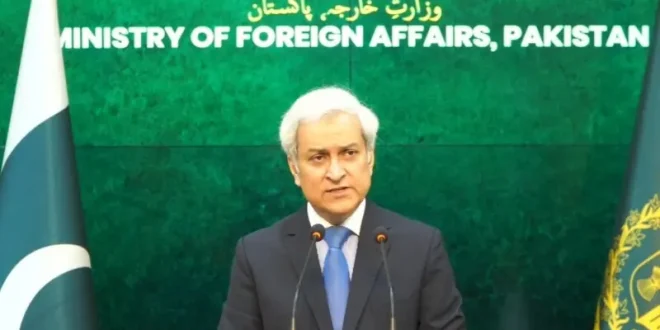
In a week marked by escalating hostilities across the Middle East, Pakistan’s Foreign Office (FO) has reiterated its profound concern and unwavering commitment to de-escalation between the United States and Iran. Speaking at a weekly press briefing, FO spokesperson Tahir Andrabi affirmed that Pakistan is exerting its “utmost” efforts to revive the Islamabad Memorandum of Understanding (MoU), an agreement signed just last month aimed at cooling tensions. The MoU, a product of intensive Pakistani diplomacy, had briefly offered a glimmer of hope for resolving the critical situation in the Strait of Hormuz and the broader regional conflict. However, renewed attacks by Iran on commercial shipping, followed by retaliatory US strikes and the spread of conflict to new fronts in Yemen, Iraq, and Egypt, have underscored the precariousness of the situation. Islamabad steadfastly advocates for dialogue and diplomacy, seeing it as the “only viable path forward” to sustain a cessation of hostilities and prevent a full-blown regional catastrophe.
Andrabi’s statements also touched upon other pertinent issues, including a strong rejection of a German documentary on Pakistan’s nuclear program as “speculative commentary” and a condemnation of India’s ban on Pakistan TV accounts, which he cited as evidence of India’s “deep intolerance for independent voices.” These points highlight the multifaceted diplomatic challenges Pakistan navigates.
Background: A Region on the Brink
The current volatility between the United States and Iran is the culmination of years of deep-seated mistrust and escalating provocations. Following the US withdrawal from the Joint Comprehensive Plan of Action (JCPOA) in 2018 and the re-imposition of stringent sanctions, Washington adopted a “maximum pressure” campaign against Tehran. This environment ripened for conflict, eventually leading to US-Israeli strikes on Iran in February, marking a significant escalation in the long-simmering proxy war.
The Islamabad MoU, brokered by Pakistan in mid-June, represented a crucial diplomatic breakthrough. This agreement, achieved after weeks of intense backchannel negotiations, aimed to de-escalate tensions by reopening the vital Strait of Hormuz – a global chokepoint through which a significant portion of the world’s oil supply transits – and committing both parties to 60 days of further technical-level talks. The stakes could not be higher; a prolonged closure or disruption of the Strait would have catastrophic implications for the global economy, energy markets, and international trade.
However, the fragile peace shattered on July 7, when Iran attacked commercial shipping in the Strait, accusing the US of violating the understanding. This act triggered a swift and powerful response from Washington, initiating multiple waves of US strikes on Iranian military targets. The conflict has since spiraled, with Houthi rebels in Yemen imposing a naval blockade on Saudi Arabia, effectively extending the war to another critical shipping route, the Bab al-Mandeb. Further alarming developments saw the conflict spread to new fronts, with explosions hitting a natural gas port in Egypt and a US-owned tanker reportedly struck by a drone, alongside joint US-Saudi retaliatory strikes in Iraq. The latest blow came with renewed US strikes on Iran in response to attacks on American bases in Jordan, painting a grim picture of a region teetering on the precipice.
Impact on Pakistan: Navigating a Volatile Neighbourhood
For Pakistan, the escalating US-Iran conflict is not a distant geopolitical drama but a pressing concern with direct implications for its national security, economy, and regional standing. Situated at the crossroads of South Asia and the Middle East, Pakistan shares a long, porous border with Iran, making it acutely vulnerable to any spillover from the conflict. A full-scale regional war could trigger a humanitarian crisis, leading to potential refugee flows and exacerbating existing sectarian tensions within Pakistan’s diverse populace.
Economically, the stakes are equally high. Disruptions to global oil supplies and skyrocketing energy prices would deal a severe blow to Pakistan’s import-dependent economy, already grappling with inflation and balance of payments issues. The stability of crucial maritime trade routes, particularly those passing through the Strait of Hormuz, is vital for Pakistan’s energy security and its aspirations for regional connectivity, including the ambitious China-Pakistan Economic Corridor (CPEC). Furthermore, a destabilized Middle East could impact remittances from Pakistani expatriates, a significant source of foreign exchange.
Diplomatically, Pakistan’s proactive role as a mediator underscores its strategic importance. By offering its good offices, Islamabad aims to preserve regional peace, protect its own interests, and strengthen its relationships with both the United States, a key security and economic partner, and Iran, a Muslim-majority neighbour. This delicate balancing act, while challenging, also presents an opportunity for Pakistan to enhance its diplomatic stature on the international stage as a responsible state committed to peaceful conflict resolution.
Analysis: Diplomacy’s Fragile Path Amidst Hard Power Realities
Pakistan’s renewed push to bring the US and Iran back to the negotiating table, specifically under the collapsed Islamabad MoU, is a testament to the dire need for de-escalation in the Middle East. However, the path ahead is fraught with immense challenges. The deep-seated mistrust, ideological divisions, and geopolitical rivalries that characterize US-Iran relations are formidable barriers. The recent surge in hostilities – Iran’s attacks, US retaliatory strikes, the Houthi blockade, and the widening geographical spread of the conflict – has only deepened the chasm between Tehran and Washington, making any immediate return to dialogue highly improbable.
Despite these obstacles, Pakistan possesses unique attributes that make it a credible, albeit challenged, mediator. Islamabad has historically maintained working relationships with both Washington and Tehran, affording it a degree of diplomatic leverage that few other nations can claim. Its position as a significant Muslim-majority nation with strategic importance in South Asia and historical ties to the Gulf region allows it to engage with various stakeholders. By emphasizing adherence to the “spirit of the agreement” and the Pakistan-Qatar joint statement, Islamabad seeks to find common ground, focusing on practical steps like de-escalation in key choke points such as the Strait of Hormuz.
Yet, diplomacy alone cannot resolve conflicts fueled by hard power realities. For the MoU to be revived, both the US and Iran would need to demonstrate a genuine commitment to restraint and a willingness to compromise – qualities conspicuously absent in the current environment. Pakistan’s “utmost” efforts are crucial not just for mediating a full agreement, but for merely keeping communication channels open and preventing the regional powder keg from exploding into a wider conflagration. The potential for miscalculation remains terrifyingly high, underscoring the urgency of Pakistan’s consistent advocacy for dialogue.
Beyond the immediate US-Iran crisis, Pakistan’s Foreign Office also highlighted other critical diplomatic concerns. Its strong rejection of the DW documentary on its nuclear program reflects a persistent need to defend its strategic assets and sovereign narrative on the international stage, countering what it perceives as biased and speculative reporting. Similarly, the condemnation of India’s censorship of Pakistani media accounts serves as a reminder of the ongoing information warfare and broader geopolitical rivalry with its eastern neighbor. These issues, while distinct, paint a comprehensive picture of Pakistan’s multifaceted foreign policy agenda, where regional stability, national security, and diplomatic advocacy converge in a complex and often volatile global landscape.