Dost Pakistan Journeys Tours and safaris in the North & South Pakistsn
Related Articles



Unidentified Quadcopter Crash in Islamabad: A Microcosm of Pakistan’s Macro Drone Security Challenge
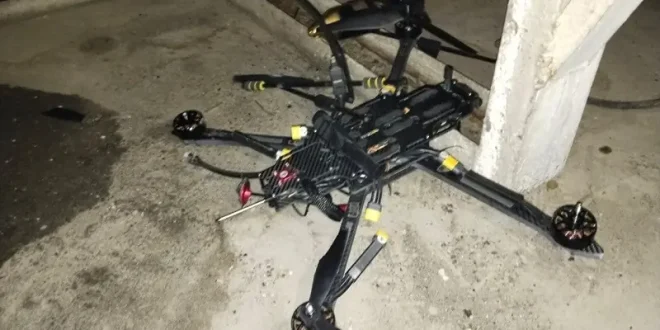
ISLAMABAD – A recent incident involving an unidentified quadcopter crashing onto a rooftop in Islamabad’s Humak locality serves as more than just a local police matter; it’s a stark reminder of the escalating drone-related security concerns facing Pakistan. While the immediate aftermath saw law enforcement cordon off the area and launch an investigation to trace the drone’s origin and operators, this event underscores the ongoing challenges in managing increasingly contested low-altitude airspace.
The News: A Crash Landing and an Ongoing Investigation
The quiet residential area of Model Town Humak recently became the scene of an unusual incident when a quadcopter, whose origins remain unknown, crash-landed on a house rooftop. Local police, swiftly responding to a resident’s report, secured the site and confiscated the drone. Efforts are currently underway to identify both the launch location and the individuals responsible for flying the unmanned aerial vehicle (UAV). This incident, though seemingly minor, immediately draws parallels to a series of more serious drone-related events that have gripped the nation’s security apparatus in recent months.
Background: A Nation Grappling with Drone Threats
This Humak incident does not occur in a vacuum but against a backdrop of heightened alert and proactive measures by Pakistani authorities. Just months prior, in February, the government imposed a sweeping nationwide ban on all types of unmanned aerial vehicles. This significant policy shift was necessitated by a rising tide of drone incursions, most notably the use of “rudimentary drones” by Afghan Taliban forces targeting various parts of the country. These cross-border threats highlighted a critical vulnerability, prompting the administrations of Islamabad, Khyber Pakhtunkhwa, Gilgit-Baltistan, Sindh, and Balochistan to issue comprehensive notifications reinforcing the ban.
The urgency of the situation was further emphasized in March when security sources reported the successful interception of two such rudimentary drones near Rawalpindi. These devices were brought down using advanced electronic countermeasures, leading to a temporary closure of Islamabad’s airspace as a precautionary measure. While no damage or casualties were reported, these incidents collectively painted a clear picture: Pakistan’s airspace, particularly at lower altitudes, was becoming increasingly susceptible to unauthorized and potentially hostile drone activity. The ban, with exemptions only for law enforcement agencies and the Islamabad administration, was framed as essential for safeguarding public safety, critical infrastructure, sensitive installations, and key personalities.
Impact on Pakistan: Navigating a New Security Frontier
The proliferation of drone technology, even in its most basic forms, presents a multi-faceted challenge to Pakistan’s national security and public order. The Humak quadcopter crash, irrespective of its intent, highlights the difficulty in enforcing a blanket ban and the potential for any unidentified aerial object to trigger security protocols. For security agencies, every such incident represents a potential threat, consuming resources and requiring meticulous investigation.
Beyond the immediate security implications, these events can have broader societal impacts. Public safety is paramount, and the presence of unidentified drones, particularly over residential areas or sensitive sites, can foster anxiety. Moreover, temporary airspace closures, even if localized, can disrupt civilian air traffic, albeit typically on a smaller scale. The challenge for Pakistan lies in striking a delicate balance: aggressively countering genuine threats while potentially stifling the legitimate and beneficial applications of drone technology in sectors like agriculture, infrastructure inspection, and disaster management. The comprehensive ban, while a necessary defensive measure, also prompts questions about future regulatory frameworks that might allow for controlled, safe, and productive drone use.
Analysis: The Evolving Dynamics of Airspace Control
The Humak quadcopter crash, though seemingly a minor incident, is a significant data point in Pakistan’s evolving struggle for airspace sovereignty, especially at low altitudes. It underscores the practical challenges of enforcing a nationwide ban and illustrates that even non-threatening or recreational drone activity can inadvertently strain security resources and raise alarms in a high-alert environment.
The government’s proactive measures, including the ban and the successful interception of rudimentary drones, demonstrate a clear understanding of the threat. However, the constant evolution of drone technology, even inexpensive off-the-shelf models, necessitates a continuous upgrade in counter-drone capabilities. This is not merely an arms race but a strategic challenge requiring sophisticated air traffic management systems for low-altitude zones, enhanced surveillance, and rapid response mechanisms. The distinction between a recreational quadcopter and a rudimentary threat drone can be ambiguous in real-time, demanding robust identification and neutralization protocols.
Furthermore, the incident calls for a deeper look into public awareness regarding drone regulations. While law enforcement is working to trace the quadcopter’s operators, the very act of flying an unauthorized UAV in a restricted zone, whether out of malice or ignorance, points to a need for stronger public education campaigns alongside stricter enforcement. As Pakistan continues to confront cross-border threats and internal security challenges, effective management of its airspace, from high-flying aircraft to low-altitude drones, will remain a critical component of its national security strategy. The Humak crash is a potent reminder that in the era of accessible drone technology, even the smallest aerial object can cast a long shadow over security landscapes.