 Dost Pakistan Journeys Tours and safaris in the North & South Pakistsn
Related Articles



“`html
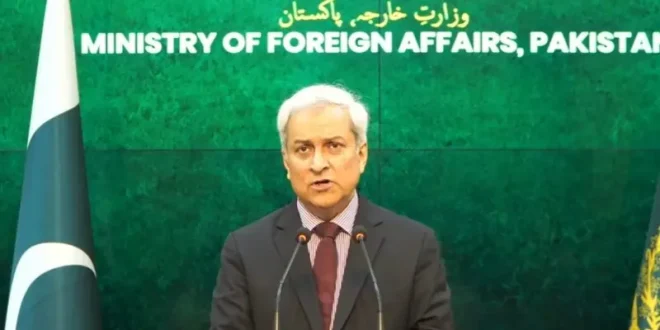
After death of 3 Pakistani sailors, FO says Islamabad will implement maritime coalition ‘in full earnest’
The recent commitment by Pakistan’s Foreign Office (FO) to “fully implement” a Saudi-led multinational maritime defence coalition, following the tragic deaths of three Pakistani sailors in Houthi attacks on a Saudi cargo ship, marks a pivotal moment in Islamabad’s foreign policy calculus. This declaration, alongside ongoing mediation efforts between the US and Iran and the signing of a new defence pact with Saudi Arabia and Turkiye, paints a vivid picture of Pakistan’s multi-faceted diplomatic engagements in a volatile region.
The News: A Multi-Front Diplomatic Offensive
In a week bristling with diplomatic activity, Pakistan’s Foreign Office spokesperson confirmed Islamabad’s resolve to join a Saudi-led maritime coalition aimed at safeguarding shipping and energy routes in the Red Sea. This affirmation came swiftly after three Pakistani nationals lost their lives in a Houthi rebel strike on a Saudi vessel, underscoring the immediate human cost and strategic imperative behind the move. The coalition, supported by 14 nations, highlights a concerted regional effort to counter threats to vital international waterways.
Concurrently, Pakistan’s Interior Minister Mohsin Naqvi embarked on a visit to Tehran, primarily to discuss bilateral relations, security concerns, and to advance the “Islamabad Memorandum of Understanding” (MoU) – a framework for Pakistan’s ongoing mediation between the United States and Iran. Despite the looming August 17 deadline for US-Iran negotiations under this MoU, Pakistan remains optimistic, viewing periods of escalation and calm as a “natural progression” in complex conflicts.
Adding another layer to Pakistan’s strategic outreach, the FO also lauded the signing of a joint defence pact in Makkah between Pakistan, Saudi Arabia, and Turkiye. This agreement, described as “purely defensive,” aims to bolster collective deterrence by treating an attack against one signatory as an attack against all, reflecting a deeper commitment to shared regional security burdens.
Finally, amid these significant developments, the FO took a firm stance against “baseless” remarks from India’s Ministry of External Affairs concerning alleged human rights abuses in Azad Jammu and Kashmir (AJK), reiterating Pakistan’s commitment to the fundamental rights of AJK’s populace while drawing attention to India’s own record in Indian Illegally Occupied Jammu and Kashmir (IIOJK).
Contextual Underpinnings: A Region in Flux
To fully grasp the significance of Pakistan’s recent foreign policy pronouncements, it’s essential to understand the intricate geopolitical landscape of the Middle East and South Asia:
- The Red Sea and Houthi Threat: The Red Sea is a critical maritime chokepoint, vital for global trade and energy shipments. The conflict in Yemen, involving the Saudi-led coalition against Houthi rebels, has spilled over into these waters, with Houthi attacks disrupting commercial shipping. These actions directly threaten international maritime security and the economic interests of nations reliant on these routes, including Pakistan.
- Pakistan-Saudi Arabia Relations: Pakistan and Saudi Arabia share a deeply rooted strategic and economic relationship. Saudi Arabia has been a crucial financial partner for Pakistan, while Pakistan has historically provided security assistance to the Kingdom. Islamabad’s commitment to the maritime coalition aligns with its long-standing alliance with Riyadh.
- US-Iran Tensions and Mediation: The long-standing animosity between the US and Iran, exacerbated by nuclear ambitions, sanctions, and regional proxy conflicts, poses a significant threat to global stability. Pakistan, along with other “brotherly states” like Qatar, has sought to play a mediating role, driven by a desire to prevent wider regional conflagration that could destabilize its own neighbourhood and economy. The “Islamabad MoU” signifies a diplomatic pathway, however fragile, towards de-escalation.
- The Makkah Pact: The trilateral defence agreement between Pakistan, Saudi Arabia, and Turkiye reflects a growing desire among these prominent Muslim-majority nations to forge stronger collective security mechanisms. This pact could be seen as an effort to create a new regional security architecture, leveraging shared cultural, religious, and strategic interests.
- Kashmir Dispute: The perennial Kashmir issue remains a flashpoint between nuclear-armed rivals Pakistan and India. Accusations and counter-accusations regarding human rights in AJK and IIOJK are a regular feature of their strained diplomatic relations, often surfacing during moments of heightened regional or international scrutiny.
Impact on Pakistan: Navigating the Crossroads
These rapid-fire diplomatic engagements carry significant implications for Pakistan across several fronts:
- Enhanced Security Risks and Commitments: Joining the Red Sea maritime coalition directly exposes Pakistani nationals and potentially its naval assets to the risks of regional conflict. While defensive in nature, it entails a tangible commitment of resources and personnel to an active theatre of operations. The Makkah Pact, too, while bolstering collective deterrence, expands Pakistan’s security obligations to its allies.
- Economic Imperatives: Protecting Red Sea shipping lanes is paramount for global trade, including Pakistan’s own energy imports and exports. Disruptions directly impact Pakistan’s economy through higher freight costs and supply chain vulnerabilities. Moreover, maintaining strong ties with Saudi Arabia is vital for foreign exchange remittances and financial assistance.
- Geopolitical Balancing Act: Pakistan finds itself threading a delicate needle. Aligning with Saudi Arabia in the Red Sea and through the Makkah Pact, while simultaneously mediating between the US and Iran, requires exceptional diplomatic finesse. Islamabad must ensure its actions are not perceived as overtly favouring one side over another in complex regional rivalries, particularly concerning Iran.
- Diplomatic Stature and Influence: Successfully facilitating dialogue between the US and Iran would significantly elevate Pakistan’s diplomatic standing as a responsible regional player committed to peace. Conversely, failure or perceived bias could diminish its credibility. The Makkah Pact also positions Pakistan as a key player in a new, potentially influential, regional security bloc.
- Domestic and Regional Stability: Regional conflicts have a ripple effect. Instability in the Middle East, be it from Red Sea hostilities or a wider US-Iran conflict, could impact Pakistan’s own internal security and economic stability. Managing its eastern border dynamics with India, particularly concerning Kashmir, remains a constant domestic and international challenge.
Analysis: Pakistan’s Strategic Rethink
Pakistan’s recent foreign policy manoeuvres suggest a strategic re-evaluation aimed at proactive engagement rather than reactive bystander status in a rapidly evolving geopolitical landscape. This shift is driven by a confluence of economic necessity, security imperatives, and a desire to enhance its diplomatic influence.
The commitment to the Red Sea maritime coalition, spurred by the tragic loss of its citizens, underscores Pakistan’s recognition of the interconnectedness of global security. Protecting international waterways is not merely a matter of supporting an ally; it’s a direct safeguard for Pakistan’s economic lifelines. This move, however, also highlights the inherent risks of entanglement in complex regional proxy wars.
Pakistan’s persistence in mediating between the US and Iran is a testament to its long-term vision for regional stability. While fraught with challenges and frequent setbacks, Islamabad understands that a full-blown conflict between these two powers would be catastrophic for the entire region. The “Islamabad MoU” represents a significant, albeit fragile, diplomatic achievement, positioning Pakistan as a facilitator of critical dialogue. The optimism expressed by the FO, viewing escalations as part of a “natural progression,” reflects a seasoned understanding of high-stakes diplomacy, where patience and persistence are key.
The Makkah Pact with Saudi Arabia and Turkiye is perhaps the most intriguing development. It signals a potential forging of a new, potent collective security architecture among key Islamic nations. While explicitly termed “defensive,” such an alliance inevitably shifts regional power dynamics and could be perceived differently by other regional actors or global powers. It positions Pakistan more firmly within a specific bloc, yet its concurrent mediation efforts suggest a desire to maintain broader diplomatic flexibility. This balancing act – aligning with certain powers for security while engaging others for peace – defines Pakistan’s current strategic tightrope walk.
Finally, the firm rejection of Indian remarks on AJK is a consistent element of Pakistan’s foreign policy, reaffirming its principled stance on Kashmir and its commitment to international resolutions. This serves as a reminder that despite its focus on Western and Middle Eastern fronts, the eastern border remains a core national security concern.
In conclusion, Pakistan’s foreign policy is undergoing a significant recalibration. From ensuring the safety of its citizens and global trade routes to actively fostering dialogue between adversaries and building new alliances, Islamabad is pursuing a multi-pronged strategy. This approach, while ambitious, reflects a nation striving to assert its agency and protect its interests in an increasingly complex and interconnected world.
“`
