 Dost Pakistan Journeys Tours and safaris in the North & South Pakistsn
Imaan Mazari’s Health Concerns: A Bellwether for Human Rights in Pakistan
The News
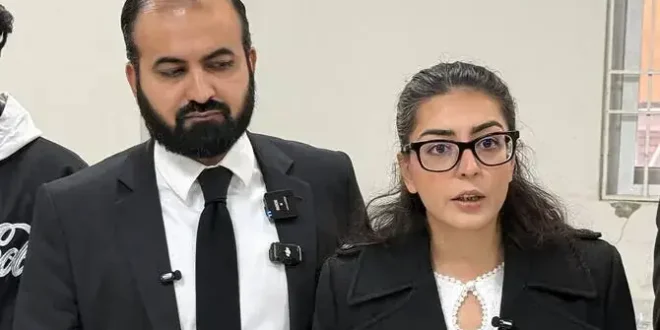
The Islamabad Bar Association (IBA) has voiced profound apprehension regarding the deteriorating health conditions of prominent activist and lawyer Imaan Mazari, alongside Hadi Ali Chattha, who are currently in custody. In an urgent communication addressed to the Chief Justices of both the Islamabad High Court (IHC) and the Supreme Court of Pakistan, IBA acting president Iram Rashid and secretary Raja Khawar Dhaniyal underscored the critical need for immediate judicial intervention. The letter specifically highlighted that Imaan Mazari is reportedly suffering from serious medical issues requiring continuous treatment, while Hadi Ali Chattha also faces a challenging situation necessitating proper medical attention. The IBA firmly asserted that access to timely and appropriate medical care is a fundamental right of every prisoner, holding the concerned authorities accountable for ensuring these essential healthcare facilities are provided. The association has called for swift instructions to jail authorities and medical officers to guarantee ongoing and adequate medical treatment for both individuals, additionally urging an expedited hearing for their pending applications seeking suspension of sentences.
Background: A Deeper Look at Human Rights and Justice in Pakistan
The concerns raised by the Islamabad Bar Association are not isolated; they resonate within a broader context of human rights advocacy and the rule of law in Pakistan. Imaan Mazari is a well-known human rights lawyer and activist, frequently vocal on issues pertaining to civil liberties, judicial independence, and state accountability. Her activism, often characterized by strong critiques of state policies and institutions, has historically led to legal challenges and detentions. While the specific charges leading to her current custody are not detailed in this news brief, her previous arrests have often been linked to charges of sedition, incitement, or disrupting public order, typically following her participation in protests or critical public statements. Hadi Ali Chattha, mentioned alongside Mazari, appears to be implicated in similar circumstances, though details of his background and specific involvement are less publicised in this context.
Pakistan’s Constitution guarantees fundamental rights, including the right to life and dignity, which inherently extends to providing humane treatment and necessary medical care to all individuals, irrespective of their legal status as prisoners. Bar associations in Pakistan, like the IBA, historically play a crucial role as watchdogs for constitutionalism and human rights. They frequently step in to advocate for individuals whose rights are perceived to be violated, particularly in cases that garner public attention or involve politically sensitive figures. This intervention by the IBA reflects a long-standing tradition of the legal fraternity acting as a check on executive power and a voice for justice.
Impact on Pakistan: Rule of Law and International Scrutiny
The situation surrounding Imaan Mazari’s and Hadi Ali Chattha’s health in custody carries significant implications for Pakistan on multiple fronts.
- Rule of Law and Constitutional Rights: At its core, this incident tests the state’s commitment to upholding fundamental rights enshrined in its own constitution. The explicit demand for medical care for prisoners isn’t merely a humanitarian plea; it’s an assertion of a fundamental legal right. Any perceived failure to provide this could erode public confidence in the justice system and the state’s adherence to due process.
- Judicial Independence and Oversight: The appeal directly to the Chief Justices places the judiciary in a crucial position. Their response will be closely watched as an indicator of judicial independence and its capacity to act as a bulwark against potential executive overreach or administrative negligence. A decisive and fair intervention could reinforce the judiciary’s role as the ultimate protector of citizens’ rights, while inaction could raise questions about its effectiveness.
- International Image and Human Rights Record: Cases involving prominent activists and alleged denial of basic rights often attract international attention. Human rights organizations, international legal bodies, and foreign governments frequently monitor such situations. Adverse reports or widespread concerns could negatively impact Pakistan’s standing on global human rights indices and diplomatic relations, particularly concerning its commitments to international conventions on civil and political rights.
- Civil Society and Activism: The treatment of activists like Imaan Mazari often sends a chilling message to the broader civil society. While it might galvanize some to further advocate for rights, it could also deter others from voicing dissent or engaging in activism, fostering a climate of fear and self-censorship. The resolution of this case could therefore influence the future trajectory of human rights activism in Pakistan.
Analysis: The Intersection of Health, Rights, and State Power
The Islamabad Bar Association’s urgent appeal regarding Imaan Mazari’s and Hadi Ali Chattha’s health transcends a simple medical request; it embodies a critical juncture where the principles of fundamental human rights intersect with the exercise of state power and the integrity of the justice system. The IBA’s proactive stance highlights the vital role that independent legal bodies play in holding authorities accountable, especially when individuals are stripped of their freedom and become entirely dependent on state care.
The bedrock principle here is that detention does not divest an individual of their inherent human dignity or their fundamental right to health. International human rights laws, alongside Pakistan’s own constitutional framework, mandate that states must ensure the health and well-being of all prisoners. Any alleged denial or inadequate provision of medical care not only constitutes a violation of these rights but also raises serious questions about the transparency and humanity of the detention process.
For Pakistan, this situation presents an opportunity for its judicial system to reaffirm its commitment to the rule of law and protect the rights of all citizens, regardless of their political leanings or public profile. A swift, transparent, and humane response from the higher judiciary, ensuring proper medical treatment and an expedited review of their cases, would significantly bolster confidence in Pakistan’s institutions. Conversely, any perceived indifference or delay could further fuel skepticism regarding the state of human rights and judicial efficacy in the country. This case, therefore, serves as a crucial barometer for assessing Pakistan’s ongoing dedication to justice and fundamental freedoms.
