 Dost Pakistan Journeys Tours and safaris in the North & South Pakistsn
Meta Description: A Lahore court issues notice to the NCCIA regarding controversial remarks by JUI-F chief Maulana Fazlur Rehman on security personnel’s sacrifices. This analysis explores the political, social, and legal ramifications of his statement in Pakistan.
Lahore Court Issues Notice to NCCIA on Plea Seeking Case Against Fazl Over Remarks on Security Personnel
The News
In a development that has stirred significant debate across Pakistan, a sessions court in Lahore has issued a notice to the National Cyber Crime Investigation Agency (NCCIA). The notice comes in response to a petition seeking the registration of a case against Jamiat Ulema-i-Islam-Fazl (JUI-F) chief, Maulana Fazlur Rehman. The controversy stems from remarks allegedly made by Fazlur Rehman regarding security personnel and the concept of martyrdom.
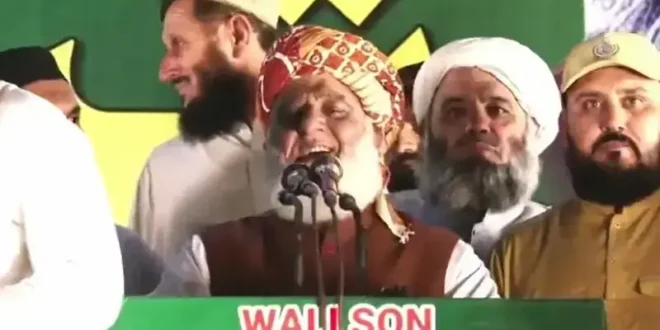
During a recent political rally in Kasur, Punjab, where the JUI-F chief was addressing the prevailing security situation and terrorism in Khyber Pakhtunkhwa (KP) and Balochistan, he reportedly stated that while soldiers’ martyrdom is frequently mentioned, security personnel are paid salaries to fight for the country. This statement quickly drew sharp criticism from various quarters, including prominent government ministers.
Citizen Mohammad Waqar filed the petition, arguing that Fazlur Rehman’s remarks, widely circulated on social media, were derogatory towards Pakistan’s martyrs and deeply hurt public sentiments, especially those of martyrs’ families. The petitioner had initially approached the NCCIA directly, but upon no action being taken, sought judicial intervention. Additional District and Sessions Judge Malik Latif, after hearing initial arguments, has directed the NCCIA to submit a reply by August 17, setting the stage for a potentially significant legal and political confrontation.
The immediate fallout saw condemnation from ruling Pakistan Muslim League-Nawaz (PML-N) ministers. Defence Minister Khawaja Asif termed the statement “unfair” and expressed disappointment, while Planning Minister Ahsan Iqbal emphasized that describing such sacrifices as mere compensation for a salary was unethical and against Islamic teachings. These reactions underscore the highly sensitive nature of the topic in Pakistan’s national discourse.
Background
To fully grasp the gravity of Maulana Fazlur Rehman’s statement and its subsequent legal challenge, it’s crucial to understand the interwoven threads of Pakistan’s political landscape, societal values, and security realities.
Maulana Fazlur Rehman and JUI-F
Maulana Fazlur Rehman is a veteran politician and the leader of Jamiat Ulema-i-Islam-Fazl (JUI-F), a powerful religious-political party with a significant vote bank, particularly in Khyber Pakhtunkhwa and Balochistan. Known for his fiery rhetoric and astute political maneuvering, Fazlur Rehman has often positioned himself as a vocal critic of the state’s policies, particularly those related to security and governance. His party derives its strength from religious seminaries (madrasahs) and a conservative voter base, giving him considerable influence in certain regions.
The Sacrifices of Security Personnel and the Concept of Martyrdom
The concept of “Shaheed” (martyr) holds immense spiritual, cultural, and national significance in Pakistan. Members of the armed forces and other security agencies who die in the line of duty are universally revered as martyrs, and their sacrifices are deeply honored. National ceremonies, monuments, and public discourse constantly reinforce this reverence. Any statement that even remotely appears to diminish these sacrifices is considered highly offensive and unpatriotic, touching a raw nerve within the public and particularly among military families.
Security Situation in KP and Balochistan
Fazlur Rehman’s remarks were made in the context of the deteriorating security situation in Khyber Pakhtunkhwa and Balochistan. Both provinces have witnessed a resurgence of militant activities, primarily from groups like the Tehrik-i-Taliban Pakistan (TTP) and Baloch separatists. This ongoing insurgency has led to numerous casualties among security forces, making the issue of their sacrifices a daily reality and a point of national concern. The military often emphasizes the scale of these sacrifices to garner public support for its counter-terrorism operations.
Role of NCCIA and Cybercrime Laws
The National Cyber Crime Investigation Agency (NCCIA) operates under the Prevention of Electronic Crimes Act (PECA), 2016. PECA is a broad piece of legislation designed to combat cybercrime but has frequently been criticized for its potential misuse to stifle dissent and freedom of speech. Given that Fazlur Rehman’s statement was widely circulated and amplified on social media platforms, the petition sought action under these cybercrime laws, highlighting the increasing trend of using digital regulations to address politically sensitive speech.
Pakistan’s Civil-Military Dynamics
Pakistan has a history of complex civil-military relations, where the military often plays a significant role in political and security affairs. Public commentary on the armed forces is a highly sensitive area. While political leaders often critique government policies, direct or perceived criticism of the military’s sacrifices can quickly escalate into a national controversy, inviting strong reactions from the establishment and its supporters.
Impact on Pakistan
Maulana Fazlur Rehman’s statement, and the subsequent legal and political reactions, have far-reaching implications across various facets of Pakistani society and governance.
Public Sentiment and National Unity
- Outrage and Division: The remarks have sparked significant public outrage, particularly among those who deeply revere the military and its martyrs. This has created a fault line in public discourse, potentially exacerbating social divisions between those who support the military unequivocally and those who believe in greater freedom to critique state institutions.
- Morale of Security Forces: Such statements can be perceived as demoralizing for active security personnel and their families, who face constant threats and make immense sacrifices. The government’s swift condemnation reflects an effort to safeguard the morale of the armed forces.
Political Ramifications
- JUI-F’s Image: While Fazlur Rehman’s base might interpret his remarks as a challenge to the establishment or a critique of security policy, a significant portion of the electorate, including those in urban centers and nationalist segments, may view it negatively, potentially affecting JUI-F’s broader political appeal.
- Government’s Stance: The strong condemnation from PML-N ministers highlights the ruling party’s strategy to align itself with public sentiment regarding military sacrifices. This serves to distance the government from any perception of disrespect towards the armed forces and to solidify its own nationalist credentials.
- Opposition Dynamics: The incident could further complicate relations within the opposition bloc, especially if other opposition parties choose to distance themselves from Fazlur Rehman’s controversial stance.
Civil-Military Relations
- Increased Tensions: Remarks touching upon the military’s sacred cow – its sacrifices and martyrs – inevitably strain the delicate balance of civil-military relations. While it is unclear if the military itself has directly responded, the political backlash signals a strong collective disapproval.
- Redefining Boundaries: The incident may inadvertently reinforce the unwritten red lines for political discourse in Pakistan, particularly concerning the military and national security.
Legal and Free Speech Implications
- Weaponization of PECA: The use of cybercrime laws (PECA) to address political statements made in a rally and circulated online raises concerns about the scope and potential misuse of these laws. Critics argue that PECA is increasingly becoming a tool to curb free speech and political dissent rather than solely tackling genuine cybercrime.
- Precedent Setting: The court’s decision to issue a notice, even at this initial stage, sets a precedent for how such politically charged statements might be handled legally. If a case is registered, it could significantly impact the legal framework surrounding freedom of expression in Pakistan.
- Balance Between Rights: The incident highlights the ongoing struggle in Pakistan to balance freedom of speech with national security interests and respect for revered institutions.
Analysis
Maulana Fazlur Rehman’s statement is not merely a verbal gaffe; it is a complex political utterance with multiple layers of interpretation, set against a tense backdrop in Pakistan.
The Intent Behind the Statement
One could argue that Fazlur Rehman’s remarks were a calculated political move. By questioning the narrative around martyrs and linking their service to a salary, he might have aimed to achieve several objectives:
- Challenging the Establishment: As a seasoned politician, Fazlur Rehman often critiques the state’s security apparatus and its role in governance. His statement could be an attempt to demystify or de-sacralize the military’s role, thus opening avenues for deeper scrutiny of security policies, particularly in KP and Balochistan, where his party has a strong presence.
- Mobilizing a Niche Base: Some segments of his support base, particularly those critical of state policies or disillusioned with military interventions, might resonate with a narrative that questions the official line on sacrifices, even if controversial.
- Political Positioning: In an environment where various political forces are vying for influence, such a bold statement can help Fazlur Rehman stand out and reassert his image as an independent voice, unafraid to speak truth to power, as he might perceive it.
However, it is also plausible that the remarks were a miscalculation, poorly worded, or taken out of context, leading to an unintended political firestorm. Given the sensitivity, even a slight misstep in wording can have profound repercussions.
The Tightrope Walk of Political Criticism
The incident underscores the extremely narrow margin for political criticism in Pakistan, particularly when it pertains to the military. While robust debate is a cornerstone of democracy, the national security paradigm in Pakistan often places the armed forces above direct political scrutiny in public discourse. Politicians are expected to navigate a treacherous path, criticizing government policies without appearing to undermine national institutions or disrespecting sacrifices. Fazlur Rehman’s statement seemingly crossed this unwritten red line.
The Expanding Reach of Cybercrime Laws
The move to invoke PECA against a public figure for remarks made at a rally and disseminated online highlights the evolving application of cybercrime laws in Pakistan. Originally intended to tackle online fraud, harassment, and data security breaches, PECA has increasingly been used to address “defamation” and “hate speech” that pertains to state institutions or powerful individuals. This trend raises fundamental questions about freedom of expression, digital rights, and the potential for these laws to be wielded as instruments of political control or censorship.
The Symbolism of the Military in National Identity
The military holds an almost sacrosanct place in Pakistan’s national identity, viewed as the ultimate defender of the nation’s sovereignty and territorial integrity. This deep-seated reverence makes any perceived insult or questioning of its sacrifices a highly charged issue. The rapid and strong reactions from government ministers illustrate the political imperative to defend this symbolism, not just out of conviction but also to avoid being seen as disrespectful to an institution central to Pakistan’s foundation and stability.
Future Implications for Political Discourse
The court’s notice to the NCCIA marks a critical juncture. If a case is indeed registered against Maulana Fazlur Rehman, it could:
- Deter Dissent: Further embolden the use of cybercrime laws against critical voices, potentially chilling political dissent and leading to increased self-censorship among politicians and the public.
- Deepen Polarization: Intensify the existing political polarization, particularly between those who advocate for unrestricted freedom of speech and those who prioritize national reverence for institutions.
- Shape Judicial Interpretation: Influence how Pakistani courts interpret the balance between freedom of expression, national security, and public order in the digital age.
Ultimately, this episode serves as a powerful reminder of the delicate and often contentious relationship between political speech, public sentiment, and institutional sanctity in Pakistan.
