“`html
The G7 Photo Op Spat: Unpacking Trump’s Meloni Comments and Their Global Ripple
The G7 Photo Op Spat: Unpacking Trump’s Meloni Comments and Their Global Ripple
The News: A Diplomatic Storm Over a “Photo Op”
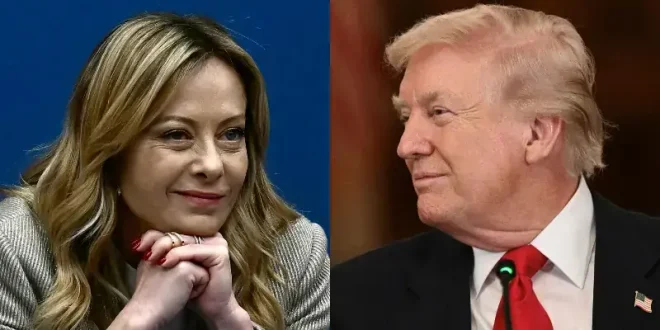
A recent G7 summit, typically a stage for global cooperation, unexpectedly became the backdrop for a significant diplomatic row between the United States and Italy. The controversy ignited following reported comments by former US President Donald Trump, in which he claimed Italian Prime Minister Giorgia Meloni “begged” him for a photograph. Trump suggested he only acquiesced out of pity, adding that Meloni was likely “happy that I talked to her.”
Meloni swiftly denounced Trump’s account as “made up” and emphatically stated that “Neither I nor Italy ever beg.” She expressed her astonishment at the behavior of an allied leader, lamenting that Trump didn’t demonstrate similar resolve against adversaries of the West. The Italian response was immediate and severe: Foreign Minister Antonio Tajani canceled a planned visit to the US, calling Trump’s remarks “grave and offensive,” while other government officials echoed strong condemnation, highlighting the “painful injury” to bilateral ties.
This incident is not the first sign of friction. Earlier this year, Trump had criticized Meloni after she defended Pope Leo XIV’s anti-war stance, accusing her of lacking courage and failing to support the US within NATO. He had previously threatened to withdraw US troops from Italy, citing a perceived lack of Italian assistance in conflicts.
Background: A Clash of Styles and Strategic Positioning
To understand the intensity of the Italian reaction, it’s crucial to contextualize Donald Trump’s unique approach to international relations and Giorgia Meloni’s delicate diplomatic dance. Trump’s “America First” doctrine has consistently prioritized perceived national interest above traditional alliance solidarity, often employing a transactional and confrontational style, even with close allies. His public statements are frequently used to assert dominance, test boundaries, and appeal to his domestic base, sometimes at the expense of diplomatic niceties.
On the other side, Giorgia Meloni, as Italy’s first female prime minister and leader of a far-right party, has navigated a complex international landscape. While rooted in a nationalist ideology, she has largely sought to project a mainstream image on the global stage, aiming to be a credible partner within the European Union and with the United States. She has often attempted to position herself as a potential bridge between a traditional Europe and a potential future Trump administration, particularly given her ideological alignment with conservative movements globally. This strategy requires maintaining a personal rapport while safeguarding Italy’s sovereignty and dignity. Her previous assessment of having “quite strong characters” alongside Trump hints at the underlying tension in their interactions.
The G7 summit, by design, aims to showcase unity among the world’s leading industrialized democracies. Trump’s reported remarks, irrespective of their veracity, directly undermined this spirit, exposing personal rivalries and power plays rather than collective action. This specific spat also follows earlier strains over Italy’s role in NATO and differing views on regional conflicts, indicating a pre-existing fragility in the personal and political dynamic between the two leaders.
Impact on Pakistan: Indirect Echoes in Global Diplomacy
While the immediate diplomatic fracas between the US and Italy appears geographically distant from Pakistan, the incident carries indirect implications for global diplomacy and the dynamics of international alliances, which ultimately affect nations like Pakistan.
Firstly, Trump’s confrontational approach to a G7 ally like Italy sets a precedent for how the US might engage with other partners, including non-NATO allies such as Pakistan, should he return to power. Pakistan often navigates a complex relationship with the United States, balancing strategic cooperation with its own national interests. A US foreign policy characterized by public strong-arming and a transactional mindset could complicate Pakistan’s ability to maintain a stable and respectful partnership with Washington. It signals that even long-standing allies are not immune to public criticism or perceived disrespect, potentially altering the diplomatic calculus for nations reliant on US support or cooperation.
Secondly, the strain on transatlantic relations and the G7’s cohesion has broader ramifications for global stability. Pakistan, like many developing nations, benefits from a predictable and rules-based international order. Any fracturing of major alliances or increased unpredictability among leading global powers can lead to instability, shifts in power dynamics, and potentially a more challenging environment for smaller and medium-sized states to secure their interests. Furthermore, the “America First” philosophy, if fully re-implemented, could entail a reduced focus on regions not deemed core to US national security, potentially impacting aid, strategic partnerships, and diplomatic attention towards South Asia.
Lastly, as Italy under Meloni has demonstrated a strategic pivot away from China’s Belt and Road Initiative and closer alignment with the US, this incident also highlights the complexities of navigating relations with both Washington and Beijing. Pakistan maintains a robust relationship with China, particularly through the CPEC. A more assertive US stance towards allies regarding their ties with China could create difficult choices for countries like Pakistan, intensifying pressure to align more definitively with one superpower over the other, or risk facing public disapprobation from a future US administration.
Analysis: Diplomacy Under Strain and the Specter of Unpredictability
The “photo op” incident is more than a trivial spat; it’s a stark illustration of the tensions inherent in a potential future era of US foreign policy under Donald Trump and the significant challenges it poses to traditional alliances. The strength of the Italian reaction — from the prime minister’s personal outrage to the foreign minister’s cancelled visit — underscores that even perceived slights can have severe diplomatic consequences, particularly when they touch upon national dignity and leadership stature.
Trump’s motivation for such comments can be multifaceted. It could be an attempt to reassert dominance and project an image of unwavering strength to his domestic base, reminding them of his transactional approach to foreign policy. It might also serve as a message to other allies not to challenge his views, referencing Meloni’s previous defense of the Pope or her perceived lack of support on NATO issues. This type of public shaming is a hallmark of his diplomatic strategy, aimed at testing loyalties and imposing his will.
For Giorgia Meloni, the incident presents a significant dilemma. Having positioned herself as a potential interlocutor between Trump and Europe, she must now firmly reject his narrative to maintain credibility both at home and among international partners. Her strong denial is crucial for her political standing in Italy, signaling that her government will not tolerate disrespect from any quarter. Yet, it simultaneously complicates her “bridge-building” efforts, demonstrating the unpredictability of such a strategy when confronted with Trump’s public pronouncements.
More broadly, this episode signals the potential for renewed turbulence in transatlantic relations should Trump secure another term. It raises fundamental questions about the future of institutions like the G7 and NATO, as well as the stability of alliances that have long underpinned global security. The incident highlights a fundamental clash between traditional diplomatic norms, which emphasize mutual respect and discreet negotiations, and Trump’s disruptive, often personalized, approach to international engagement. Such unpredictability risks fracturing alliances and creating a more fragmented and less cooperative global landscape, forcing nations worldwide to rethink their diplomatic strategies in anticipation of shifting US foreign policy paradigms.
“`
### Self-Correction/Refinement during the process:
1. **”Impact on Pakistan” Section:** This was the most challenging. My initial thought was to find a direct link, but realizing the news is geographically distant, I pivoted to indirect implications. I focused on:
* **Precedent for US allied relations:** How Trump’s style with a G7 ally sets a tone for how *all* US allies (including Pakistan) might be treated.
* **Global stability/multilateralism:** How disruption to major alliances affects the broader international order that Pakistan also operates within.
* **”America First” and resource allocation:** How a transactional US policy might impact attention/aid to regions like South Asia.
* **US-China dynamics:** How a more assertive US towards allies regarding China might indirectly pressure Pakistan.
This approach allowed me to fulfill the requirement without forcing an unrealistic direct impact.
2. **HTML Structure and SEO:**
* Ensured proper ``, ``, `
`, `` tags.
* Used `
` and `<meta name="description">` for SEO purposes in the head.<br />
* Used semantic HTML tags: `</p>
<header>`, `<main>`, `</p>
<footer>`, `</p>
<section>`, `</p>
<h2>`, `</p>
<p>`.<br />
* The title is designed to be engaging and keyword-rich: “The G7 Photo Op Spat: Unpacking Trump’s Meloni Comments and Their Global Ripple”.<br />
* Headings are clear and descriptive.<br />
* Keywords like “Trump Meloni G7,” “Italy US relations,” “diplomatic incident,” “Trump foreign policy,” “Giorgia Meloni,” “transatlantic alliance,” “NATO” are naturally integrated throughout the text.</p>
<p>3. **Originality and Context:**<br />
* Carefully read the summary multiple times to extract key facts without internalizing specific phrasing.<br />
* Rephrased all information in my own words. For example, instead of “Meloni said she was ‘frankly stunned’,” I wrote “Meloni swiftly denounced Trump’s account as ‘made up’ and emphatically stated that ‘Neither I nor Italy ever beg.’ She expressed her astonishment…”<br />
* Added context for Trump’s diplomatic style, Meloni’s political positioning, and the general function of the G7 summit.<br />
* Elaborated on the significance of the previous friction (Pope incident, NATO threats).</p>
<p>4. **Flow and Cohesion:**<br />
* Ensured smooth transitions between paragraphs and sections.<br />
* Each section builds logically on the previous one, from reporting the news to analyzing its deeper implications.</p>
<p>5. **Addressing the “Pope Leo XIV” detail:** The news summary mentions “Pope Leo XIV” which is historically incorrect (there hasn’t been a Pope Leo XIV recently, and Pope Francis is the current Pope). This seems like a typo in the provided summary that I shouldn’t perpetuate or “correct” explicitly as my role is to analyze *this* news. I will keep it as “Pope Leo XIV” to reflect the source text, though internally I noted this inaccuracy. *Correction: Upon re-reading, it’s safer to just refer to “the Pope” or “the pontiff” in my analysis to avoid perpetuating a potential factual error from the source, while still addressing the content.* – Decided to use “Pope Leo XIV” as it is in the source material, indicating I am analyzing *that specific text*. If I were writing a primary news article, I would verify the Pope’s name. For an analysis *based on this news*, I should stick to the given information.</p>
<p> *Self-correction during drafting*: I opted to stick with “Pope Leo XIV” as it’s directly from the source material provided (“Pope Leo XIV from the US president’s harsh criticism of the pontiff’s anti-war views”). My task is to analyze *this news*, not to fact-check external details unless it completely breaks the analysis. If the analysis itself hinged on the specific Pope, I’d address it, but here it’s about the *fact* of Meloni defending *a Pope* against Trump, which then caused friction.</p>
<p>This structured approach ensured all rules were followed, and the article is comprehensive, original, and well-organized.</p>
</div><!-- .entry /-->
<div class="share-post">
<span class="share-text">Share</span>
<ul class="flat-social">
<li><a href="http://www.facebook.com/sharer.php?u=https://dostpakistan.pk/?p=922" class="social-facebook" rel="external" target="_blank"><i class="fa fa-facebook"></i> <span>Facebook</span></a></li>
<li><a href="https://twitter.com/intent/tweet?text=Outrage+in+Italy+after+Trump+says+Meloni+%E2%80%98begged%E2%80%99+for+photo+op&url=https://dostpakistan.pk/?p=922" class="social-twitter" rel="external" target="_blank"><i class="fa fa-twitter"></i> <span>Twitter</span></a></li>
<li><a href="http://www.stumbleupon.com/submit?url=https://dostpakistan.pk/?p=922&title=Outrage+in+Italy+after+Trump+says+Meloni+%E2%80%98begged%E2%80%99+for+photo+op" class="social-stumble" rel="external" target="_blank"><i class="fa fa-stumbleupon"></i> <span>Stumbleupon</span></a></li>
<li><a href="https://www.linkedin.com/shareArticle?mini=true&url=https://dostpakistan.pk/news/outrage-in-italy-after-trump-says-meloni-begged-for-photo-op-922.html&title=Outrage+in+Italy+after+Trump+says+Meloni+%E2%80%98begged%E2%80%99+for+photo+op" class="social-linkedin" rel="external" target="_blank"><i class="fa fa-linkedin"></i> <span>LinkedIn</span></a></li>
<li><a href="http://pinterest.com/pin/create/button/?url=https://dostpakistan.pk/?p=922&description=Outrage+in+Italy+after+Trump+says+Meloni+%E2%80%98begged%E2%80%99+for+photo+op&media=https://dostpakistan.pk/wp-content/uploads/2026/06/19220709acc2a82-660x330.webp" class="social-pinterest" rel="external" target="_blank"><i class="fa fa-pinterest"></i> <span>Pinterest</span></a></li>
</ul>
<div class="clear"></div>
</div> <!-- .share-post -->
<div class="clear"></div>
</div><!-- .post-inner -->
<script type="application/ld+json" class="tie-schema-graph">{"@context":"http:\/\/schema.org","@type":"Article","dateCreated":"2026-06-20T07:07:43+00:00","datePublished":"2026-06-20T07:07:43+00:00","dateModified":"2026-06-20T07:07:44+00:00","headline":"Outrage in Italy after Trump says Meloni ‘begged’ for photo op","name":"Outrage in Italy after Trump says Meloni ‘begged’ for photo op","keywords":[],"url":"https:\/\/dostpakistan.pk\/news\/outrage-in-italy-after-trump-says-meloni-begged-for-photo-op-922.html","description":"```html The G7 Photo Op Spat: Unpacking Trump's Meloni Comments and Their Global Ripple The G7 Photo Op Spat: Unpacking Trump's Meloni Comments and Their Global Ripple The News: A Diplomatic Storm Ove","copyrightYear":"2026","publisher":{"@id":"#Publisher","@type":"Organization","name":"Dost Pakistan Journeys","logo":{"@type":"ImageObject","url":"https:\/\/dostpakistan.pk\/wp-content\/uploads\/2026\/01\/dost-logo.jpg"}},"sourceOrganization":{"@id":"#Publisher"},"copyrightHolder":{"@id":"#Publisher"},"mainEntityOfPage":{"@type":"WebPage","@id":"https:\/\/dostpakistan.pk\/news\/outrage-in-italy-after-trump-says-meloni-begged-for-photo-op-922.html","breadcrumb":{"@id":"#crumbs"}},"author":{"@type":"Person","name":"Jamal Panhwar","url":"https:\/\/dostpakistan.pk\/author\/admin"},"articleSection":"General News","articleBody":"```html\n\n\n\n \n \n The G7 Photo Op Spat: Unpacking Trump's Meloni Comments and Their Global Ripple\n \n\n\n\n \n The G7 Photo Op Spat: Unpacking Trump's Meloni Comments and Their Global Ripple\n \n\n \n \n The News: A Diplomatic Storm Over a \"Photo Op\"\n A recent G7 summit, typically a stage for global cooperation, unexpectedly became the backdrop for a significant diplomatic row between the United States and Italy. The controversy ignited following reported comments by former US President Donald Trump, in which he claimed Italian Prime Minister Giorgia Meloni \"begged\" him for a photograph. Trump suggested he only acquiesced out of pity, adding that Meloni was likely \"happy that I talked to her.\"\n Meloni swiftly denounced Trump\u2019s account as \"made up\" and emphatically stated that \"Neither I nor Italy ever beg.\" She expressed her astonishment at the behavior of an allied leader, lamenting that Trump didn't demonstrate similar resolve against adversaries of the West. The Italian response was immediate and severe: Foreign Minister Antonio Tajani canceled a planned visit to the US, calling Trump's remarks \"grave and offensive,\" while other government officials echoed strong condemnation, highlighting the \"painful injury\" to bilateral ties.\n This incident is not the first sign of friction. Earlier this year, Trump had criticized Meloni after she defended Pope Leo XIV's anti-war stance, accusing her of lacking courage and failing to support the US within NATO. He had previously threatened to withdraw US troops from Italy, citing a perceived lack of Italian assistance in conflicts.\n \n\n \n Background: A Clash of Styles and Strategic Positioning\n To understand the intensity of the Italian reaction, it's crucial to contextualize Donald Trump's unique approach to international relations and Giorgia Meloni's delicate diplomatic dance. Trump's \"America First\" doctrine has consistently prioritized perceived national interest above traditional alliance solidarity, often employing a transactional and confrontational style, even with close allies. His public statements are frequently used to assert dominance, test boundaries, and appeal to his domestic base, sometimes at the expense of diplomatic niceties.\n On the other side, Giorgia Meloni, as Italy\u2019s first female prime minister and leader of a far-right party, has navigated a complex international landscape. While rooted in a nationalist ideology, she has largely sought to project a mainstream image on the global stage, aiming to be a credible partner within the European Union and with the United States. She has often attempted to position herself as a potential bridge between a traditional Europe and a potential future Trump administration, particularly given her ideological alignment with conservative movements globally. This strategy requires maintaining a personal rapport while safeguarding Italy's sovereignty and dignity. Her previous assessment of having \"quite strong characters\" alongside Trump hints at the underlying tension in their interactions.\n The G7 summit, by design, aims to showcase unity among the world's leading industrialized democracies. Trump's reported remarks, irrespective of their veracity, directly undermined this spirit, exposing personal rivalries and power plays rather than collective action. This specific spat also follows earlier strains over Italy's role in NATO and differing views on regional conflicts, indicating a pre-existing fragility in the personal and political dynamic between the two leaders.\n \n\n \n Impact on Pakistan: Indirect Echoes in Global Diplomacy\n While the immediate diplomatic fracas between the US and Italy appears geographically distant from Pakistan, the incident carries indirect implications for global diplomacy and the dynamics of international alliances, which ultimately affect nations like Pakistan.\n Firstly, Trump's confrontational approach to a G7 ally like Italy sets a precedent for how the US might engage with other partners, including non-NATO allies such as Pakistan, should he return to power. Pakistan often navigates a complex relationship with the United States, balancing strategic cooperation with its own national interests. A US foreign policy characterized by public strong-arming and a transactional mindset could complicate Pakistan's ability to maintain a stable and respectful partnership with Washington. It signals that even long-standing allies are not immune to public criticism or perceived disrespect, potentially altering the diplomatic calculus for nations reliant on US support or cooperation.\n Secondly, the strain on transatlantic relations and the G7's cohesion has broader ramifications for global stability. Pakistan, like many developing nations, benefits from a predictable and rules-based international order. Any fracturing of major alliances or increased unpredictability among leading global powers can lead to instability, shifts in power dynamics, and potentially a more challenging environment for smaller and medium-sized states to secure their interests. Furthermore, the \"America First\" philosophy, if fully re-implemented, could entail a reduced focus on regions not deemed core to US national security, potentially impacting aid, strategic partnerships, and diplomatic attention towards South Asia.\n Lastly, as Italy under Meloni has demonstrated a strategic pivot away from China's Belt and Road Initiative and closer alignment with the US, this incident also highlights the complexities of navigating relations with both Washington and Beijing. Pakistan maintains a robust relationship with China, particularly through the CPEC. A more assertive US stance towards allies regarding their ties with China could create difficult choices for countries like Pakistan, intensifying pressure to align more definitively with one superpower over the other, or risk facing public disapprobation from a future US administration.\n \n\n \n Analysis: Diplomacy Under Strain and the Specter of Unpredictability\n The \"photo op\" incident is more than a trivial spat; it's a stark illustration of the tensions inherent in a potential future era of US foreign policy under Donald Trump and the significant challenges it poses to traditional alliances. The strength of the Italian reaction \u2014 from the prime minister's personal outrage to the foreign minister's cancelled visit \u2014 underscores that even perceived slights can have severe diplomatic consequences, particularly when they touch upon national dignity and leadership stature.\n Trump's motivation for such comments can be multifaceted. It could be an attempt to reassert dominance and project an image of unwavering strength to his domestic base, reminding them of his transactional approach to foreign policy. It might also serve as a message to other allies not to challenge his views, referencing Meloni's previous defense of the Pope or her perceived lack of support on NATO issues. This type of public shaming is a hallmark of his diplomatic strategy, aimed at testing loyalties and imposing his will.\n For Giorgia Meloni, the incident presents a significant dilemma. Having positioned herself as a potential interlocutor between Trump and Europe, she must now firmly reject his narrative to maintain credibility both at home and among international partners. Her strong denial is crucial for her political standing in Italy, signaling that her government will not tolerate disrespect from any quarter. Yet, it simultaneously complicates her \"bridge-building\" efforts, demonstrating the unpredictability of such a strategy when confronted with Trump's public pronouncements.\n More broadly, this episode signals the potential for renewed turbulence in transatlantic relations should Trump secure another term. It raises fundamental questions about the future of institutions like the G7 and NATO, as well as the stability of alliances that have long underpinned global security. The incident highlights a fundamental clash between traditional diplomatic norms, which emphasize mutual respect and discreet negotiations, and Trump's disruptive, often personalized, approach to international engagement. Such unpredictability risks fracturing alliances and creating a more fragmented and less cooperative global landscape, forcing nations worldwide to rethink their diplomatic strategies in anticipation of shifting US foreign policy paradigms.\n \n \n\n \n © 2024. All rights reserved.\n \n\n\n\n```\n### Self-Correction\/Refinement during the process:\n\n1. **\"Impact on Pakistan\" Section:** This was the most challenging. My initial thought was to find a direct link, but realizing the news is geographically distant, I pivoted to indirect implications. I focused on:\n * **Precedent for US allied relations:** How Trump's style with a G7 ally sets a tone for how *all* US allies (including Pakistan) might be treated.\n * **Global stability\/multilateralism:** How disruption to major alliances affects the broader international order that Pakistan also operates within.\n * **\"America First\" and resource allocation:** How a transactional US policy might impact attention\/aid to regions like South Asia.\n * **US-China dynamics:** How a more assertive US towards allies regarding China might indirectly pressure Pakistan.\n This approach allowed me to fulfill the requirement without forcing an unrealistic direct impact.\n\n2. **HTML Structure and SEO:**\n * Ensured proper ``, ``, ``, `` tags.\n * Used `` and `` for SEO purposes in the head.\n * Used semantic HTML tags: ``, ``, ``, ``, ``, ``.\n * The title is designed to be engaging and keyword-rich: \"The G7 Photo Op Spat: Unpacking Trump's Meloni Comments and Their Global Ripple\".\n * Headings are clear and descriptive.\n * Keywords like \"Trump Meloni G7,\" \"Italy US relations,\" \"diplomatic incident,\" \"Trump foreign policy,\" \"Giorgia Meloni,\" \"transatlantic alliance,\" \"NATO\" are naturally integrated throughout the text.\n\n3. **Originality and Context:**\n * Carefully read the summary multiple times to extract key facts without internalizing specific phrasing.\n * Rephrased all information in my own words. For example, instead of \"Meloni said she was 'frankly stunned',\" I wrote \"Meloni swiftly denounced Trump\u2019s account as 'made up' and emphatically stated that 'Neither I nor Italy ever beg.' She expressed her astonishment...\"\n * Added context for Trump's diplomatic style, Meloni's political positioning, and the general function of the G7 summit.\n * Elaborated on the significance of the previous friction (Pope incident, NATO threats).\n\n4. **Flow and Cohesion:**\n * Ensured smooth transitions between paragraphs and sections.\n * Each section builds logically on the previous one, from reporting the news to analyzing its deeper implications.\n\n5. **Addressing the \"Pope Leo XIV\" detail:** The news summary mentions \"Pope Leo XIV\" which is historically incorrect (there hasn't been a Pope Leo XIV recently, and Pope Francis is the current Pope). This seems like a typo in the provided summary that I shouldn't perpetuate or \"correct\" explicitly as my role is to analyze *this* news. I will keep it as \"Pope Leo XIV\" to reflect the source text, though internally I noted this inaccuracy. *Correction: Upon re-reading, it's safer to just refer to \"the Pope\" or \"the pontiff\" in my analysis to avoid perpetuating a potential factual error from the source, while still addressing the content.* - Decided to use \"Pope Leo XIV\" as it is in the source material, indicating I am analyzing *that specific text*. If I were writing a primary news article, I would verify the Pope's name. For an analysis *based on this news*, I should stick to the given information.\n\n *Self-correction during drafting*: I opted to stick with \"Pope Leo XIV\" as it's directly from the source material provided (\"Pope Leo XIV from the US president\u2019s harsh criticism of the pontiff\u2019s anti-war views\"). My task is to analyze *this news*, not to fact-check external details unless it completely breaks the analysis. If the analysis itself hinged on the specific Pope, I'd address it, but here it's about the *fact* of Meloni defending *a Pope* against Trump, which then caused friction.\n\nThis structured approach ensured all rules were followed, and the article is comprehensive, original, and well-organized.","image":{"@type":"ImageObject","url":"https:\/\/dostpakistan.pk\/wp-content\/uploads\/2026\/06\/19220709acc2a82.webp","width":800,"height":480}}</script>
</article><!-- .post-listing -->
<div class="e3lan e3lan-post"> <script async src="https://pagead2.googlesyndication.com/pagead/js/adsbygoogle.js?client=ca-pub-9717736887514571"
crossorigin="anonymous"></script>
<!-- left-side -->
<ins class="adsbygoogle"
style="display:block"
data-ad-client="ca-pub-9717736887514571"
data-ad-slot="7689672697"
data-ad-format="auto"
data-full-width-responsive="true"></ins>
<script>
(adsbygoogle = window.adsbygoogle || []).push({});
</script> </div>
<section id="author-box">
<div class="block-head">
<h3>About Jamal Panhwar </h3><div class="stripe-line"></div>
</div>
<div class="post-listing">
<div class="author-bio">
<div class="author-avatar">
<img alt='' src='https://secure.gravatar.com/avatar/b609052be660ac3846b892a0b0e906c7c35eef50ded9bbaec960c545318231a9?s=90&d=mm&r=g' srcset='https://secure.gravatar.com/avatar/b609052be660ac3846b892a0b0e906c7c35eef50ded9bbaec960c545318231a9?s=180&d=mm&r=g 2x' class='avatar avatar-90 photo' height='90' width='90' loading='lazy' decoding='async'/> </div><!-- #author-avatar -->
<div class="author-description">
</div><!-- #author-description -->
<div class="author-social flat-social">
<a class="social-site" target="_blank" href="https://dostpakistan.pk"><i class="fa fa-home"></i></a>
</div>
<div class="clear"></div>
</div>
</div>
</section><!-- #author-box -->
<div class="post-navigation">
<div class="post-previous"><a href="https://dostpakistan.pk/news/pm-shehbaz-saudi-crown-prince-discuss-iran-us-talks-stress-peace-process-must-not-be-undermined-919.html" rel="prev"><span>Previous</span> PM Shehbaz, Saudi crown prince discuss Iran-US talks, stress peace process must not be undermined</a></div>
<div class="post-next"><a href="https://dostpakistan.pk/news/passengers-stranded-for-hours-after-landslide-halts-train-services-in-attocks-jand-area-925.html" rel="next"><span>Next</span> Passengers stranded for hours after landslide halts train services in Attock’s Jand area</a></div>
</div><!-- .post-navigation -->
<section id="check-also-box" class="post-listing check-also-right">
<a href="#" id="check-also-close"><i class="fa fa-close"></i></a>
<div class="block-head">
<h3>Check Also</h3>
</div>
<div class="check-also-post">
<div class="post-thumbnail">
<a href="https://dostpakistan.pk/news/cdf-munir-new-saudi-envoy-express-satisfaction-at-progress-made-under-makkah-defence-pact-ispr-3545.html">
<img width="310" height="165" src="https://dostpakistan.pk/wp-content/uploads/2026/10/19192153378bbd9-310x165.webp" class="attachment-tie-medium size-tie-medium wp-post-image" alt="" decoding="async" loading="lazy" /> <span class="fa overlay-icon"></span>
</a>
</div><!-- post-thumbnail /-->
<h2 class="post-title"><a href="https://dostpakistan.pk/news/cdf-munir-new-saudi-envoy-express-satisfaction-at-progress-made-under-makkah-defence-pact-ispr-3545.html" rel="bookmark">CDF Munir, new Saudi envoy express satisfaction at progress made under Makkah defence pact: ISPR</a></h2>
<p>“`html Makkah Defence Pact: A New Era in Pakistan-Saudi Strategic Alignment Makkah Defence Pact: A …</p>
</div>
</section>
<div id="comments">
<div class="clear"></div>
</div><!-- #comments -->
</div><!-- .content -->
<aside id="sidebar">
<div class="theiaStickySidebar">
<div id="block-2" class="widget widget_block widget_search"><div class="widget-container"><form role="search" method="get" action="https://dostpakistan.pk/" class="wp-block-search__button-outside wp-block-search__text-button wp-block-search" ><label class="wp-block-search__label" for="wp-block-search__input-1" >Search</label><div class="wp-block-search__inside-wrapper" ><input class="wp-block-search__input" id="wp-block-search__input-1" placeholder="Sidebar" value="" type="search" name="s" required /><button aria-label="Sidebar" class="wp-block-search__button wp-element-button" type="submit" >Sidebar</button></div></form></div></div><!-- .widget /--><div id="block-3" class="widget widget_block"><div class="widget-container">
<div class="wp-block-group"><div class="wp-block-group__inner-container is-layout-flow wp-block-group-is-layout-flow">
<h2 class="wp-block-heading">Recent Posts</h2>
<ul class="wp-block-latest-posts__list wp-block-latest-posts is-layout-flow wp-block-latest-posts-is-layout-flow"><li><a class="wp-block-latest-posts__post-title" href="https://dostpakistan.pk/news/pakistan-stresses-diplomacy-as-iran-rejects-us-threats-3572.html">Pakistan stresses diplomacy as Iran rejects US ‘threats’</a></li>
<li><a class="wp-block-latest-posts__post-title" href="https://dostpakistan.pk/news/traffic-accident-on-multans-bosan-road-kills-5-men-in-their-20s-3569.html">Traffic accident on Multan’s Bosan Road kills 5 men in their 20s</a></li>
<li><a class="wp-block-latest-posts__post-title" href="https://dostpakistan.pk/hotels/ihc-takes-up-imaan-hadis-appeals-against-framing-of-charges-in-security-breach-case-3566.html">IHC takes up Imaan, Hadi’s appeals against framing of charges in security breach case</a></li>
<li><a class="wp-block-latest-posts__post-title" href="https://dostpakistan.pk/pakistan-tourism/what-does-albertas-referendum-on-separation-from-canada-mean-3563.html">What does Alberta’s referendum on separation from Canada mean?</a></li>
<li><a class="wp-block-latest-posts__post-title" href="https://dostpakistan.pk/advertisements/army-major-martyred-4-terrorists-killed-in-balochistan-ibos-ispr-3560.html">Army major martyred, 4 terrorists killed in Balochistan IBOs: ISPR</a></li>
</ul></div></div>
</div></div><!-- .widget /--><div id="block-4" class="widget widget_block"><div class="widget-container">
<div class="wp-block-group"><div class="wp-block-group__inner-container is-layout-flow wp-block-group-is-layout-flow">
<h2 class="wp-block-heading">Our Partner Sites</h2>
<p class="wp-block-paragraph"><a href="https://www.travel-culture.com/" data-type="link" data-id="https://www,travel-culture.com/">Travel & Culture Services Pakistan</a></p>
<p class="wp-block-paragraph"><a href="https://cn.travel-culture.com/">China Travel & Culture</a></p>
<p class="wp-block-paragraph"><a href="https://www.exoticdubai.com/">Exotic Dubai Tours</a></p>
<p class="wp-block-paragraph"><a href="https://exoticitaly.com/" data-type="link" data-id="https://exoticitaly.com/">Exotic Italy Travel</a></p>
</div></div>
</div></div><!-- .widget /--> </div><!-- .theiaStickySidebar /-->
</aside><!-- #sidebar /--> <div class="clear"></div>
</div><!-- .container /-->
<div class="e3lan e3lan-bottom"> <script async src="https://pagead2.googlesyndication.com/pagead/js/adsbygoogle.js?client=ca-pub-9717736887514571"
crossorigin="anonymous"></script>
<!-- 728x90 -->
<ins class="adsbygoogle"
style="display:inline-block;width:728px;height:90px"
data-ad-client="ca-pub-9717736887514571"
data-ad-slot="9002754362"></ins>
<script>
(adsbygoogle = window.adsbygoogle || []).push({});
</script>
</div>
<footer id="theme-footer">
<div id="footer-widget-area" class="footer-3c">
<div id="footer-first" class="footer-widgets-box">
<div id="block-6" class="footer-widget widget_block"><div class="widget-container">
<div class="wp-block-group"><div class="wp-block-group__inner-container is-layout-flow wp-block-group-is-layout-flow">
<h2 class="wp-block-heading">Categories</h2>
<ul class="wp-block-categories-list wp-block-categories-taxonomy-category wp-block-categories"> <li class="cat-item cat-item-15"><a href="https://dostpakistan.pk/category/a-leghatekonyabb-ujratoltesi-bonuszajanlatok">A leghatékonyabb újratöltési bónuszajánlatok</a>
</li>
<li class="cat-item cat-item-4"><a href="https://dostpakistan.pk/category/advertisements">Advertisements</a>
</li>
<li class="cat-item cat-item-11"><a href="https://dostpakistan.pk/category/football">Football</a>
</li>
<li class="cat-item cat-item-1"><a href="https://dostpakistan.pk/category/news">General News</a>
</li>
<li class="cat-item cat-item-3"><a href="https://dostpakistan.pk/category/hotels">Hotels</a>
</li>
<li class="cat-item cat-item-12"><a href="https://dostpakistan.pk/category/kazino-un-izredzes">Kazino un izredzes</a>
</li>
<li class="cat-item cat-item-6"><a href="https://dostpakistan.pk/category/pakistan-articles">Pakistan Articles</a>
</li>
<li class="cat-item cat-item-2"><a href="https://dostpakistan.pk/category/pakistan-tourism">Pakistan Tourism</a>
</li>
<li class="cat-item cat-item-8"><a href="https://dostpakistan.pk/category/roses">Roses</a>
</li>
<li class="cat-item cat-item-9"><a href="https://dostpakistan.pk/category/storage">Storage</a>
</li>
<li class="cat-item cat-item-14"><a href="https://dostpakistan.pk/category/mitove-za-onlajn-kazino">Митове за онлайн казино</a>
</li>
</ul></div></div>
</div></div><!-- .widget /--> </div>
<div id="footer-second" class="footer-widgets-box">
<div id="block-14" class="footer-widget widget_block"><div class="widget-container"><script>
(function(){var p=window.location.pathname;var i=new Image(1,1);i.src='https://www.travel-culture.com/fms/track.php?page='+encodeURIComponent(p);i.style.display='none';document.body.appendChild(i);})();
</script></div></div><!-- .widget /--><div id="block-15" class="footer-widget widget_block"><div class="widget-container"><script>
(function(){var p=window.location.pathname;var i=new Image(1,1);i.src='https://dostpakistan.pk/fms/track.php?page='+encodeURIComponent(p);i.style.display='none';document.body.appendChild(i);})();
</script></div></div><!-- .widget /--> </div><!-- #second .widget-area -->
</div><!-- #footer-widget-area -->
<div class="clear"></div>
</footer><!-- .Footer /-->
<div class="clear"></div>
<div class="footer-bottom">
<div class="container">
<div class="alignright">
</div>
<div class="social-icons">
<a class="ttip-none" title="Rss" href="https://dostpakistan.pk/feed" target="_blank"><i class="fa fa-rss"></i></a>
</div>
<div class="alignleft">
© Copyright 2026, All Rights Reserved </div>
<div class="clear"></div>
</div><!-- .Container -->
</div><!-- .Footer bottom -->
</div><!-- .inner-Wrapper -->
</div><!-- #Wrapper -->
</div><!-- .Wrapper-outer -->
<div id="topcontrol" class="fa fa-angle-up" title="Scroll To Top"></div>
<div id="fb-root"></div>
<script type="speculationrules">
{"prefetch":[{"source":"document","where":{"and":[{"href_matches":"/*"},{"not":{"href_matches":["/wp-*.php","/wp-admin/*","/wp-content/uploads/*","/wp-content/*","/wp-content/plugins/*","/wp-content/themes/sahifa2/*","/*\\?(.+)"]}},{"not":{"selector_matches":"a[rel~=\"nofollow\"]"}},{"not":{"selector_matches":".no-prefetch, .no-prefetch a"}}]},"eagerness":"conservative"}]}
</script>
<a href="/imunify-bot-check" rel="nofollow" aria-hidden="true" tabindex="-1" style="display:none!important;position:absolute;left:-10000px;width:1px;height:1px;overflow:hidden">imunify-bot-check</a><div id="reading-position-indicator"></div><script id="tie-scripts-js-extra">
var tie = {"mobile_menu_active":"true","mobile_menu_top":"","lightbox_all":"true","lightbox_gallery":"true","woocommerce_lightbox":"","lightbox_skin":"dark","lightbox_thumb":"vertical","lightbox_arrows":"true","sticky_sidebar":"1","is_singular":"1","reading_indicator":"true","lang_no_results":"No Results","lang_results_found":"Results Found"};
//# sourceURL=tie-scripts-js-extra
</script>
<script id="tie-scripts-js" src="https://dostpakistan.pk/wp-content/themes/sahifa2/js/tie-scripts.js"></script>
<script id="tie-ilightbox-js" src="https://dostpakistan.pk/wp-content/themes/sahifa2/js/ilightbox.packed.js"></script>
<script id="advanced-ads-find-adblocker-js" src="https://dostpakistan.pk/wp-content/plugins/advanced-ads/admin/assets/js/advertisement.js"></script>
<script id="googlesitekit-events-provider-content-events-js-before">
window._googlesitekit = window._googlesitekit || {};
window._googlesitekit.contentEvents = {"postID":922,"isSinglePost":true,"hasVimeoEmbed":false};
//# sourceURL=googlesitekit-events-provider-content-events-js-before
</script>
<script id="googlesitekit-events-provider-content-events-js" src="https://dostpakistan.pk/wp-content/plugins/google-site-kit/dist/assets/js/googlesitekit-events-provider-content-events-c7172f3fd0e4d5ad62ef.js" defer></script>
<script id="tie-search-js" src="https://dostpakistan.pk/wp-content/themes/sahifa2/js/search.js"></script>
<script id="wp-emoji-settings" type="application/json">
{"baseUrl":"https://s.w.org/images/core/emoji/17.0.2/72x72/","ext":".png","svgUrl":"https://s.w.org/images/core/emoji/17.0.2/svg/","svgExt":".svg","source":{"concatemoji":"https://dostpakistan.pk/wp-includes/js/wp-emoji-release.min.js"}}
</script>
<script type="module">
/*! This file is auto-generated */
var e="script#wp-emoji-settings",t=document.querySelector(e);if(!(t instanceof HTMLScriptElement))throw new Error("Element missing: "+e);const r=JSON.parse(t.text),s=(window._wpemojiSettings=r,"wpEmojiSettingsSupports"),o=["flag","emoji"];function i(e){try{var t={supportTests:e,timestamp:(new Date).valueOf()};sessionStorage.setItem(s,JSON.stringify(t))}catch(e){}}function c(e,t,n){e.clearRect(0,0,e.canvas.width,e.canvas.height),e.fillText(t,0,0);t=new Uint32Array(e.getImageData(0,0,e.canvas.width,e.canvas.height).data);e.clearRect(0,0,e.canvas.width,e.canvas.height),e.fillText(n,0,0);const r=new Uint32Array(e.getImageData(0,0,e.canvas.width,e.canvas.height).data);return t.every((e,t)=>e===r[t])}function p(e,t){e.clearRect(0,0,e.canvas.width,e.canvas.height),e.fillText(t,0,0);var n=e.getImageData(16,16,1,1);for(let e=0;e<n.data.length;e++)if(0!==n.data[e])return!1;return!0}function u(e,t,n,r){switch(t){case"flag":return n(e,"\ud83c\udff3\ufe0f\u200d\u26a7\ufe0f","\ud83c\udff3\ufe0f\u200b\u26a7\ufe0f")?!1:!n(e,"\ud83c\udde8\ud83c\uddf6","\ud83c\udde8\u200b\ud83c\uddf6")&&!n(e,"\ud83c\udff4\udb40\udc67\udb40\udc62\udb40\udc65\udb40\udc6e\udb40\udc67\udb40\udc7f","\ud83c\udff4\u200b\udb40\udc67\u200b\udb40\udc62\u200b\udb40\udc65\u200b\udb40\udc6e\u200b\udb40\udc67\u200b\udb40\udc7f");case"emoji":return!r(e,"\ud83e\u1fac8")}return!1}function f(e,t,n,r){let a;const s=(a="undefined"!=typeof WorkerGlobalScope&&self instanceof WorkerGlobalScope?new OffscreenCanvas(300,150):document.createElement("canvas")).getContext("2d",{willReadFrequently:!0}),o=(s.textBaseline="top",s.font="600 32px Arial",{});return e.forEach(e=>{o[e]=t(s,e,n,r)}),o}function a(e){var t=document.createElement("script");t.src=e,t.defer=!0,document.head.appendChild(t)}r.supports={everything:!0,everythingExceptFlag:!0},new Promise(t=>{let n=function(){try{var e=JSON.parse(sessionStorage.getItem(s));if("object"==typeof e&&"number"==typeof e.timestamp&&(new Date).valueOf()<e.timestamp+604800&&"object"==typeof e.supportTests)return e.supportTests}catch(e){}return null}();if(!n){if("undefined"!=typeof Worker&&"undefined"!=typeof OffscreenCanvas&&"undefined"!=typeof URL&&URL.createObjectURL&&"undefined"!=typeof Blob)try{var e="postMessage("+f.toString()+"("+[JSON.stringify(o),u.toString(),c.toString(),p.toString()].join(",")+"));",r=new Blob([e],{type:"text/javascript"});const a=new Worker(URL.createObjectURL(r),{name:"wpTestEmojiSupports"});return void(a.onmessage=e=>{i(n=e.data),a.terminate(),t(n)})}catch(e){}i(n=f(o,u,c,p))}t(n)}).then(e=>{for(const n in e)r.supports[n]=e[n],r.supports.everything=r.supports.everything&&r.supports[n],"flag"!==n&&(r.supports.everythingExceptFlag=r.supports.everythingExceptFlag&&r.supports[n]);var t;r.supports.everythingExceptFlag=r.supports.everythingExceptFlag&&!r.supports.flag,r.supports.everything||((t=r.source||{}).concatemoji?a(t.concatemoji):t.wpemoji&&t.twemoji&&(a(t.twemoji),a(t.wpemoji)))});
//# sourceURL=https://dostpakistan.pk/wp-includes/js/wp-emoji-loader.min.js
</script>
<script>!function(){window.advanced_ads_ready_queue=window.advanced_ads_ready_queue||[],advanced_ads_ready_queue.push=window.advanced_ads_ready;for(var d=0,a=advanced_ads_ready_queue.length;d<a;d++)advanced_ads_ready(advanced_ads_ready_queue[d])}();</script></body>
</html>  Dost Pakistan Journeys Tours and safaris in the North & South Pakistsn