 Dost Pakistan Journeys Tours and safaris in the North & South Pakistsn
Related Articles

“`html
Tragedy in Serang: Indonesia Factory Fire Highlights Urgent Industrial Safety Reforms
The News: A Devastating Blaze in Serang
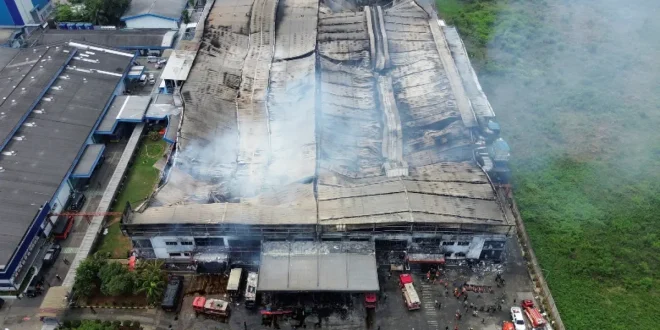
Indonesia has once again been gripped by a profound industrial tragedy, as a ferocious fire ripped through the Fonusa Agung Mulia confectionery factory in the Serang district, West Java. The devastating incident, which commenced on Saturday afternoon, has tragically claimed three lives, left four individuals injured, and, most harrowingly, 36 people remain unaccounted for. Rescue operations are ongoing amidst extremely challenging conditions, with drone footage revealing a landscape of widespread destruction, collapsed structural elements, and lingering smoke indicative of the inferno’s intensity.
Initial reports from local fire officials indicate that upon their arrival, a substantial portion of the factory premises was already engulfed in flames, raising critical questions regarding the facility’s internal safety and early warning systems. The Fonusa Agung Mulia factory is identified as a subsidiary of UNIFAM, one of Southeast Asia’s prominent consumer-food companies. As search-and-rescue teams painstakingly work through the charred remains, distraught relatives have gathered near the factory, desperately awaiting updates on their missing loved ones. The local disaster agency has initiated an investigation into the incident’s cause, adding another somber entry to Indonesia’s concerning record of industrial workplace fatalities.
Background: A Troubling Pattern of Industrial Accidents in Indonesia
The catastrophic fire in Serang is not an isolated event but rather a stark and tragic manifestation of a recurring challenge within Indonesia’s rapidly expanding industrial sector. As a burgeoning economic power in Southeast Asia, Indonesia has pursued aggressive industrialization, fostering a significant manufacturing base. However, this growth has frequently been overshadowed by a worrying incidence of industrial accidents, underscoring systemic vulnerabilities in worker safety and regulatory oversight.
Recent history provides a grim context: in December last year, a high-rise building fire in Jakarta, reportedly triggered by a drone battery explosion, resulted in the deaths of 22 people. Prior to that, in 2023, an explosion at a nickel-processing plant in the eastern part of the country claimed at least 13 lives. These incidents, alongside countless smaller-scale accidents, highlight persistent issues such as inadequate safety infrastructure, insufficient investment in modern fire suppression and emergency response systems, and potential shortcomings in the enforcement of existing industrial safety regulations. The economic imperative to boost production and maintain competitiveness can, at times, inadvertently compromise the robust implementation of vital safety protocols, leaving thousands of industrial workers exposed to preventable hazards.
Impact on Pakistan: Shared Vulnerabilities and Lessons for Industrial Safety
While the confectionery factory fire in Serang, Indonesia, does not bear direct economic or supply chain implications for Pakistan – the mention of “2:30 pm Pakistan time” in the initial reporting served solely as a geographical time reference – the incident carries significant resonance due to shared industrial safety challenges common among many developing nations, including Pakistan. Both Indonesia and Pakistan are rapidly industrializing economies, heavily reliant on a burgeoning manufacturing sector that employs a substantial portion of their workforces.
Consequently, both nations often grapple with analogous issues: balancing rapid industrial growth with robust safety standards, ensuring adequate regulatory enforcement, and protecting the welfare of industrial laborers. Pakistan has unfortunately also endured its share of devastating industrial accidents, from catastrophic textile factory fires to boiler explosions, which have similarly laid bare gaps in its industrial safety frameworks. The tragedy in Serang, therefore, serves as a poignant cautionary tale, urging policymakers, business leaders, and labor organizations across Pakistan to critically re-evaluate and strengthen their own workplace safety standards, emergency preparedness protocols, and oversight mechanisms. It underscores a universal truth: prioritizing human life and well-being must remain paramount in the pursuit of industrial development.
Analysis: A Critical Juncture for Systemic Reform and Accountability
The tragic events unfolding at the Fonusa Agung Mulia factory are more than just an accident; they represent a critical symptom of systemic deficiencies within Indonesia’s broader industrial safety framework. The high number of missing individuals, coupled with reports of the factory being fully ablaze upon emergency services’ arrival, points to potential failures in early detection, emergency evacuation procedures, and fundamental adherence to fire safety protocols.
Firstly, this incident brings corporate responsibility firmly into the spotlight. As a subsidiary of a major consumer-food conglomerate like UNIFAM, Fonusa Agung Mulia would be expected to uphold stringent safety standards. The ongoing investigation must thoroughly scrutinize whether these standards were not only established but also rigorously enforced, consistently audited, and adequately funded. Beyond legal compliance, there is a clear ethical imperative for corporations to proactively invest in advanced safety infrastructure, comprehensive employee training, and a culture that prioritizes worker well-being over production quotas.
Secondly, the recurrent nature of such industrial disasters across Indonesia demands urgent and decisive governmental intervention. While regulations may exist, their efficacy hinges on consistent and transparent enforcement. This requires strengthening regulatory bodies, empowering them with sufficient resources for unannounced inspections, imposing deterrent penalties for non-compliance, and establishing clear accountability mechanisms for all stakeholders. A reactive approach to safety, where action follows tragedy, is demonstrably insufficient.
Finally, the profound human cost of these incidents underscores the vulnerability of factory workers, who often come from socio-economically disadvantaged backgrounds. Their voices and safety concerns must be central to any reform efforts. Empowering workers through robust safety committees, providing accessible and anonymous channels for reporting hazards, and ensuring fair compensation and support for victims and their families are indispensable elements of a just and humane industrial system.
Indonesia’s ambitious economic development trajectory must be meticulously balanced with an unwavering commitment to industrial safety. The Serang factory fire is a tragic, yet powerful, reminder that uncontrolled industrial expansion without robust safety nets is unsustainable and exacts an unbearable human toll. It serves as a clarion call for comprehensive, systemic reform, demanding collective accountability from government, industry, and labor to transform industrial workplaces into environments where lives are protected, not needlessly imperiled.
“`
