Dost Pakistan Journeys Tours and safaris in the North & South Pakistsn
Related Articles



Hina Javaid Murder: Forensic Evidence Points to Servant, But Questions Linger for Pakistan’s Justice System
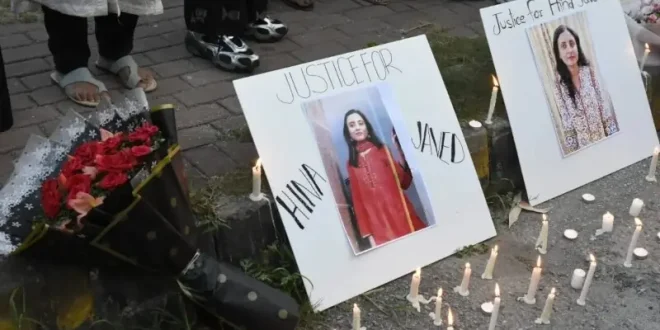
The high-profile murder of digital media executive Hina Javaid, who was found dead with signs of torture and strangulation in Rawalpindi, has seen a significant development. After a nearly three-month delay, police have submitted their charge sheet, asserting that forensic DNA analysis points to her domestic servant as the primary perpetrator, linking him to both the murder and sexual assault. This conclusion effectively clears Hina’s husband and father-in-law, who were initially named in the FIR and faced scrutiny.
The News: A Pivotal Development in the Hina Javaid Murder Case
Rawalpindi police recently confirmed the completion of their investigation into the brutal murder of Hina Javaid, submitting a detailed challan (charge sheet) to the court. According to City Police Officer (CPO) Rawalpindi Sardar Ghias Gul, DNA evidence conclusively links the domestic servant to the crime, specifically to the sexual assault preceding the murder. This forensic breakthrough, corroborated by a high-level inquiry committee, has led investigators to identify the servant as the prime suspect. Consequently, Hina’s husband and father-in-law, initially arrested and questioned amidst public suspicion, have been officially cleared of involvement by the police, as no incriminating evidence against them was found. The case has drawn national attention, with Punjab Chief Minister Maryam Nawaz and First Lady Aseefa Bhutto Zardari intervening, underscoring the demand for thorough investigation and justice. Despite the police findings, Hina’s family has expressed strong dissatisfaction, alleging evidence tampering by the husband’s brother and demanding an independent judicial inquiry, casting a shadow of doubt over the investigative process.
Background: Unpacking the Context of Violence and Justice in Pakistan
The Hina Javaid murder case unfolds against a complex backdrop of societal challenges in Pakistan, particularly concerning violence against women (VAW) and the efficacy of its justice system. Pakistan grapples with persistent issues of gender-based violence, where women often face significant barriers in seeking justice, ranging from societal pressure to systemic flaws in law enforcement and judicial processes. High-profile cases like Hina’s often draw intense media scrutiny and public outrage, forcing authorities to act, sometimes leading to political intervention. This increased spotlight, while ensuring attention, can also highlight inherent weaknesses. The reliance on forensic evidence, especially DNA analysis, is a growing yet often challenging aspect of criminal investigations in Pakistan. While DNA has the potential to be a definitive tool for justice, its proper collection, preservation, and analysis require robust infrastructure and training, which are not always consistently available. Furthermore, the case brings into focus the often-vulnerable position of domestic workers within Pakistani households, who can be both victims of exploitation and, in rare instances, perpetrators of serious crimes. This case, therefore, is not just about one individual’s tragic death but reflects broader national dialogues on women’s safety, the accountability of the justice system, and the integrity of criminal investigations.
Impact on Pakistan: Public Trust, Justice, and Systemic Reform
The resolution, or rather the current phase, of the Hina Javaid murder case carries significant implications for Pakistan. Foremost is the impact on public trust in law enforcement and the judicial system. The initial accusations against the husband and father-in-law, followed by their swift clearance based on forensic evidence, coupled with the family’s allegations of tampering and calls for a judicial inquiry, create a complex narrative that can erode confidence. When a victim’s family publicly disputes police findings, it suggests a credibility gap that the system must address. This case also serves as a crucial test for the state’s commitment to delivering justice for victims of violence against women. How the courts handle the challan, and whether an independent judicial inquiry is indeed granted, will set a precedent for future cases involving influential parties or contested evidence. Moreover, the CPO’s acknowledgment of “shortcomings in police prosecution” directly points to the urgent need for systemic reforms. These include enhancing forensic capabilities, improving evidence collection protocols, ensuring unbiased investigations, and strengthening the prosecutorial arm of law enforcement. The Hina Javaid case, therefore, is not merely a criminal investigation; it is a catalyst for introspection into the deep-seated issues that plague Pakistan’s justice delivery mechanism, potentially driving demands for greater transparency, accountability, and ultimately, a more equitable system for all citizens.
Analysis: Navigating Conflicting Narratives and the Quest for Truth
The Hina Javaid murder case epitomizes the intricate challenges inherent in high-profile criminal investigations, particularly in a context like Pakistan where public perception, political pressure, and forensic science intersect. The police’s submission of a charge sheet, pinning the crime on the domestic servant based on DNA evidence and sexual assault findings, presents a seemingly clear narrative. Forensic DNA, when handled correctly, is indeed a powerful tool, capable of definitively linking individuals to crime scenes. The inclusion of Section 376 (rape) further solidifies the violent nature of the crime as understood by the investigators.
However, the family’s persistent dissatisfaction and their call for a judicial inquiry introduce a critical counter-narrative. Allegations of evidence tampering by the husband’s brother, along with the initial focus on the husband in the FIR and his subsequent arrest, raise legitimate questions about the initial phase of the investigation. Was the initial line of inquiry flawed, or were there external pressures influencing it? The three-month delay in submitting the challan, while not uncommon, allows for an extended period of scrutiny and suspicion to fester, especially in a case with such public visibility.
This case, therefore, underscores a fundamental tension: the objective evidence presented by law enforcement versus the subjective experience and distrust of the victim’s family. While DNA evidence is scientific, its collection, chain of custody, and interpretation are human processes prone to error or, in worse scenarios, manipulation. The “clean chit” given to the husband, despite being named in the initial complaint and being a direct party, will require robust justification in court to quell public doubts and the family’s concerns. The involvement of high-ranking officials and the formation of a high-powered committee illustrate the pressure on the system, but also highlight the need for independent oversight when confidence in standard procedures falters.
Ultimately, the Hina Javaid murder case is a microcosm of systemic flaws within Pakistan’s justice framework. It demands not just a verdict on the identified suspect, but also a thorough examination of investigative protocols, forensic capabilities, and the capacity of the system to maintain impartiality under public and political scrutiny. The CPO’s commitment to addressing “shortcomings in police prosecution” is a welcome admission, but the true measure of reform will be seen in the court’s proceedings, the transparency of the process, and whether justice, in its fullest and most credible sense, is ultimately delivered for Hina Javaid and her grieving family.