Dost Pakistan Journeys Tours and safaris in the North & South Pakistsn
Related Articles

“`html
Good Governance ‘Quintessential’ for Security and Stability of Pakistan: DG ISPR
The Military’s Call for Systemic Reform and Security Resolve
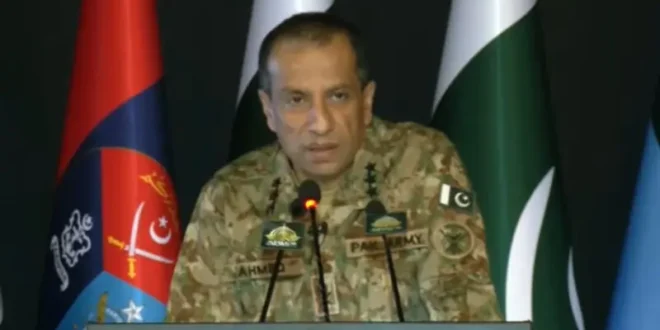
In a wide-ranging press conference, Director General Inter-Services Public Relations (DG ISPR), Lieutenant General Ahmed Sharif Chaudhry, underscored good governance as “quintessential” for Pakistan’s enduring security and stability. His remarks, delivered amidst a briefing on the nation’s security landscape—with a particular focus on Balochistan—highlighted the imperative for deep-seated reforms to tackle multifaceted challenges.
The DG ISPR affirmed the military’s long-standing stance that effective governance is indispensable, not merely a policy preference but a fundamental requirement for the implementation of critical initiatives like the National Action Plan (NAP). He explicitly linked the country’s inability to resolve its issues to a deficit in good governance, advocating for a serious national dialogue on administrative reforms, including the potential for new administrative units, guided by constitutional methods and the will of the people.
Shifting to the kinetic aspect of national security, the DG ISPR presented stark statistics on counter-terrorism operations. He revealed that over 40,000 intelligence-based operations (IBOs) have been conducted this year, predominantly in Balochistan, leading to the neutralization of over 2,000 terrorists—an average of 10 per day, marking the highest ratio ever. This intense engagement, however, comes at a heavy cost, with 819 Pakistanis, including military personnel, law enforcers, and civilians, martyred during the same period. He attributed the surge in terrorist incidents to the “terrorist-supporting Taliban regime” in Afghanistan and diminishing returns from their alternative strategies, asserting the state’s firm resolve against appeasement or dialogue with militant groups.
The briefing further delved into the concept of a “hard state,” defined not by military dominance but by the uniform application of the Constitution and law. Lamenting Pakistan’s current status, he championed an “obligations movement,” stressing citizens’ primary duty of loyalty to the state and obedience to its laws (Article 5 of the Constitution) before asserting rights. In Balochistan, he pinpointed issues such as elitism, sardarism, a desire for appeasement, external power plays (implicating India and Afghanistan), and a relentless propaganda campaign as drivers of instability. The DG ISPR also provided data refuting narratives of deprivation and lack of representation, while detailing efforts to strengthen security forces and boost socioeconomic development in the province. He concluded with an optimistic vision for Balochistan as a future economic powerhouse.
Finally, addressing recent unrest in Azad Jammu and Kashmir (AJK), the DG ISPR reiterated Pakistan’s unwavering stance on Kashmir as its “jugular vein.” He suggested external manipulation behind protests by the Joint Awami Action Committee (JAAC), asserting the state’s monopoly on violence and urging legal and constitutional avenues for grievances.
Contextualizing Pakistan’s Enduring Security and Governance Challenges
The DG ISPR’s comprehensive briefing comes against a backdrop of complex and persistent challenges facing Pakistan. Internally, the country grapples with a resurgence of terrorism, particularly from the Tehreek-i-Taliban Pakistan (TTP) and Baloch separatist groups like the Balochistan Liberation Army (BLA). These groups exploit porous borders, internal grievances, and perceived institutional weaknesses.
The military, through ISPR, serves as the primary communication conduit for defense and security matters, making its pronouncements carry significant weight and often reflecting strategic shifts in state policy. Its emphasis on good governance is not new; successive military and civilian leaderships have acknowledged its importance, yet consistent implementation has remained elusive.
Historically, Pakistan has struggled with political stability, institutional capacity, and the consolidation of democratic norms. This has often led to governance deficits that, in turn, create space for extremism, corruption, and social fragmentation. The National Action Plan (NAP), formulated in the wake of the tragic 2014 Peshawar Army Public School attack, was a national consensus to tackle terrorism through a multi-pronged approach, encompassing both kinetic operations and reforms in governance, justice, and societal cohesion.
Balochistan, Pakistan’s largest province by area, is a crucible of these challenges. Rich in natural resources and strategically located at the crossroads of Central Asia, South Asia, and the Middle East, it has historically experienced periods of insurgency, fueled by a mix of genuine grievances over resource distribution, perceived marginalization, and external interference. The mention of “sardarism” and “elitism” points to entrenched feudal structures that have historically hindered development and perpetuated inequality.
Regionally, Pakistan’s relationship with Afghanistan remains fraught, especially since the Taliban’s takeover in 2021. The sanctuary allegedly provided to TTP and other militant groups within Afghanistan, coupled with cross-border attacks, has severely strained bilateral ties. Simultaneously, the enduring rivalry with India continues to manifest in allegations of proxy warfare, particularly concerning support for separatist movements in Balochistan. The specific coining of terms like “Fitna-al-Hindustan” (Indian mischief) and “Fitna-al-Khawarij” (renegade extremists) by Pakistani authorities underscores the severity of these external threat perceptions.
The Kashmir dispute, a core element of Pakistan’s foreign and domestic policy since partition, resurfaced in the briefing, highlighting the ongoing tensions and the military’s firm commitment to its historical stance, even as internal unrest in AJK becomes a point of concern.
The Far-Reaching Implications of the Military’s Stance
The DG ISPR’s statements carry significant implications across Pakistan’s political, security, economic, and social fabric, influencing both domestic discourse and international perceptions.
Political Repercussions and Administrative Reform
The explicit call for “good governance” and a “serious discussion” on administrative reforms, including the potential for more provinces, places immense pressure on Pakistan’s political establishment. It signals the military’s view that existing governance structures are inadequate for a nation of 250 million people. This could ignite a crucial but potentially contentious debate on constitutional amendments, resource allocation, and power-sharing, challenging the entrenched interests of political elites and traditional power brokers, particularly those identified as “sardars” and “khanzaday” in Balochistan. The emphasis on the “will of the people” suggests a desire for democratic legitimacy in any such restructuring.
Intensified Security Operations and Regional Tensions
The detailed statistics on counter-terrorism operations underscore the military’s resolute and kinetic approach to militancy. The high number of terrorists neutralized and the explicit rejection of appeasement signal an enduring, high-intensity campaign. This strategy, while aimed at eradicating terrorism, inevitably has regional implications. The strong condemnation of the “terrorist-supporting Taliban regime” in Afghanistan and direct allegations against India could further escalate diplomatic tensions, particularly with Kabul, where border management and the issue of TTP sanctuaries remain flashpoints. The concept of “proactive engagements” suggests a readiness to pursue terrorists beyond immediate defensive measures, potentially leading to more cross-border pressure.
Economic Development and Stability
The DG ISPR’s vision for Balochistan as a future economic “game-changer” within 5-10 years, particularly with the emphasis on mineral corridors and the blue economy, highlights the immense potential tied to stability. However, terrorism and instability directly undermine investor confidence and disrupt development projects. The substantial allocations for socioeconomic projects in Balochistan are vital, but their effectiveness hinges on improved security and the ability to counter narratives of deprivation. The military’s firm stance against elements involved in smuggling and targeting infrastructure aims to create an environment conducive to economic growth and capitalize on the province’s strategic location and resources.
Societal Cohesion and National Identity
The articulation of an “obligations movement” is a direct appeal to citizens to prioritize loyalty to the state and adherence to the Constitution over grievances and divisive identities. This aims to foster a stronger sense of national identity (“first and final identity should be Pakistani”) and counter separatist or parochial tendencies, particularly in regions like Balochistan where propaganda often exploits local sentiments. By linking rights to obligations, the military seeks to reframe the social contract, encouraging responsible citizenship and discouraging reliance on external actors or violent means to address concerns. This also challenges entrenched “elitism” that historically leveraged local identities for political gain.
International Perceptions and Diplomacy
The unvarnished critique of Afghanistan’s Taliban regime and India’s alleged role in sponsoring terrorism will likely shape Pakistan’s diplomatic engagements. While strengthening its narrative on external threats, it also necessitates a robust diplomatic strategy to present its case on the international stage. The repatriation of Afghan nationals, while a domestic policy decision, also impacts humanitarian concerns and regional migration dynamics. The resolute stance on Kashmir reaffirms a long-held national position, but the reference to “exposed” elements behind AJK protests could invite scrutiny.
Navigating the Path to a ‘Hard State’: Challenges and Opportunities
The DG ISPR’s recent presser provides a critical lens into the military’s perspective on Pakistan’s security paradigm, intertwining kinetic counter-terrorism with the foundational importance of governance. This comprehensive outlook, while offering clarity on the state’s resolve, also raises profound questions about the practicalities of achieving a truly “hard state” in Pakistan.
The Military’s Expanded Role: A Necessary Intervention or Overreach?
By explicitly linking good governance, administrative reforms, and even the “obligations movement” to national security, the military is clearly articulating its vision for a stronger Pakistan. This extends its traditional security mandate into areas often considered the exclusive domain of civilian political leadership. For some, this intervention is a necessary steering hand in times of crisis, where political institutions may appear faltering or fragmented. For others, it might be perceived as a blurring of civil-military lines, potentially impeding the organic evolution of democratic governance. The call for politicians to lead the debate on administrative reforms, while strategic, implicitly acknowledges the military’s deep concern over the current political capacity to initiate such fundamental changes.
The ‘Hard State’ Ideal: Aspiration Versus Reality
The DG ISPR’s definition of a “hard state” – one where law and constitution apply equally to all, not a military-dominated entity – is an ideal that resonates deeply with the aspirations for justice and equality. However, the journey to becoming such a state is fraught with challenges. Institutional weaknesses, pervasive corruption, political patronage, and a historically uneven application of law often mean that powerful elites remain largely untouched. The very “elitism and sardarism” identified as drivers of instability in Balochistan are deeply embedded in the political and social fabric, making genuine legal equality a formidable task to achieve.
Balochistan’s Complex Equation: Beyond External Factors and Elites
While the DG ISPR cogently highlighted external power plays, Afghanistan’s alleged support for terrorism, and the obstructionist role of local elites in Balochistan, a complete analysis must also consider the efficacy of internal policies. Despite impressive development allocations, questions persist regarding their transparent and equitable implementation, and whether they truly address the sense of political and economic disenfranchisement felt by some segments of the population. The “missing persons” issue, while presented with statistics on resolved cases, remains a sensitive and potent narrative tool for separatist groups, underscoring the need for sustained efforts to build trust and ensure accountability.
Countering Narratives and Building Trust
The military’s detailed exposition on propaganda, including the use of Indian websites and social media, reflects a sophisticated understanding of the information warfare landscape. However, effectively countering these narratives requires more than just exposure; it demands proactive engagement, transparent communication, and genuine responsiveness to public concerns. The emphasis on “engaging and talking directly with people” in Balochistan is a crucial step towards building trust and undermining the appeal of extremist ideologies. The “obligations movement” could potentially foster national unity, but it must be balanced with a clear commitment to safeguarding fundamental rights and ensuring grievance redressal mechanisms are robust and accessible.
The Governance Conundrum: Who Will Lead the Change?
Ultimately, the call for good governance and administrative restructuring places the ball firmly in the court of Pakistan’s political leadership. The challenge lies in transcending political expediency and self-interest to undertake reforms that are genuinely in the national interest. Whether the current political landscape can foster the consensus and courage required for such transformative change, especially against entrenched power structures, remains a pivotal question for Pakistan’s future security and stability.
“`