Dost Pakistan Journeys Tours and safaris in the North & South Pakistsn
Related Articles
“`html
Deepening Ties: US Congressmen’s Visit Signals Renewed Strategic Emphasis on Pakistan’s Role
A recent high-level visit by two prominent US congressmen to Pakistan has underscored a significant re-evaluation of Islamabad’s critical role in regional stability and global economic dynamics. Discussions with Chief of Defence Forces (CDF) Field Marshal Asim Munir, coupled with extensive cultural and economic engagements, point towards a renewed emphasis on fostering a robust, multifaceted partnership between the United States and Pakistan.
The Recent Diplomatic Engagement
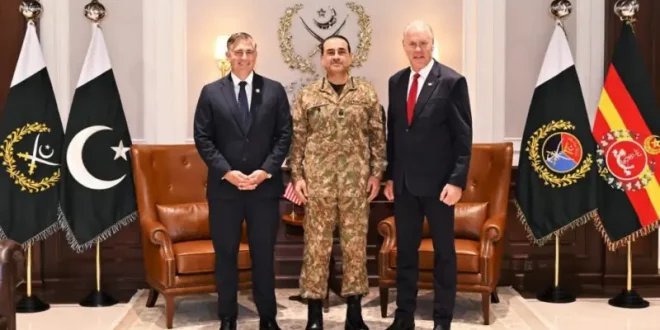
The core of the recent diplomatic activity revolved around the meeting between CDF Asim Munir and US House Representatives Ryan Keith Zinke (Montana) and Michael James (Washington) at General Headquarters (GHQ). The Inter-Services Public Relations (ISPR) highlighted that the US delegation explicitly acknowledged Pakistan’s “critical role” in maintaining regional stability and lauded its “economic resilience” in the face of ongoing challenges. The agenda was broad, encompassing matters of mutual interest, regional security, bilateral defense cooperation, and avenues for enhancing economic collaboration and prosperity.
During these discussions, CDF Munir emphasized Pakistan’s “vast economic potential” and articulated a vision where sustainable regional stability is inextricably linked to economic growth, trade expansion, and enhanced connectivity. He further detailed Pakistan’s ongoing structural reforms, designed to cultivate a business-friendly environment and attract vital foreign investment. The congressmen, during their wider tour of Islamabad and Lahore, not only engaged with political and administrative leadership but also explored Pakistan’s rich cultural heritage and modern urban development initiatives, such as the Punjab Safe Cities Authority. Notably, they also commended Pakistan’s “constructive” mediation efforts between the US and Iran, signaling appreciation for its diplomatic contributions to de-escalation in a volatile region.
Background: A Shifting Strategic Landscape
The relationship between the United States and Pakistan has historically been characterized by periods of close alliance, often driven by shared security interests, interspersed with phases of relative distance. From Pakistan’s role as a frontline state during the Cold War against the Soviet Union in Afghanistan to its crucial partnership in the War on Terror post-9/11, the bond has frequently been transactional. However, with the US withdrawal from Afghanistan and evolving geopolitical realities, there has been a noticeable shift in the nature of this engagement.
Pakistan occupies an exceptionally strategic geographical position, bordering Afghanistan, Iran, and sharing proximity with China and India. This makes it an indispensable player in any serious regional security architecture. Furthermore, Pakistan, a nation of over 240 million people, represents a significant emerging market with substantial untapped economic potential, despite facing persistent macroeconomic challenges, including high inflation and the need for ongoing structural reforms often supported by international financial institutions like the IMF. This backdrop provides crucial context for the renewed American interest, moving beyond solely security concerns to embrace a broader economic and stability-focused partnership.
Potential Impact on Pakistan
This high-profile visit carries several significant implications and potential benefits for Pakistan:
- Diplomatic Validation: The explicit acknowledgment of Pakistan’s “critical role” in regional stability by US lawmakers serves as a strong diplomatic endorsement, reinforcing Islamabad’s standing on the international stage. It signals continued US engagement and support, which can be crucial for a nation navigating complex regional dynamics.
- Economic Opportunities: The emphasis on “vast economic potential” and structural reforms by CDF Munir, coupled with the US delegation’s commitment to deeper economic linkages, bodes well for Pakistan’s economy. This could translate into increased foreign direct investment (FDI), particularly in sectors like critical minerals, energy development, information technology, and other emerging economic areas. Given that the US is already Pakistan’s largest single-country export market and Pakistan is the second-largest importer of US cotton, enhanced bilateral trade and greater market access for Pakistani exporters could significantly boost its economic recovery efforts.
- Enhanced Security Cooperation: While not explicitly detailed, the focus on “regional security” and “bilateral defence cooperation” suggests a continuation or even enhancement of existing security partnerships, which are vital for counter-terrorism efforts and maintaining peace in a volatile neighborhood.
- Improved International Image: The positive remarks from US congressmen and their engagement with Pakistan’s cultural and modern infrastructure can contribute to a more positive international perception of the country, potentially boosting tourism and fostering broader cultural exchange.
- Strengthened Mediation Role: The commendation for Pakistan’s mediation efforts between the US and Iran highlights its diplomatic utility and capacity to act as a bridge-builder in complex geopolitical disputes, thereby enhancing its regional influence.
Analysis: Towards a Multifaceted Strategic Partnership
The recent visit by US Congressmen to Pakistan signifies a strategic re-calibration in Washington’s approach, moving beyond a narrow, security-centric lens to embrace a more holistic and interdependent relationship. This shift is driven by mutual interests and the evolving geopolitical landscape.
For the United States, maintaining stability in South Asia, particularly in the context of Afghanistan and counter-terrorism, remains a priority. Engaging with Pakistan, a nuclear-armed nation with a large population and a pivotal geographical location, is indispensable for these objectives. Furthermore, as the global economy faces diversification and supply chain resilience challenges, Pakistan’s emerging markets and resources present new economic opportunities for American businesses and investors.
Conversely, for Pakistan, this renewed engagement is crucial for its economic revival, attracting much-needed foreign investment, diversifying its export markets, and maintaining a balanced foreign policy amidst regional power shifts. The emphasis by CDF Munir on economic growth and structural reforms underscores the Pakistan Army’s ongoing focus on national economic revival, a central pillar of current government policy. This highlights the military’s continuing, significant influence not only in defense matters but also in shaping the nation’s economic trajectory and foreign relations.
The discussions suggest a pivot from a traditional aid-dependent relationship towards one founded on mutual trade, investment, and private sector partnerships. This indicates a more mature and sustainable model for future US-Pakistan relations, aiming for a partnership of equals rather than a donor-recipient dynamic. However, the path forward is not without its challenges. Sustaining internal political stability in Pakistan, effectively implementing long-term economic reforms, and navigating complex regional rivalries will be critical for fully realizing the potential of this renewed engagement.
Ultimately, the positive rhetoric and substantive discussions during this visit signal a strategic commitment from both sides to forge a deeper, more resilient, and multifaceted partnership. If effectively managed, this re-engagement could pave the way for a new era of cooperation, beneficial not only for the United States and Pakistan but also for fostering greater stability and prosperity across South Asia.
“`