Dost Pakistan Journeys Tours and safaris in the North & South Pakistsn
Related Articles

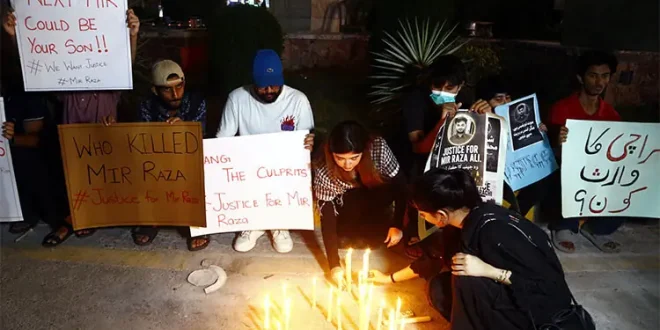
Missing weapon, forensic inconsistencies puzzle investigators in Raza ‘murder’ case
The mysterious death of 25-year-old Mir Raza Ali Khan, a former IBA student and aspiring businessman, has plunged investigators into a complex web of financial distress, last movements shrouded in personal ritual, and critical forensic anomalies. While initial evidence leans towards a tragic suicide, the Karachi police are grappling with key inconsistencies that suggest a darker possibility, fueling a painstaking investigation.
The News: A Discrepancy of Evidence
The body of Mir Raza Ali Khan was discovered with a single gunshot wound to his chest in bushes near Shahi Qila in Gulistan-i-Jauhar, Karachi, two days after he was reported missing from his PECHS Block-2 home. Initially thought to be a kidnapping, the narrative quickly shifted as investigators pieced together Raza’s final hours.
Evidence pointing towards suicide is compelling: financial losses running into millions, an unfulfilled request for a Rs30 million loan, and an investor’s report of Raza experiencing “weird thoughts.” His fiancée also corroborated his “obsession” with Bitcoin investments. Crucially, Raza’s actions before his death suggested a deliberate farewell: he deleted all data from his iPhone, left his car keys, house keys, watch, and cash for his mother, and retrieved a pistol from his shop. He then hired an online cab, requesting his favourite song and paying double the fare, before being dropped off in Gulistan-i-Jauhar where CCTV footage showed him “roaming” alone.
However, despite this strong circumstantial evidence, investigators harbour significant doubts. Three critical points undermine the suicide theory:
- Unexplained Location Choice: Why did Raza travel to a specific, somewhat remote area in Gulistan-i-Jauhar for this final act?
- Missing Weapon: While the holster for his pistol was found, the firearm itself has not been recovered.
- Absence of Gunshot Residue (GSR): Doctors noted the bullet was fired at close range, yet no GSR was found on Raza’s hands – a standard indicator in self-inflicted firearm deaths. Although decomposition was cited as a possible factor, its absence remains a forensic red flag.
The deceased’s mobile phone, which he had wiped, was later recovered from an individual who had inserted a SIM card, enabling police to trace it. Intensive efforts are underway, including analyzing call record data (CRD) and extensive CCTV footage, with police expressing confidence in a swift resolution.
Background: A City’s Pressures and the Lure of Quick Gains
Mir Raza Ali Khan’s tragic story unfolds against the backdrop of Karachi, a megacity often grappling with complex law and order challenges. Cases involving sudden disappearances and suspicious deaths are not uncommon, placing immense pressure on law enforcement agencies to deliver clear answers in a diverse and densely populated urban environment.
Economic Stress and the Entrepreneurial Dream
Raza, a former IBA student, represented a segment of Pakistan’s youth increasingly drawn to entrepreneurship. While entrepreneurship is lauded, it often comes with significant financial risks. His substantial financial losses, running into millions, are indicative of the volatile landscape many young business ventures navigate. This situation is further exacerbated by a challenging economic climate, where securing traditional loans can be difficult, pushing individuals towards less regulated, higher-risk investments.
The Allure and Peril of Cryptocurrency
Raza’s fiancée mentioned his “obsession” with Bitcoin investments. Cryptocurrencies like Bitcoin surged in popularity in Pakistan, especially among younger populations, promising quick and substantial returns. However, their highly volatile nature, lack of regulation, and susceptibility to market manipulation also make them incredibly risky. Significant losses in crypto markets can lead to severe financial distress, emotional turmoil, and, for some, devastating consequences. This context highlights a growing concern in Pakistan regarding digital asset literacy and the potential for financial ruin.
Forensic Science and its Limitations
The absence of gunshot residue (GSR) on Raza’s hands is a critical forensic inconsistency. While investigators mentioned the possibility of decomposition affecting evidence, it underscores the challenges faced by forensic science in Pakistan. Modern forensic techniques require robust infrastructure, highly trained personnel, and strict protocols for scene preservation. In cases where bodies are found days after death, factors like weather, environment, and external interference can significantly degrade crucial evidence, complicating analyses and raising doubts about definitive conclusions.
The Stigma of Mental Health
The “weird thoughts” Raza reportedly expressed and the immense financial pressure he faced point towards potential mental health struggles. In Pakistan, discussions around mental health are often stigmatized, leading individuals to suffer in silence rather than seek help. Financial distress is a well-documented trigger for depression and suicidal ideation, and cases like Raza’s painfully highlight the urgent need for greater awareness, accessibility to mental health support, and open dialogue within society.
Impact on Pakistan: Public Trust and Systemic Challenges
The outcome of the Mir Raza Ali Khan case will have broader implications for Pakistan, affecting public confidence in the justice system, highlighting economic vulnerabilities, and underscoring the need for social support mechanisms.
Erosion of Public Trust in Law Enforcement
High-profile cases with conflicting evidence and lingering doubts can erode public trust in law enforcement’s ability to conduct thorough and impartial investigations. The police’s acknowledged “doubts” are transparent but also place immense pressure on them to provide a conclusive and believable narrative. If the resolution leaves too many questions unanswered, it can fuel speculation and cynicism about the integrity and competence of investigative agencies.
Economic Vulnerability and Investor Protection
Raza’s story is a stark reminder of the financial pressures on young entrepreneurs and the dangers of unregulated, high-risk investments like cryptocurrencies. It could spur discussions around the need for better financial literacy programs, regulatory frameworks for digital assets, and support systems for individuals facing business failures. The case shines a light on the broader economic anxieties that many young Pakistanis face, pushing them towards ventures that, while promising, can also lead to catastrophic losses.
Catalyst for Mental Health Awareness
Irrespective of whether Raza’s death is ultimately classified as suicide or murder, the reported financial distress and “weird thoughts” underscore the critical importance of mental health support. This case could serve as a tragic catalyst for greater public discourse on mental well-being, destigmatizing mental illness, and encouraging the development of accessible mental health services across the country. It highlights how societal pressures, particularly economic ones, can push individuals to their breaking point.
Precedent for Forensic Standards
The forensic challenges in this case, particularly regarding the missing GSR, emphasize the need for advanced forensic capabilities and standardized protocols for crime scene management in Pakistan. A meticulous resolution of these discrepancies could set a precedent for higher investigative standards and reinforce the importance of scientific evidence in the Pakistani justice system.
Analysis: Untangling the Threads of Doubt
The Mir Raza Ali Khan case is a compelling testament to the complexities that arise when personal tragedy intersects with forensic ambiguity. While the volume of evidence initially points towards suicide, the police’s persistent doubts are crucial and well-founded, pushing the investigation beyond a simple conclusion.
The Weight of Suicide Evidence
Raza’s actions leading up to his death paint a vivid picture of someone preparing for an end. Deleting phone data, leaving valuables for his mother, retrieving his weapon, and his final cab ride with a favourite song all suggest a planned, solitary act. His financial woes and reported “weird thoughts” provide a clear, albeit tragic, motive for suicide. This narrative is further strengthened by the CCTV footage showing him alone at the drop-off point, “roaming” without apparent company.
The Unsettling Inconsistencies
However, the three points of doubt raised by the police are significant enough to prevent a definitive suicide ruling:
- The Choice of Location: If Raza intended to end his life, why travel to Gulistan-i-Jauhar? While some might seek a secluded spot, this specific journey raises questions. Was it a place he knew, or was he meeting someone?
- The Missing Pistol: This is arguably the most critical piece of missing evidence. In a self-inflicted gunshot death, the weapon is almost invariably found at or near the scene. Its absence, even if the holster was recovered, suggests external interference. Could someone have taken the weapon after the fact? Or, more unsettlingly, was the weapon never in Raza’s sole possession at the moment of firing?
- Absence of Gunshot Residue (GSR): Despite the close-range shot, the lack of GSR on Raza’s hands is a major forensic anomaly. While decomposition could affect detection, it remains a strong indicator against a direct self-inflicted shot without some form of intermediary. This opens the door to scenarios such as assisted suicide (where someone else might have held the gun, or guided Raza’s hand) or, more ominously, murder (where Raza was shot by another person, or forced to pull the trigger with someone else’s hand on the weapon).
Exploring Alternative Scenarios
These inconsistencies compel investigators to consider possibilities beyond a straightforward suicide:
- Robbery Post-Suicide: It’s plausible that Raza committed suicide, and then passersby or opportunistic criminals discovered the body, stealing the phone and pistol. This would explain the missing items but not the lack of GSR or the specific location choice.
- Assisted Suicide: Given the financial distress and “weird thoughts,” it’s conceivable Raza sought help to end his life. An accomplice could have met him at the location, provided or managed the pistol, and then removed it, potentially explaining the lack of GSR on Raza’s hands.
- Murder Staged as Suicide: This is the most complex scenario. Could the “suicide” be a meticulously crafted illusion? While Raza’s personal actions (phone wipe, leaving items) make this harder to execute without coercion, the missing pistol and GSR are strong indicators that someone else might have been involved in the actual shooting or its immediate aftermath. The financial losses could provide a motive for murder as well – perhaps a failed deal, a violent debt collection, or a desperate act by someone else.
The Path Forward
The investigation’s success hinges on meticulously pursuing every lead, no matter how small. Digital forensics on the recovered phone (even if data was deleted) could reveal crucial metadata or partially recoverable information. A deeper dive into Raza’s financial dealings, beyond just the loan request, is necessary to identify all individuals connected to his business and debts. The “weird thoughts” comment needs careful contextualization, potentially through interviews with the investor and others close to Raza.
Ultimately, the Mir Raza Ali Khan case is a challenging puzzle for the Karachi police. The compelling evidence of personal despair must be weighed against critical forensic and circumstantial anomalies. The resolution of this mystery will not only bring closure to a grieving family but also test the limits of investigative and forensic capabilities in Pakistan, defining whether the truth truly lies in suicide, or a more sinister plot.
Disclaimer: This analysis is based on the provided news summary and does not represent a definitive conclusion on the case, which remains under active investigation.
“`