Dost Pakistan Journeys Tours and safaris in the North & South Pakistsn
Related Articles


“`html
Reko Diq Project: Navigating Geopolitical Storms and Balochistan’s Challenges
The colossal Reko Diq copper-gold project, a cornerstone of Pakistan’s economic future, is once again at a critical juncture. Recent reports indicate a potential two-year delay in its production timeline, pushing the ambitious launch from 2028 to 2030. This setback, attributed primarily to persistent security challenges in Balochistan and the escalating Middle East crisis, casts a shadow of uncertainty over one of the largest foreign investments in Pakistan’s history.
The News: A Revised Timeline Amidst Global Turmoil
Canadian mining giant Barrick Mining Corporation, holding a significant 50% stake in the venture, is reportedly adjusting its original 2028 timeline. Government sources and industry insiders suggest that a full-scale resumption of development is now anticipated by mid-2027, following an ongoing internal project review. While company officials publicly maintain optimism about the multi-billion-dollar project staying on track, Barrick CEO Mark Bristow himself acknowledged last month that a “security improvement” is a prerequisite for a full construction schedule.
The immediate catalyst for this recalibration appears to be the broader regional instability, particularly the conflict in neighboring Iran, coupled with the enduring complex security landscape within Balochistan, Pakistan’s largest province by area. Despite the operational slowdown, Barrick has commendably retained its 700 permanent and 2,000 contractual workers, signaling a continued commitment to the local workforce, though some third-party service contracts have lapsed.
The financial implications of these potential delays are a subject of intense debate among experts. While one private-sector source warns of astronomical cost overruns ranging from $8 billion to $10 billion, an industry insider with ties to the Reko Diq Mining Company (RDMC) dismisses these figures as exaggerated, estimating a more modest 10% increase, roughly $450 million to $900 million. This divergence underscores the high stakes and the difficulty in quantifying the ripple effects of such disruptions.
Adding a crucial development to this unfolding narrative, Barrick Mining Chairman John L. Thornton is expected to visit Pakistan later this month for the Pakistan Minerals Investment Forum 2026. This visit will undoubtedly be a pivotal moment for stakeholders to address concerns and reaffirm commitments.
Background: A Project Forged in Controversy and Hope
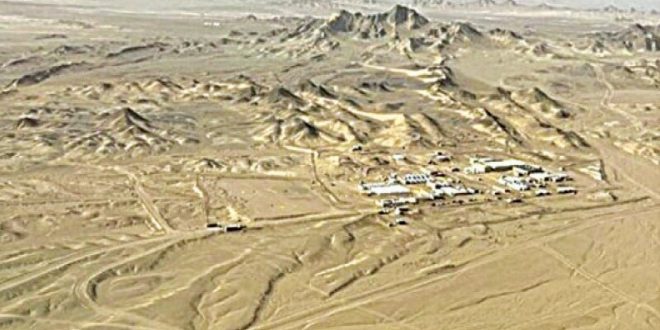
The Reko Diq copper-gold project is not merely an investment; it is a saga in Pakistan’s economic development. Located in the Tethyan belt, it boasts one of the world’s largest undeveloped copper-gold deposits. Its journey has been tumultuous, marked by a protracted international arbitration dispute with Tethyan Copper Company (TCC) – a joint venture between Barrick and Antofagasta – which resulted in a staggering $6.2 billion penalty against Pakistan. The eventual settlement, facilitated by Barrick’s re-entry and a revised ownership structure (50% Barrick, 25% Balochistan provincial government, 25% Pakistani state-owned enterprises), was hailed as a diplomatic and economic triumph, clearing the path for this crucial project to proceed.
The strategic importance of Reko Diq for Pakistan cannot be overstated. It represents a monumental infusion of foreign direct investment (FDI), estimated at over $9.1 billion across two phases, a lifeline for an economy grappling with external debt and current account deficits. Beyond the direct revenue, it promises thousands of jobs, infrastructure development, and a potential transformation of Pakistan’s resource extraction landscape.
However, the project’s location in Balochistan is its Achilles’ heel. The province has historically been plagued by various insurgencies, separatist movements, and security challenges fueled by grievances over resource control, underdevelopment, and political marginalization. This intricate socio-political backdrop makes any large-scale industrial undertaking inherently vulnerable to disruptions. Furthermore, the wider geopolitical volatility in the Middle East, particularly near Pakistan’s border with Iran, creates an environment of elevated risk, influencing investor sentiment and operational logistics for multinational corporations like Barrick.
Impact on Pakistan: Economic Ripples and Missed Opportunities
A delay in the Reko Diq copper-gold project reverberates deeply through Pakistan’s economic and social fabric:
- Escalating Costs: Even at the lower end of the projected cost overruns ($450-900 million), these are significant sums. If the higher estimates of $8-10 billion materialize, they could drastically alter the project’s profitability, potentially rendering it “prohibitively expensive” as one expert warned. Such an increase would either dilute Pakistan’s equity value or burden Barrick further, impacting shareholder returns.
- Delayed Economic Benefits: Pakistan desperately needs the foreign exchange earnings and tax revenues that Reko Diq promises. A two-year postponement means a delay in substantial capital inflows and the projected $74 billion free cash flow over its 37-year operational life. This further stresses a national economy already struggling with debt and inflationary pressures.
- Job Creation Stalled: The project is expected to generate 7,500 jobs during peak construction and sustain 4,000 permanent positions. These jobs are critical, especially for the local communities in Balochistan where unemployment is rife. Delays directly impact livelihoods and prolong economic hardship in an already marginalized region.
- Investor Confidence Erosion: The Reko Diq project is a litmus test for large-scale foreign investment in Pakistan, particularly in sensitive sectors like mining. Any significant delay, especially due to security concerns, risks deterring future investors looking at Pakistan’s resource potential. It reinforces perceptions of instability, making the country a harder sell for FDI.
- Under-Realized Value Addition: A critical concern highlighted by an industry insider is Barrick’s reported plan to process only 30-35% of the copper-gold output domestically, routing the rest to its Australian facilities. This represents a significant missed opportunity for Pakistan to maximize local value addition through downstream industries, technology transfer, and skilled labor development. It undermines the vision of transforming Pakistan from a raw material exporter to a hub for mineral processing.
Analysis: Balancing Risk, Reward, and National Interest
The predicament facing the Reko Diq project encapsulates the complex interplay between immense economic potential and persistent geopolitical and security risks. Barrick Mining’s cautious approach is a pragmatic response to the volatile environment. For an investment of this magnitude, ensuring the safety of personnel and the security of assets is paramount. The internal review and the CEO’s statements underscore a responsible, albeit frustratingly slow, de-risking strategy.
The divergent cost estimates highlight the deep uncertainty. While the optimistic view suggests manageable increases, the possibility of a multi-billion-dollar surge in costs due to prolonged delays cannot be dismissed. Such figures would inevitably trigger new financial modeling and potentially even renegotiations, adding further complexities.
Crucially, the situation underscores the urgent need for the Pakistani government – both federal and provincial – to demonstrate unwavering resolve in improving the security landscape in Balochistan. This is not solely about protecting Reko Diq but about creating a conducive environment for any future economic development in a province that holds immense, untapped natural resources. Sustained efforts to address the root causes of discontent, coupled with robust security operations, are vital.
Despite the challenges, the fundamental viability and long-term promise of Reko Diq remain undeniable. With nearly $1 billion already invested and a projected free cash flow of $74 billion, the stakes are too high for any shareholder to walk away. The continued presence of workers on site, active research, and community development projects suggest a deep-seated commitment from Barrick. Chairman Thornton’s upcoming visit to the Pakistan Minerals Investment Forum will be an opportunity to reaffirm this commitment, provide clarity on the revised timelines, and engage in constructive dialogue with Pakistani stakeholders.
Looking ahead, Pakistan must leverage such forums to not only reassure existing investors but also to proactively address concerns regarding security and policy consistency. It must also critically re-evaluate strategies for maximizing local value addition from projects like Reko Diq, ensuring that the nation truly benefits from its vast mineral wealth beyond mere export revenues. The Reko Diq project is more than just a mine; it is a symbol of Pakistan’s aspirations and its ability to navigate global challenges to secure a prosperous future.
“`