Dost Pakistan Journeys Tours and safaris in the North & South Pakistsn
Related Articles



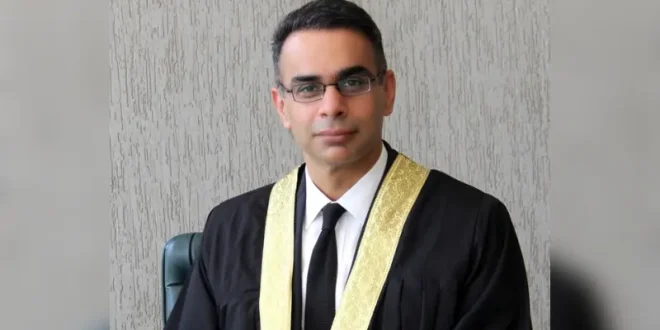
Justice Babar Sattar’s Islamabad Residence: A Lens into Judicial Independence and Entitlement Debates
By Our News Analyst
Published: May 27, 2024
What happened:
In a development that has drawn attention to judicial entitlements, Justice Babar Sattar, recently transferred from the Islamabad High Court (IHC) to the Peshawar High Court (PHC), has decided to retain his official residence in Islamabad’s coveted F-6 sector. This decision, formally communicated to the IHC administration, comes under the ambit of the Presidential Order 1997, which permits a judge to maintain one official residence provided they do not seek separate accommodation in their new posting. Reports suggest Justice Sattar may utilize the PHC’s official rest house during his tenure in Peshawar, a practice also sanctioned by existing rules for judges retaining residences elsewhere.
Background:
The issue of judicial housing, particularly for judges of the Islamabad High Court, has long been a point of contention and logistical challenge. Unlike some other high courts, the IHC has historically lacked a dedicated housing colony for its judges. This absence has compelled the IHC administration to seek Category-I residences – properties typically earmarked for BS-22 officers – from the general pool managed by the Estate Office. This reliance on the executive branch for basic living necessities has often raised questions regarding the administrative independence of the judiciary.
The landscape of judicial housing entitlements was significantly shaped by a landmark judgment authored by Justice Babar Sattar himself in 2023. In this ruling, while dismissing a petition concerning government accommodation, Justice Sattar unequivocally held that judges are entitled to official accommodation from the date of their appointment and throughout their service. Crucially, he distinguished this entitlement as flowing directly from the Presidential Order, rather than the general accommodation rules applicable to other federal government servants. His judgment highlighted the disparity in housing provision for IHC judges, noting that at the time, five out of eight serving judges had residences, while others awaited allotment. He critically observed that such disparities “impinge on the independence of the judiciary.” Furthermore, he directed the housing ministry to remove judges’ names from the general allotment list to mitigate any perception of dependency on the executive. The judgment also mandated expediting the construction of a dedicated judicial housing complex for IHC judges on a six-acre plot provided by the Capital Development Authority.
Historical precedents also exist; former IHC Chief Justice Mohammad Anwar Khan Kasi famously retained residences in both Islamabad and Quetta during his tenure, underscoring a long-standing practice regarding judicial housing.
Why it matters:
This development is significant on several fronts. First, it directly engages with the principle of judicial independence. Justice Sattar’s prior judgment argued that assured accommodation is a fundamental entitlement necessary to safeguard judges from executive influence and ensure their impartiality. His current action, therefore, can be viewed as an exercise of this established entitlement, rather than a mere personal preference. When judges are not beholden to the executive for their basic needs, their ability to deliver justice without fear or favour is theoretically strengthened.
Second, it underscores the practical implications of government housing policy and resource allocation. Category-I residences in prime locations like Islamabad’s F-6 sector are highly sought after. While legally permissible for judges, the optics of a public servant retaining such a residence, especially when not physically serving in that city, can spark public debate. It forces a conversation about the balance between institutional prerogatives designed to protect the judiciary and the broader public’s expectation of judicious use of state resources.
Third, it tests the consistency and application of judicial rulings. Justice Sattar’s own landmark judgment set a robust framework for judicial housing. His current decision provides a live example of how those principles translate into practice, potentially solidifying the precedent for other judges.
Impact on Pakistan:
The reverberations of such decisions extend beyond individual judges to the broader institutional framework of Pakistan’s judiciary.
- Strengthening or Questioning Entitlements: This incident could reinforce the legal standing of judicial housing entitlements, encouraging other judges to assert similar rights. Conversely, it might reignite public scrutiny and calls for reviewing such privileges in an era of fiscal austerity and increasing demands for accountability from all state institutions.
- Executive-Judiciary Dynamics: The ongoing need for the IHC administration to liaise with the Estate Office for judge accommodations highlights a subtle, yet persistent, dependency on the executive. While Justice Sattar’s judgment aimed to delink judges from the general bureaucratic pool, the logistical reality of housing remains a point of interface. Expediting the dedicated IHC housing project, as directed by Justice Sattar himself, remains crucial for truly bolstering judicial administrative autonomy.
- Public Perception of Justice: Transparency and perceived fairness are vital for public trust in the judiciary. While the legal basis for Justice Sattar’s decision is clear, the public, often grappling with their own economic challenges, might view such entitlements through a critical lens. This necessitates clear communication about the institutional rationale behind such provisions.
- Optimizing Resources: With judges potentially residing far from their courts, questions about travel, efficiency, and the optimal use of state-provided assets could arise. This further emphasizes the need for a comprehensive, long-term strategy for judicial infrastructure that supports judicial functions effectively.
Analysis:
Justice Babar Sattar’s decision to maintain his Islamabad residence, while legally permissible under established presidential orders and consistent with his own judicial philosophy on entitlements, encapsulates a complex interplay of judicial independence, institutional rights, and public accountability. His 2023 judgment was a powerful assertion of the judiciary’s distinct position, arguing that secured housing is not merely a perk but a prerequisite for judges to perform their duties impartially, free from the administrative whims of the executive. From this perspective, his current action aligns with the very principles he advocated: a judge’s entitlement to secure accommodation is an institutional right, not contingent on their temporary place of posting if an alternative primary residence isn’t sought elsewhere.
However, the optics of a senior judge retaining a prime government property in a city where he is no longer officially serving, even while using a guest house in his new posting, cannot be ignored. In a country where public resources are often stretched and scrutiny of official perks is high, such decisions, however legally sound, inevitably invite public discussion. This tension between institutional necessities – as defined by the judiciary itself – and public perception is a constant challenge for state institutions.
Ultimately, this situation underscores the ongoing need for Pakistan to develop a robust, transparent, and dedicated infrastructure policy for its judiciary. The directives from Justice Sattar’s 2023 judgment for a dedicated IHC housing colony are more relevant than ever. Such a facility would not only streamline accommodation processes but also symbolically and practically reinforce the judiciary’s administrative independence, reducing reliance on general government pools. It would also help to mitigate the perception of individual judges’ decisions being solely about personal benefit, instead framing them within a clear, institutional framework designed to uphold the integrity and independence of the entire justice system. This ongoing dialogue is crucial for strengthening the rule of law and public trust in Pakistan’s Pakistani Judiciary.