Dost Pakistan Journeys Tours and safaris in the North & South Pakistsn
Related Articles


“`html
Pakistan’s Landmark Ruling: Lahore High Court Fortifies Women’s Dower Rights Amidst Matrimonial Disputes
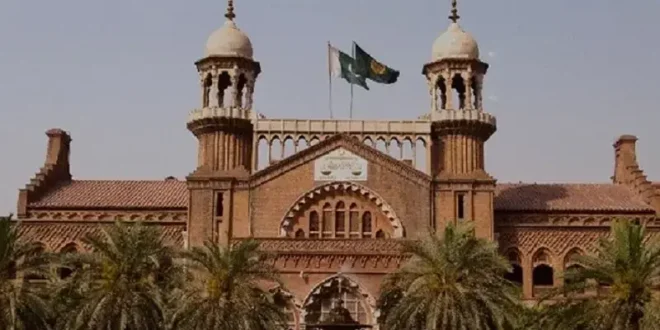
A recent verdict from the Lahore High Court (LHC) has significantly reinforced the legal framework safeguarding women’s matrimonial rights in Pakistan, particularly concerning dower (haq mehr). The court’s decision, which upheld the right of a divorced woman to receive a house as dower, sends a clear message about the sanctity of these rights, even when challenged by technicalities or societal norms.
What Happened: Upholding Matrimonial Justice
In a pivotal ruling, Justice Sajid Mehmood Sethi of the Lahore High Court dismissed an appeal filed by Muhammad Khan, affirming the concurrent judgments of two lower courts. These lower courts had previously granted his former wife, Anwar Bibi, possession of a five-marla house in Chiniot as her dower. The crux of the dispute revolved around a dower agreement, executed separately from the official marriage certificate (nikahnama), which stipulated the house as part of the dower. The LHC ruled that this separate agreement was valid and enforceable, rejecting the husband’s technical objections, including claims that the agreement was fabricated and written on ordinary stamp paper.
Background: Understanding Dower and Pakistani Matrimonial Law
In Muslim personal law, dower (or haq mehr) is a fundamental right of a wife, representing a mandatory payment or gift from the husband at the time of marriage. It serves as a financial safeguard and a mark of respect, becoming her exclusive property. While often recorded in the nikahnama, the formal marriage contract, Islamic jurisprudence allows for dower to be fixed before, during, or even after the marriage, and its terms can be enhanced through subsequent agreements. In Pakistan, disputes related to dower and other matrimonial matters are typically adjudicated by specialized family courts, with appellate jurisdiction usually residing with higher courts like the LHC.
In this particular case, Anwar Bibi claimed that on their wedding day in 2017, her husband executed an agreement promising her a constructed house as dower, along with Rs300,000 in the event of divorce. Following their divorce in 2021, she sought to enforce these terms. Muhammad Khan, the husband, contested the claim, asserting the agreement was fake, that the property belonged to his first wife, and that the marriage certificate only mentioned a dower of Rs5,000. He further argued that the agreement’s use of ordinary stamp paper, instead of an e-stamp paper, invalidated it.
Why It Matters: Key Legal Principles Affirmed
The Lahore High Court’s decision is significant for several reasons, clarifying and strengthening critical legal principles:
- Validity of Separate Dower Agreements: The ruling unequivocally establishes that dower arrangements are not solely confined to the nikahnama. A separate, independently executed agreement, even if detailing property not mentioned in the marriage certificate, holds legal weight and is enforceable. This offers greater flexibility and protection for women whose dower terms might evolve or be formally documented outside the immediate marriage contract.
- Substance Over Form: Justice Sethi firmly rejected the husband’s contention that the agreement was invalid because it was on “ordinary stamp paper.” This underscores a crucial legal principle: procedural or technical objections, particularly minor ones, cannot be used to defeat substantive, proven matrimonial rights. The court prioritized the truth and equity of the transaction over mere formalistic defects.
- Timing and Enhancement of Dower: The judgment reaffirms that dower can be fixed at various stages—before, during, or after marriage—and can be enhanced through subsequent agreements. This aligns with settled principles of Muslim law and provides a vital safeguard for women.
- Acknowledging Social Realities: Perhaps one of the most progressive aspects of the ruling is the court’s observation that women often refrain from demanding dower during the subsistence of marriage due to “emotional, domestic, and societal reasons.” The judge emphasized that such restraint cannot legally be construed against them, protecting women from having their rights undermined by circumstances outside their control. This is a crucial recognition of socio-cultural dynamics in Pakistan.
- Evidentiary Standards: The court also highlighted the husband’s refusal to allow a forensic examination of his signatures and thumb impression on the dower agreement. This refusal led to an “adverse inference” against him, demonstrating the judiciary’s commitment to robust evidentiary standards and discouraging attempts to evade justice through obstruction.
Impact on Pakistan: Strengthening Women’s Rights and Legal Precedent
This LHC ruling is a substantial victory for women’s rights advocates in Pakistan. It provides vital judicial clarity that will likely have a ripple effect across family courts nationwide:
- Enhanced Financial Security for Divorced Women: By validating separate dower agreements and dismissing technical challenges, the court has significantly bolstered the financial security of divorced women. It ensures that solemn promises made at the time of marriage, even if documented informally, are legally binding and enforceable.
- Deterrent Against Denial of Rights: The judgment acts as a deterrent for husbands who might attempt to renege on dower agreements post-divorce by raising frivolous technical objections or denying execution of documents.
- Guidance for Lower Courts: The detailed reasoning by the LHC provides clear guidelines for family courts on how to interpret dower agreements, evaluate evidence, and prioritize substantive rights over procedural formalities. This could streamline the resolution of similar cases.
- Promoting Equitable Justice: The ruling fosters an environment where legal outcomes are more aligned with the principles of fairness and equity, particularly for women who are often in a vulnerable position after the dissolution of marriage.
While the enforcement of legal rights can still present challenges for women in various parts of Pakistan, this judgment provides a stronger legal foundation for them to seek justice and secure their entitlements.
Analysis: A Step Towards Equitable Matrimonial Justice
The Lahore High Court’s decision represents a forward-looking interpretation of matrimonial law, skillfully weaving together traditional Islamic legal principles with a pragmatic understanding of contemporary social realities. It demonstrates a judiciary committed to safeguarding fundamental rights and ensuring that justice is not derailed by technicalities or manipulative claims.
By explicitly acknowledging the “social realities” that prevent many women from demanding dower during marriage, the court has taken a progressive stance, aligning legal interpretation with the spirit of justice rather than a rigid, detached application of the law. This approach not only protects women’s rights but also fosters greater trust in the judicial system’s ability to deliver equitable outcomes.
This ruling sets an important precedent, offering hope that more women across Pakistan will be able to enforce their dower rights without undue obstacles. It stands as a testament to the evolving legal landscape in Pakistan, moving closer towards ensuring financial autonomy and dignity for women post-divorce.
“`