Dost Pakistan Journeys Tours and safaris in the North & South Pakistsn
Related Articles

US-Iran Standoff: Diplomacy on the Brink Amidst Escalating Tensions and a Fragile Peace
Recent statements from US Defence Secretary Pete Hegseth at the Shangri-La Dialogue reveal a complex and volatile situation in the US-Iran conflict, characterized by simultaneous diplomatic efforts and unwavering threats of renewed military action. This analysis delves into the unfolding events, their background, global implications, and the unexpected emergence of Pakistan as a key mediator.
What Happened: A Double-Edged Message from Washington
At the high-profile Shangri-La Dialogue in Singapore, US Defence Secretary Pete Hegseth delivered a stark message regarding the ongoing tensions with Iran. While acknowledging “productive” discussions aimed at de-escalating the weeks-long conflict, Hegseth unequivocally stated that “war not off the table” if a comprehensive agreement is not reached. He emphasized the US military’s formidable capability and robust stockpiles, ready to “recommence if necessary.”
This assertive stance was underscored by a recent military action: the US Central Command confirmed disabling a Gambia-flagged cargo ship, M/V Lian Star, en route to an Iranian port. The vessel, accused of violating the US blockade, was incapacitated by a Hellfire missile strike to its engine room after failing to comply with warnings, highlighting Washington’s intent to enforce its economic pressure.
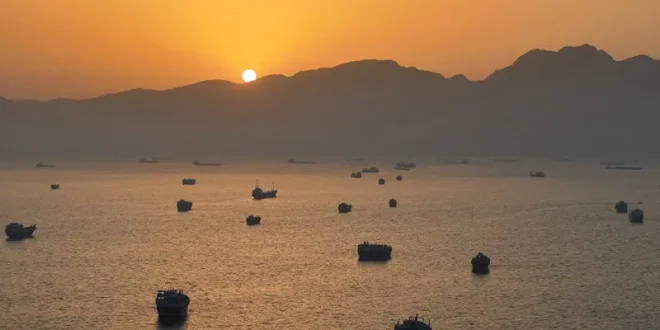
The core demand from Washington remains Iran’s abandonment of any nuclear weapons ambitions, a “great deal” sought by President Donald Trump. While Iran maintains its nuclear program is for civilian purposes, the US insists its “goalposts haven’t shifted.” Simultaneously, the crucial Strait of Hormuz, a strategic maritime choke point, remains a point of contention, with the US asserting its control over the “ironclad” blockade, even as Iran’s military headquarters issues warnings to vessels to comply with its regulations for safe passage.
Background: A Conflict’s Costly Genesis
The current confrontation traces its roots to a “weeks-long war” initiated by the US and Israel on February 28. This conflict has already exacted a heavy toll, claiming thousands of lives in Iran and Lebanon, and unleashing significant global economic instability. A primary driver of this economic pain has been Iran’s effective closure of the Strait of Hormuz, a vital artery for international oil shipments. This blockade has sent energy prices soaring, impacting economies worldwide.
At the heart of the dispute lies Iran’s nuclear program. The US, under President Trump, has consistently demanded that Iran never develop a nuclear weapon, a stance reiterated by White House officials who stated Trump would only accept a deal that “satisfies his red lines.” However, Iran views these demands, coupled with the ongoing naval blockade, as a betrayal of diplomatic efforts. Mohsen Rezaei, a military adviser to Iran’s supreme leader, accused Trump of “betraying diplomacy for the third time” and pursuing objectives beyond genuine negotiations.
Why It Matters: Global Ramifications of a Volatile Standoff
The US-Iran conflict carries immense global implications, extending far beyond the immediate belligerents:
- Global Economy and Energy Security: The Strait of Hormuz is a critical passageway for a significant portion of the world’s oil supply. Its closure, or even the threat of it, directly impacts global energy prices, leading to inflation and economic uncertainty for consumers and industries worldwide. Any escalation could further disrupt supply chains and trigger a global recession.
- Regional Stability in the Middle East: The conflict exacerbates existing tensions in an already volatile Middle East. Proxies and allies of both sides could be drawn into a wider confrontation, leading to humanitarian crises and further destabilization.
- Nuclear Proliferation Concerns: The core US demand regarding Iran’s nuclear program highlights international anxieties about proliferation. Should diplomacy fail, the risk of Iran pursuing a nuclear weapon could trigger a regional arms race, fundamentally altering global security dynamics.
- International Law and Maritime Freedom: The naval blockade and the incident with the M/V Lian Star raise questions about freedom of navigation and international maritime law. The assertions of control over the Strait of Hormuz by both the US and Iran challenge established norms and could set dangerous precedents.
- Credibility of Diplomacy vs. Coercion: The simultaneous pursuit of talks alongside military threats and actions raises questions about the nature of modern international diplomacy. It tests whether genuine peace can be forged under duress or if such tactics merely serve to escalate tensions further.
Impact on Pakistan: An Unexpected Diplomatic Ascent
In a significant development for regional diplomacy, US Defence Secretary Pete Hegseth singled out Pakistan for its pivotal role in facilitating the US-Iran peace talks. He praised Prime Minister Shehbaz Sharif and CDF & COAS Field Marshal Asim Munir, highlighting an “unexpected development and a true friendship developing” between Washington and Islamabad.
This acknowledgement positions Pakistan as an increasingly relevant player in complex international negotiations, particularly in the Middle East. For Islamabad, this diplomatic success could translate into several benefits:
- Enhanced International Standing: Mediating between global powers and regional adversaries boosts Pakistan’s image as a responsible and capable diplomatic actor, potentially opening doors for greater influence on other international platforms.
- Strengthened US-Pakistan Ties: The reaffirmation of a “true friendship” signals a positive trajectory for bilateral relations, potentially leading to increased cooperation in security, economic, and strategic spheres. This comes after past instances of US mediation, such as President Trump brokering a ceasefire between Pakistan and India during a May 2025 conflict, further cementing this diplomatic bond.
- Regional Stability and Economic Benefits: A de-escalation of the US-Iran conflict would directly benefit Pakistan by stabilizing regional energy markets and reducing geopolitical risks. This stability is crucial for Pakistan’s own economic growth and security.
Hegseth’s comments also touched upon regional security, noting that while countries like Pakistan and India may perceive threats differently, Washington is not “pointing a finger” or deeming either a threat to the US in the context of ICBM development, indicating a balanced US approach to South Asian security dynamics.
Analysis: Brinkmanship, Blockades, and the Battle for Hormuz
The current state of US-Iran relations is a precarious tightrope walk between dialogue and potential full-scale conflict. Hegseth’s “productive talks” alongside “war not off the table” warning epitomizes a strategy of coercive diplomacy. The Trump administration appears committed to leveraging maximum pressure – economic sanctions, naval blockades, and explicit military threats – to force Iran into acceding to its demands regarding nuclear disarmament.
Iran, however, views this as a blatant betrayal of diplomatic norms. Mohsen Rezaei’s assertion that Trump is “betraying diplomacy” underscores a fundamental mistrust, exacerbated by the continuous enforcement of the naval blockade during negotiations. For Tehran, maintaining its strategic leverage, particularly over the Strait of Hormuz, is paramount, not just for national pride but for economic survival and regional influence.
The Strait of Hormuz remains the critical flashpoint. The US Defence Secretary’s declaration that “we are in control when it comes to that” directly contradicts Iran’s repeated assertions of sovereignty and its warnings to international vessels. Qatar’s rejection of permanent transit fees further highlights the economic implications and the diverse regional interests at play in this vital waterway.
The disabling of the M/V Lian Star serves as a potent reminder of the US’s willingness to enforce its blockade with kinetic action, even during ongoing talks. This incident sends a clear message to any entity attempting to circumvent sanctions, underscoring the high stakes involved for all parties.
Hegseth’s assurance that the US can “do two things at one time” – referring to commitments in Asia-Pacific alongside the Iran conflict – is an attempt to project unwavering global power and reassure allies. However, sustained engagement on multiple fronts places immense strain on resources and could test the limits of even the most powerful militaries.
In essence, the situation is a high-stakes poker game. Washington is betting that its “ironclad” pressure will compel Iran to capitulate. Tehran, conversely, is demonstrating its resolve through military posturing and continued assertions of sovereignty, refusing to negotiate entirely from a position of weakness. The ultimate outcome hinges on which side blinks first, or whether a genuine diplomatic breakthrough can emerge from this tense and dangerous brinkmanship.