Dost Pakistan Journeys Tours and safaris in the North & South Pakistsn
Related Articles

US Defence Secretary Alarms Over China’s Military Growth, Demands Allied Contributions
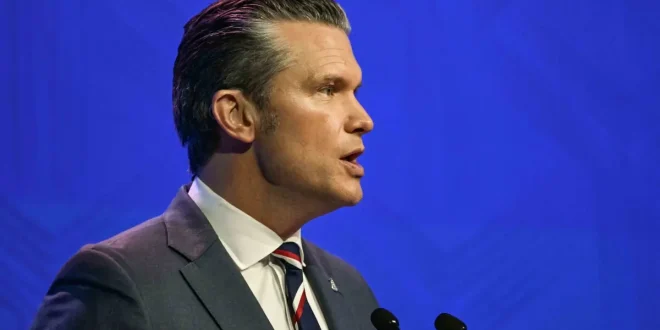
US Defence Secretary Pete Hegseth’s recent pronouncements at the Shangri-La Dialogue have sent a clear message: the Indo-Pacific region faces a pivotal moment. With China’s rapid military expansion casting a long shadow, Washington is urging its Asian partners to step up their defence commitments significantly. This analysis delves into the implications of Hegseth’s warnings, the demand for increased allied spending, and the broader shifts in US foreign policy impacting global security.
What Happened: Washington’s Urgent Call to Action in Asia
At Asia’s premier defence forum, the Shangri-La Dialogue in Singapore, US Defence Secretary Pete Hegseth delivered a stark warning regarding China’s accelerating military buildup and its expanding regional footprint. He articulated a “rightful alarm” over Beijing’s growing power, which he sees as threatening the existing balance in the Indo-Pacific. Hegseth then issued a direct challenge to Asian allies, urging them to boost their defence spending to 3.5 per cent of their GDP. This significant demand comes as the United States itself commits a substantial $1.5 trillion investment into its own military, signalling a strategic imperative for collective security.
Hegseth emphasized that a future where any single power dominates the Pacific would fundamentally disrupt regional stability, jeopardizing the security and prosperity of all nations. He stressed the need for a stronger, more self-reliant network of allies to deter aggression. The Secretary also underscored a broader shift in US alliance policy, echoing President Donald Trump’s long-standing demand for allies to shoulder more of their own defence costs. He explicitly stated that the era of the US “subsidising the defence of wealthy nations is over,” advocating for “partners, not protectorates,” and condemning “freeloading.” While acknowledging contributions from countries like South Korea, Japan, and Australia, his message was clear: reciprocal commitment is paramount for robust alliances.
Beyond the Indo-Pacific, Hegseth addressed other pressing global issues. He affirmed the US’s readiness to resume military strikes against Iran should diplomatic efforts fail, dismissing concerns that such actions would divert attention from Asia by asserting the US “can do two things at one time.” On Taiwan, Hegseth maintained that any decision regarding future arms sales, including a pending multi-billion-dollar package, would ultimately rest with President Trump, reflecting Washington’s nuanced approach amidst ongoing engagement with Beijing.
Background: Decades of US Hegemony Challenged
Secretary Hegseth’s remarks are deeply rooted in the evolving geopolitical landscape of the 21st century. For decades following World War II, the United States served as the principal security guarantor in the Asia-Pacific, fostering an environment conducive to economic growth and relative peace. This Pax Americana, however, is now being increasingly challenged by China’s meteoric rise. Beijing’s transformation from an economic powerhouse to a formidable military actor, evidenced by its expanding naval fleet, advanced missile capabilities, and assertive actions in the South China Sea, directly contests the US-led regional order.
The “no freeloading” policy, championed by the Trump administration, extends beyond Asia, reflecting a global recalibration of US alliance strategy previously seen in its demands on NATO members. This approach seeks to rebalance the burden of collective defence, compelling allies to invest more in their own security apparatuses and thereby strengthening the overall deterrent capacity against potential adversaries. This strategic pivot aims to ensure that US resources are utilized more efficiently while simultaneously building a more resilient network of partners. Concurrently, ongoing US diplomatic and military engagements in the Middle East, particularly concerning Iran’s nuclear ambitions, illustrate the multi-faceted demands on US foreign policy, requiring careful strategic management to avoid overextension while maintaining global influence.
Why It Matters: A New Era of Regional Security Architecture
Hegseth’s speech carries profound implications for the future security architecture of the Indo-Pacific and beyond. Firstly, the demand for allies to increase defence spending to 3.5% of GDP represents a substantial financial commitment. If embraced, this could lead to a significant rearmament across the region, bolstering collective defence capabilities against potential Chinese aggression but also carrying the risk of an intensified arms race. This move towards greater self-reliance could transform existing alliances, shifting them from a protectorate model to one of more equitable partnership.
Secondly, Washington’s explicit rejection of regional hegemony by any single power reaffirms its commitment to a rules-based international order and the maintenance of a crucial balance of power. This stance offers reassurance to smaller nations concerned about Chinese coercion. Thirdly, the emphasis on “partners, not protectorates” signifies a maturing of US alliances, fostering deeper strategic coordination and interoperability among allied forces. Such a shift could lead to more robust joint exercises, intelligence sharing, and integrated defence planning, creating a more cohesive and formidable deterrent.
Finally, Hegseth’s insistence that the US can manage simultaneous crises, from Asia to the Middle East, underscores Washington’s determination to project global power without compromising its strategic priorities. This dual focus highlights the interconnectedness of global security challenges, where events in one theatre can directly influence resource allocation and strategic postures in another, underscoring the complexities of contemporary international relations.
Impact on Pakistan: Navigating Geopolitical Crosscurrents
For Pakistan, a nation with deep, multifaceted strategic ties to China and a complex, evolving relationship with the United States, Secretary Hegseth’s pronouncements necessitate careful strategic consideration. While Pakistan is not directly aligned with the maritime security concerns dominating the Shangri-La Dialogue, the broader implications of US policy shifts in the Indo-Pacific directly impact its geopolitical environment. Pakistan’s extensive defence cooperation with China, including arms procurement and the flagship China-Pakistan Economic Corridor (CPEC), firmly positions it within Beijing’s strategic orbit.
The intensifying US push for its Asian partners to counter Chinese influence creates a more polarized international system. Pakistan must navigate this delicate balance, safeguarding its strategic autonomy while managing its vital relationship with Beijing and its perennial engagements with Washington. An escalated arms race or intensified geopolitical competition in the broader Asian region could indirectly influence Pakistan’s security calculations, particularly regarding its neighbourhood. Furthermore, any explicit confrontation or heightened rivalry between the US and China could place Pakistan under pressure to align more overtly, a scenario its foreign policy has historically sought to mitigate. Pakistan’s strategic imperative will be to continue its pragmatic, non-aligned foreign policy, prioritizing its national interests and regional stability amidst these escalating global power dynamics, potentially exploring diversified strategic partnerships while maintaining its existing key alliances.
Analysis: A Forceful Reassertion of US Primacy
Secretary Hegseth’s address at the Shangri-La Dialogue serves as a forceful and unequivocal articulation of the Trump administration’s evolving strategic doctrine for the Indo-Pacific. It is characterized by a blend of assertive rhetoric, a clear demand for greater burden-sharing from allies, and a firm commitment to maintaining US primacy in the face of China’s rise. The adage “speak softly while carrying a big stick,” explicitly referenced by Hegseth, perfectly encapsulates this approach – projecting strength and unwavering resolve while simultaneously acknowledging the need for managed competition and dialogue with rivals, as evidenced by improved military-to-military communication with China.
The fundamental challenge for the United States lies in translating these demands for increased allied defence spending into tangible and sustainable outcomes without alienating crucial partners. While the strategic objective of fostering a more self-reliant and capable alliance network is sound, the ambitious target of 3.5% of GDP could prove difficult for some nations facing domestic economic pressures and competing priorities. This more aggressive posture, coupled with an insistence on alliances being transactional and reciprocal rather than purely ideological, marks a departure from traditional US diplomacy. It underscores a conviction that allies must actively contribute to their collective defence, moving beyond a passive reliance on US security guarantees.
Ultimately, Hegseth’s message signals a more demanding and less patient United States, one that is prepared to lead with strength but also expects its partners to demonstrate tangible commitment. The long-term efficacy of this strategy will hinge on Washington’s ability to balance its firm stance with diplomatic finesse, fostering genuine and equitable partnerships that effectively counter emerging threats while preserving regional stability in an increasingly complex and multi-polar world.