Dost Pakistan Journeys Tours and safaris in the North & South Pakistsn
Related Articles
PML-N MPA Saqib Chadhar Bail: A Test for Pakistan’s Cybercrime Laws and Political Accountability
By The News Analysis Desk
What Happened: High-Profile Harassment Case Takes Legal Turn
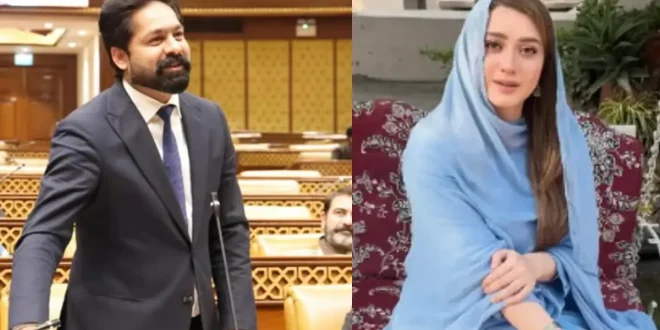
In a development closely watched by the public and legal observers alike, Pakistan Muslim League-Nawaz (PML-N) Member of Provincial Assembly (MPA) Saqib Chadhar has been granted interim pre-arrest bail by a Lahore court. This legal move comes swiftly after the National Cyber Crime Investigation Agency (NCCIA) registered a case against him following a formal complaint by acclaimed television actor Momina Iqbal. The allegations against Chadhar are extensive and severe, encompassing cyber harassment, stalking, criminal intimidation, blackmailing, defamation, unlawful surveillance, and threats directed at Iqbal and her family.
According to the First Information Report (FIR), Iqbal detailed a relentless campaign of alleged harassment that reportedly intensified after she declined Chadhar’s marriage proposal, citing his existing marital status. The complaint outlines alleged attempts by Chadhar to access her private digital data, the circulation of violent content, blackmail using private videos, social and professional defamation, and even the alleged sabotage of a previous marriage proposal. More recently, the MPA is accused of escalating threats to leak private material, cause harm to her and her fiancé, and disrupt her upcoming marriage. The NCCIA’s decision to proceed with the case was underpinned by preliminary technical and forensic analysis of mobile phones and other devices, which reportedly yielded substantiating evidence. The court has scheduled the next hearing for June 24, instructing the NCCIA not to arrest Chadhar until then and to present the complete case record.
Background: From Social Media Appeal to Official Scrutiny
The genesis of this high-profile case lies in Momina Iqbal’s compelling plea on social media, where she directly addressed senior PML-N figures, including Punjab Chief Minister Maryam Nawaz. Her viral post vividly described enduring “online harassment, cyberbullying, and death threats for a long time” from an unnamed PML-N MPA. Initially, Iqbal voiced frustration with the perceived inaction of both the NCCIA and the Federal Investigation Agency (FIA), claiming that her complaints had been suppressed and that even individuals connected to the Chief Minister’s office had attempted to silence her rather than facilitating an investigation.
This public outcry proved pivotal. The PML-N’s leadership, spearheaded by Chief Minister Maryam Nawaz, reportedly intervened, instructing the NCCIA to promptly address Iqbal’s complaint and initiate action if the allegations were substantiated. This directive was not only a response to public pressure but also, as reported by sources, an effort to mitigate any negative perception of the CM’s office following Iqbal’s initial accusations of interference. Subsequently, both Iqbal and Chadhar were summoned by the NCCIA for their statements. Following these sessions, Iqbal formally lodged an application for an FIR, detailing the threats and alleged blackmail. Reinforcing the seriousness of the issue, Chief Minister Maryam Nawaz publicly warned via X (formerly Twitter) that any attempt to exert political pressure, abuse influence, or exploit women through threats of releasing “personal content” would be met with “firm and uncompromising action.” In a related legal development that adds complexity, Iqbal’s husband, Hamza Habib, also secured interim protective bail from the Lahore High Court in a separate case concerning allegations of threatening Chadhar.
Why It Matters: A Litmus Test for Justice and Accountability
This case transcends a mere personal dispute; it represents a critical juncture for Pakistan’s legal framework, its commitment to women’s safety, and the accountability of its public officials. Firstly, it starkly highlights the pervasive issue of cyber harassment, particularly in a digitally connected era where online spaces can become potent avenues for abuse and intimidation. For a public figure like Momina Iqbal, the magnification of such harassment is immense, making her decision to speak out a potentially powerful catalyst for other victims who often suffer in silence.
Secondly, the involvement of an MPA from the ruling party fundamentally challenges the principle of rule of law versus political influence. The initial alleged reluctance of authorities to act, juxtaposed with the rapid response once the matter gained high-level political attention, raises significant questions about the equitable application of justice for all citizens. Chief Minister Maryam Nawaz’s strong public stance is crucial, signalling a potential shift towards greater accountability for powerful individuals. However, the true measure of this commitment will be demonstrated through the impartial and transparent adjudication of the case. Finally, the potent role of social media as a platform for civic engagement and a mechanism for grievances is once again undeniably affirmed. Iqbal’s viral appeal undeniably forced the hand of institutions that had previously appeared unresponsive.
Impact on Pakistan: Setting Precedents for Cybercrime and Public Trust
The eventual outcome of the Momina Iqbal vs. Saqib Chadhar case holds profound implications for Pakistan. Should it be diligently pursued and fairly adjudicated, it could establish a powerful precedent, emboldening more victims of cybercrime, regardless of their social standing, to step forward. This is particularly vital in a society where discussing harassment, especially against powerful figures, can be deeply daunting. The case will also serve as a crucial test for the efficacy and rigorous enforcement of Pakistan’s Prevention of Electronic Crimes Act (PECA). A robust and impartial application of PECA in this high-profile scenario could significantly enhance public trust in the legislation itself and the institutions, like the NCCIA, mandated to enforce it.
Conversely, any perception of political interference or a lenient outcome could severely erode public confidence in the justice system, reinforcing the long-held belief that powerful individuals are often shielded from the full force of the law. For the PML-N, the case presents a delicate political tightrope walk. Their handling of an MPA facing such serious allegations will undeniably reflect on their commitment to good governance, women’s rights, and accountability, potentially influencing their public image and broader political standing. Ultimately, this case significantly contributes to an ongoing national discourse on gender-based violence, online safety, and the crucial, enduring need for transparent and equitable justice for all citizens.
Analysis: Navigating the Intersection of Power, Law, and Public Opinion
The granting of interim bail to Saqib Chadhar, while a standard procedural step to ensure due process and the right to a fair investigation before arrest, should not be misconstrued as an indication of guilt or innocence. It simply allows the legal proceedings to unfold without immediate detention. However, the surrounding context of this bail is far from routine. This case vividly encapsulates the complex interplay between political power, the evolving landscape of cybercrime laws, and the burgeoning influence of social media in Pakistan.
While Chief Minister Maryam Nawaz’s swift intervention and strong public statements are commendable and crucial, they also inadvertently highlight a systemic issue: why did it require a celebrity’s viral social media post and a direct appeal to the highest provincial authority to initiate decisive action? This disparity in response time and the seriousness with which complaints are addressed often leaves ordinary citizens feeling unheard, unprotected, and disenfranchised. The Prevention of Electronic Crimes Act (PECA), while a necessary legislative tool in the digital age, has faced its own share of criticism regarding its broad scope and potential for misuse. This particular case offers a significant opportunity to demonstrate PECA’s protective capabilities when applied judiciously, without bias, and with a particular focus on “offences against modesty of a natural person” and cyberstalking.
Furthermore, the existence of a counter-complaint involving Iqbal’s husband, Hamza Habib, introduces an additional layer of complexity, serving as a reminder against premature judgments and underscoring the absolute necessity for a thorough, impartial investigation into all claims. Ultimately, the resolution of this high-profile case will be meticulously observed, not just as a matter of justice for Momina Iqbal, but as a crucial barometer for how seriously Pakistan is committed to protecting its citizens, particularly women, from the insidious threat of digital harassment, and how effectively it holds its powerful elite accountable under the unwavering gaze of the law. The path forward demands unwavering transparency, uncompromising integrity, and a steadfast commitment to the principles of justice, irrespective of social or political status.