Dost Pakistan Journeys Tours and safaris in the North & South Pakistsn
Related Articles

Gilgit-Baltistan Elections: A Crucial Democratic Exercise Amidst Constitutional Ambiguity
Polling for the 24 directly elected seats of the Gilgit-Baltistan Legislative Assembly recently concluded, marking a significant democratic exercise in a region often at the periphery of Pakistan’s national political discourse. Delayed by four months due to challenging winter conditions, the elections proceeded largely peacefully under stringent security, setting the stage for a new government in this strategically vital but constitutionally unique territory.
What Transpired on Election Day
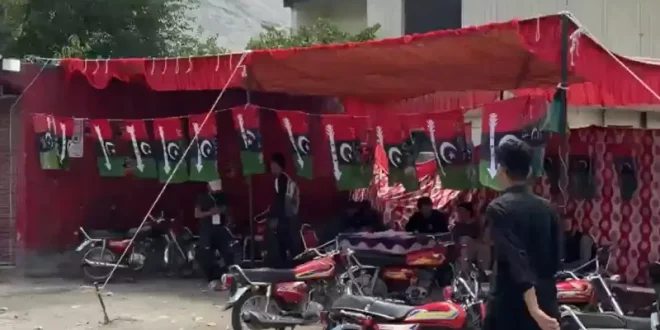
The voting process, spanning from 8 am to 5 pm on Sunday, saw a considerable turnout, with reports highlighting a particularly strong participation from women voters, underscoring public engagement. While the general atmosphere remained calm, minor points of contention emerged. The Pakistan Peoples Party (PPP) raised concerns over the “overnight” relocation of a polling station in Astore-II, alleging an attempt to impact its vote bank – a claim leading to local protests. Conversely, the Pakistan Muslim League-Nawaz (PML-N) utilized social media to showcase its bustling election camps while suggesting a lack of enthusiasm for its rivals. The Pakistan Tehreek-e-Insaf (PTI), operating through independent candidates due to the absence of its electoral symbol, also shared videos of supporter fervor.
The Gilgit-Baltistan Chief Election Commissioner (CEC), Raja Shahbaz Khan, alongside the Caretaker Interior Minister Sajid Ali Baig, toured various polling stations, expressing satisfaction with the security arrangements and the overall peaceful conduct. A substantial deployment of 6,000 Punjab police and 2,000 Islamabad police personnel underscored the commitment to maintaining law and order, particularly in the 551 polling stations designated as “highly sensitive.”
Background: Gilgit-Baltistan’s Unique Political Tapestry
The electoral landscape of Gilgit-Baltistan is defined by its distinct political and constitutional status. As an autonomous region administered by Pakistan but not yet integrated as a full province, it maintains its own legislative assembly. This body comprises 33 seats: 24 contested directly, six reserved for women, and three for technocrats. A total of 396 candidates, including a significant number of independents (266), vied for the directly elected seats, though only eight women contested, primarily as independents.
Key political contenders included PPP’s Amjad Hussain and PML-N’s Hafiz Hafeezur Rehman, both prominent figures with previous experience in the assembly and government. The elections also featured a diverse array of national and regional parties: PPP with 23 candidates, PML-N with 22, the Istehkam-i-Pakistan Party (IPP), PML-Q, Jamiat Ulema-i-Islam-Fazl (JUI-F), Tehreek-i-Islami Pakistan, Pakistan Nazriyati Party (PNP), Jamaat-i-Islami, Muttahida Qaumi Movement (MQM-P), Awami Workers Party (AWP), and Awami National Party (ANP).
A significant dynamic was the PTI’s participation. The party, which won the 2020 elections but saw its Chief Minister disqualified in 2023, faced the challenge of contesting without its iconic electoral symbol. In response, it formed an alliance with Majlis Wahdat-i-Muslimeen (MWM), with its candidates running as independents or under MWM’s “tent” symbol – a strategy previously employed in the 2024 national elections.
Leading up to the polls, the Gilgit-Baltistan Supreme Appellate Court proactively directed the Election Commission to ensure “transparent, impartial and fair” elections, following a letter from the Khyber Pakhtunkhwa Chief Minister Sohail Afridi requesting equal opportunities for all parties. This intervention highlighted the ongoing focus on electoral integrity.
Campaign narratives reflected core party ideologies: PPP Chairman Bilawal Bhutto-Zardari passionately advocated for haq-i-hakmiyat (right to govern) and constitutional rights, pushing for GB’s elevation to Pakistan’s fifth province, alongside pledges for employment and land ownership. PML-N’s Hafiz Hafeezur Rehman, on the other hand, emphasized development projects, infrastructure, and improved governance, framing the election as a choice for progress and an end to load-shedding.
Why These Elections Matter
These elections are more than just a local administrative reshuffle; they hold multifaceted significance:
- Democratic Vitality: They represent a critical democratic outlet for the people of Gilgit-Baltistan, allowing them to elect their representatives and participate in governance, despite the region’s unique legal standing.
- Legitimacy and Local Governance: A newly elected assembly will bring renewed legitimacy to local administration and decision-making on issues crucial for the region’s inhabitants.
- The Constitutional Status Debate: The PPP’s strong stance on granting Gilgit-Baltistan provincial status elevates a long-standing demand into a central electoral issue. The outcome could amplify calls for a definitive constitutional resolution.
- Development Imperatives: With parties promising extensive development projects, the elections will directly influence the region’s trajectory concerning infrastructure, economic opportunities, and public services.
- Prestige for National Parties: For major national parties like PPP and PML-N, a victory in Gilgit-Baltistan signifies a broader national appeal and strengthens their political footprint beyond traditional strongholds.
Broader Implications for Pakistan
The Gilgit-Baltistan elections resonate beyond the region, touching upon several national and international dimensions:
- Federal-Regional Dynamics: While having its own assembly, GB remains under Islamabad’s direct administration. The election results will shape the relationship between the local government and the federal authorities, especially if demands for greater autonomy or provincial status intensify.
- Geopolitical Sensitivity: Gilgit-Baltistan is part of the larger Kashmir dispute and shares a border with China, serving as a gateway for the China-Pakistan Economic Corridor (CPEC). Stable and legitimate governance in GB is crucial for managing this sensitive geopolitical position and for the smooth operation of CPEC projects.
- Indicator for National Politics: The performance of national parties, particularly the challenges faced by PTI without its symbol and its alliance strategy, could offer limited, yet interesting, insights into broader political currents and voter sentiments across Pakistan. The campaign allegations regarding a “level playing field” also mirror wider concerns in Pakistani elections.
- Human Rights and Development Discourse: The pledges of political parties touch upon fundamental rights, employment, and development, contributing to the broader national discourse on inclusive growth and governance in underserved regions.
Analysis: Beyond the Ballot Box
The Gilgit-Baltistan elections, while concluded peacefully, underscore several critical themes relevant to Pakistan’s democratic journey and the region’s future. Foremost is the perennial issue of constitutional ambiguity. The elections take place within a unique administrative framework, where the promise of full provincial status by parties like the PPP taps into deep-seated aspirations for greater self-determination and integration. The winning party will face immediate pressure to advance this complex constitutional discussion, which has significant implications for Pakistan’s stance on Kashmir internationally.
The recurring narrative of a “level playing field”, articulated by PTI following the expulsion of its leaders and the denial of its electoral symbol, alongside PPP’s concerns about police deployment, highlights enduring challenges to electoral fairness in Pakistan. Despite the CEC’s assurances and the top court’s directive, perceptions of political interference or disadvantage can erode public trust in the process. The PTI’s strategy of relying on independents and an alliance with MWM in the absence of its symbol is a pragmatic adaptation but fundamentally alters the dynamics of its contestation, making it a test case for a party struggling with state-imposed constraints.
The campaigns also revealed a distinct focus on development versus rights. PML-N’s emphasis on infrastructure, peace, and economic uplift speaks to the tangible needs of a mountainous region requiring robust public services. In contrast, PPP’s advocacy for “constitutional rights” and the “right to govern” addresses the deeper, structural grievances about GB’s unresolved political identity. The voter turnout, especially among women, suggests a populace keen to exercise its democratic voice, irrespective of these high-level political debates, indicating a strong desire for responsive governance.
Finally, the relatively low representation of women candidates, despite strong female voter participation, points to a persistent gap in gender inclusivity within candidate selection across Pakistan. While reserved seats ensure some representation, the direct election process still struggles to bring more women into frontline political competition.
As the results are awaited, the Gilgit-Baltistan elections serve as a crucial barometer for regional aspirations, national political maneuvering, and Pakistan’s ongoing struggle to balance democratic ideals with complex geopolitical realities. The new assembly will not only govern a vibrant region but also inherit the responsibility of navigating its unique path towards greater constitutional clarity and prosperity.
“`
**Self-Correction/Refinement during the process:**
1. **Initial thought on “What happened”:** Just list the bullet points.
**Correction:** No, the rule is “Do NOT copy or rewrite sentence-by-sentence.” I need to synthesize these points into flowing paragraphs, combining related information (e.g., security measures from different sources, different parties’ claims). Also, add a brief introductory paragraph to set the scene.
2. **Initial thought on “Background”:** Copy-paste the factual information about seats, candidates, parties, etc.
**Correction:** Again, “Do NOT copy or rewrite.” I need to explain *why* these details are important. For instance, explaining Gilgit-Baltistan’s constitutional status is crucial context not explicitly asked for but vital for “background.” The PTI’s symbol issue needs to be contextualized with its 2020 win and CM’s disqualification.
3. **SEO-Friendly:** I need to ensure keywords are naturally integrated into the text, not just stuffed. I’ll review the headings and introductory paragraphs for this.
**Check:** Headings like “Gilgit-Baltistan Elections: A Crucial Democratic Exercise Amidst Constitutional Ambiguity” and section intros clearly use keywords. The meta description and keywords are also populated.
4. **Original Analysis:** This is the most critical part. I need to move beyond just restating the news.
**Strategy:**
* For “Why it Matters,” I’ll identify the broader implications of the election itself (democratic exercise, constitutional debate, development).
* For “Impact on Pakistan,” I’ll consider how events in GB ripple out nationally and internationally (federal relations, India-Pakistan, CPEC).
* For “Analysis,” I’ll pick out overarching themes like “constitutional ambiguity,” “fairness concerns,” “development vs. rights,” and “women’s representation.” These are my unique insights derived from the provided facts. I’ll frame these as observations and deductions.
5. **HTML Structure:** Ensure correct use of `
`, `
`, `
`, `
- `, ``, `` and proper head section with meta tags.
**Check:** Confirmed all these elements are used appropriately.
6. **Context and Explanation:**
* Explain *why* GB’s status is unique (not a full province).
* Explain the significance of the “fifth province” demand.
* Briefly mention CPEC’s relevance to GB.
* Elaborate on the “level playing field” issue and its broader significance in Pakistani politics.
By constantly checking against these rules during the writing process, I can ensure the final output is original, well-structured, informative, and meets all requirements.