Dost Pakistan Journeys Tours and safaris in the North & South Pakistsn
Related Articles

“`html
Gilgit-Baltistan Elections: A Crucible for Pakistan’s Democratic Future Amidst Police Deployment and Rigging Claims
The upcoming elections in Gilgit-Baltistan (GB) on June 7 are rapidly becoming a focal point of contention in Pakistan’s already turbulent political landscape. The deployment of 6,000 Punjab police personnel to the strategically vital region, ostensibly for security, has ignited a fierce debate. While authorities cite the need for peaceful polls, a prominent political party, the Pakistan Tehreek-e-Insaf (PTI), vehemently alleges “systematic pre-poll rigging,” casting a shadow over the integrity of the electoral process.
What Happened: Security Deployment Meets Political Outcry
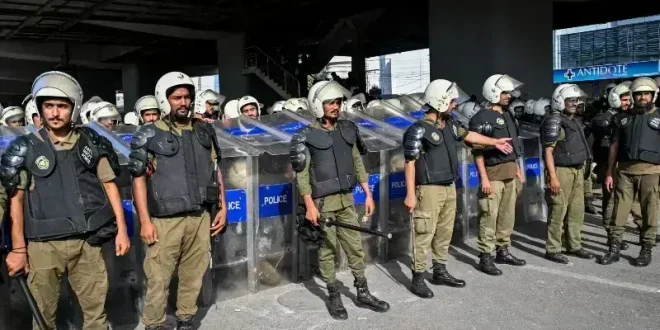
In a significant development, the Punjab government has sanctioned the deployment of 6,000 police officers to Gilgit-Baltistan to bolster security ahead of the June 7 elections. This substantial force, equipped with anti-riot gear, is being transported to the mountainous region, with careful considerations for the challenging terrain and personnel safety. The Interior Minister, Mohsin Naqvi, and Prime Minister Shehbaz Sharif have affirmed a comprehensive security plan to ensure peaceful and organized elections, emphasizing the government’s commitment to the democratic process.
However, this security measure has been met with immediate and strong condemnation from the PTI. The party has accused the federal government of orchestrating “systematic pre-poll rigging,” alleging misuse of state resources to undermine the electoral process. Specific incidents cited include the GB Election Commission issuing a notice to the mother of former Chief Minister Khalid Khursheed over campaign posters, alleged threats to candidates to abandon PTI tickets, and the presence of federal ministers from the ruling Pakistan Muslim League-Nawaz (PML-N) in the region to influence local administration. Simultaneously, PTI parliamentarians claim they are being prevented from entering GB, with reports of leaders like MNA Junaid Akbar being expelled and Asad Qaiser facing travel disruptions. The Chief Election Commissioner of GB, Raja Shahbaz Khan, has, in turn, denied discrimination and warned against code of conduct violations, insisting all actions are lawful.
Background: A Region of Strategic Importance and Enduring Contestations
Gilgit-Baltistan is more than just another administrative unit; it’s a region of immense strategic significance, often referred to as Pakistan’s northern frontier. Historically part of the broader Kashmir dispute, GB holds a unique semi-autonomous status. Its rugged terrain shares borders with Afghanistan, China, and India, making it a critical corridor, especially for projects like the China-Pakistan Economic Corridor (CPEC). The political dynamics in GB are intrinsically linked to Islamabad, with federal governments historically maintaining a strong influence. Elections in the region, while designed to foster local governance, have frequently been marred by allegations of external interference, patronage, and a lack of a truly level playing field.
The current controversy unfolds against a backdrop of heightened political polarization across Pakistan. Following the contentious general elections earlier this year, allegations of rigging and state overreach have become a recurrent theme in the country’s political discourse. The PTI, in particular, has been at loggerheads with the ruling coalition, often accusing the state machinery of targeting its leaders and members. In this context, the deployment of police from Punjab, a major province, into GB, combined with restrictions on opposition figures, fuels existing anxieties about electoral fairness and the perceived weaponization of state institutions for political ends.
Why It Matters: The Pillars of Democracy Under Strain
The unfolding situation in Gilgit-Baltistan transcends local politics; it touches upon fundamental principles of democracy and governance in Pakistan. Here’s why these developments are critically important:
- Electoral Integrity and Credibility: Fair and transparent elections are the bedrock of any functioning democracy. When a significant opposition party raises credible allegations of pre-poll rigging, it erodes public trust in the entire electoral process and the institutions designed to safeguard it, particularly the Election Commission.
- Regional Stability: GB is a highly sensitive geopolitical region. Any perception of widespread injustice or suppression of democratic rights could destabilize an already complex area, potentially leading to unrest and deepening grievances among the local populace, whose democratic aspirations are paramount.
- Trust in State Institutions: The credibility of Pakistan’s police force and Election Commission is on the line. The deployment of a large police contingent, if perceived as an instrument of political coercion rather than security, can further diminish public confidence in law enforcement. Similarly, the ECP’s ability to act impartially and enforce the code of conduct without fear or favor is being rigorously tested.
- Precedent for Future Elections: How these elections are conducted and how allegations of rigging are addressed will set a significant precedent for future polls across Pakistan. A compromised electoral process in GB could embolden similar tactics elsewhere, further undermining democratic norms.
- Perception vs. Reality: The line between legitimate security measures and political intimidation can be blurry. The government’s narrative of ensuring peace clashes directly with the PTI’s narrative of establishing a “virtual police state.” The public’s perception, often influenced by political affiliations, will heavily shape the legitimacy of the outcome.
Impact on Pakistan: Deeper Divides and Damaged Reputation
The repercussions of the Gilgit-Baltistan election controversy extend far beyond the region itself, potentially impacting Pakistan on multiple fronts:
- Heightened Political Polarization: The allegations of rigging will undoubtedly deepen the existing political divides within the country. The PTI, already in opposition, will use this as further evidence of an uneven playing field, potentially mobilizing its supporters and intensifying street protests, adding to national instability.
- International Scrutiny: Pakistan’s democratic credentials are often under the microscope of the international community. Reports of pre-poll rigging, restrictions on political activities, and an overwhelming security presence can damage the country’s international reputation, affecting its standing in global forums and potentially impacting foreign investment and aid, especially from democratic nations.
- Erosion of National Cohesion: The perception that democratic rights are being denied in a strategic and sensitive region like GB can foster a sense of alienation among its populace. This can challenge national cohesion and potentially fuel separatist sentiments in the long run if grievances remain unaddressed and unredressed.
- Weakening of Democratic Institutions: If the Election Commission fails to demonstrate clear impartiality and effectively address violations, it further weakens an already fragile democratic framework. The judiciary, too, may find itself under pressure to intervene, highlighting systemic weaknesses in the checks and balances necessary for a healthy democracy.
- Economic Uncertainty: Political instability and a lack of faith in democratic processes deter both local and foreign investment. Persistent uncertainty can negatively impact economic growth, exacerbating existing challenges like inflation and unemployment.
Analysis: Navigating the Tightrope Between Security and Democracy
The situation in Gilgit-Baltistan presents a classic dilemma: balancing the imperative of security with the sanctity of a free and fair electoral process. While the deployment of security forces for elections is not uncommon in Pakistan, the sheer scale of the Punjab police contingent—6,000 personnel for a relatively small electoral exercise—and its origin from another province immediately raise questions of intent. For the government, it is a necessary measure to ensure peace in a challenging environment. For the opposition, it is an overt act of intimidation, designed to suppress dissent and manipulate outcomes.
The PTI’s allegations of “systematic pre-poll rigging” resonate with a broader narrative it has cultivated since the last general elections. The specific claims—targeting candidates’ families, alleged coercion to switch parties, and blocking opposition figures—paint a picture of a state machinery actively intervening in the democratic process. The Election Commission’s role is therefore paramount. While its Chief Commissioner vows impartiality and warns against violations, the perceived selective application of rules (e.g., ruling party ministers operating freely while opposition leaders are expelled) significantly undermines its credibility. For the ECP to truly be seen as a neutral arbiter, its actions must unequivocally demonstrate fairness to all political actors, irrespective of their affiliations.
Moreover, the geographical and political sensitivity of Gilgit-Baltistan amplifies these concerns. The region’s populace, already navigating its unique constitutional status, deserves to have its democratic voice heard without undue influence or pressure. The long-term stability of GB, and indeed Pakistan, hinges on ensuring that the elections are not just peaceful, but also genuinely representative of the people’s will. Failing to address the deep-seated grievances surrounding electoral integrity could lead to lasting resentment, creating a fertile ground for further political instability and undermining the very democratic ideals the government professes to uphold.
In conclusion, the Gilgit-Baltistan elections are shaping up to be a critical test for Pakistan’s democratic future. The interplay of security deployments, allegations of rigging, and the response of electoral institutions will determine not only the immediate outcome in GB but also the broader trajectory of democratic governance in the country. For Pakistan to navigate its complex political landscape successfully, a renewed commitment to transparency, impartiality, and the fundamental right to a free and fair election is not merely desirable, but absolutely essential.
“`