Dost Pakistan Journeys Tours and safaris in the North & South Pakistsn
Related Articles



“`html
US-Pakistan Friendship: Hegseth Hails Islamabad’s Pivotal Role in US-Iran Peace
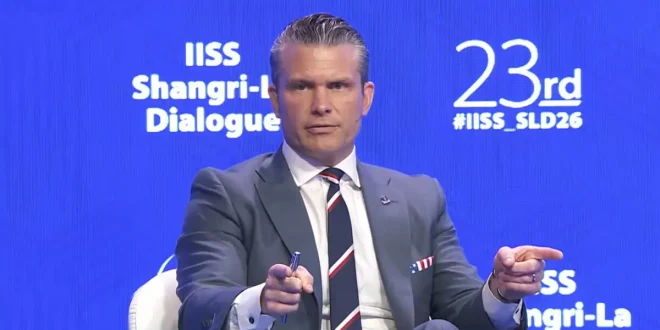
In a significant diplomatic overture, United States Secretary of Defense Pete Hegseth recently lauded Pakistan’s instrumental role in facilitating the delicate US-Iran peace negotiations, culminating in an April 8 ceasefire. Speaking at the prestigious Shangri-La Dialogue in Singapore, Hegseth not only praised Islamabad’s leadership but also heralded the emergence of a “true friendship” between Washington and Islamabad, signaling a notable shift in US foreign policy calculus for South Asia.
What Happened: A Diplomatic Reorientation
During the high-profile Shangri-La Dialogue, a premier security summit for the Indo-Pacific region, US Defense Secretary Pete Hegseth articulated strong commendation for Pakistan’s diplomatic efforts. He specifically highlighted Islamabad’s function as the official interlocutor between Washington and Tehran, a role that proved crucial in de-escalating tensions and achieving a ceasefire between the US and Iran. This praise came in response to questions about regional missile capabilities, particularly from Pakistan and India. Hegseth explicitly named Prime Minister Shehbaz Sharif and Chief of Defence Forces/Chief of Army Staff Field Marshal Asim Munir, crediting them for their personal commitment to the peace process. His declaration of a “true friendship” developing between the two nations marks a departure from recent US rhetoric, especially after initially emphasizing India as a “critical anchor” in his primary address.
Context and Background: Navigating a Complex Past
The US-Pakistan relationship has been characterized by periods of close alliance, often driven by shared security interests, interspersed with phases of tension and mistrust. From Pakistan’s crucial role as an ally during the Cold War (famously facilitating the US opening to China) to its status as a frontline state in the War on Terror, the partnership has endured strategic shifts. However, recent years saw a cooling of ties, particularly following the US withdrawal from Afghanistan and a perceived pivot by Washington towards India as the primary strategic partner in the Indo-Pacific. US administrations, including the current one, have often stressed the importance of India in countering growing Chinese influence in the region.
Against this backdrop, Pakistan has consistently sought to underscore its continued relevance in regional and global security. Its historical ties to both the US and various Middle Eastern actors have positioned it uniquely for mediation. The recent US-Iran peace negotiations provided a critical opportunity for Pakistan to reassert its diplomatic utility. Notably, President Donald Trump and his administration have frequently offered effusive praise for Pakistan’s leadership, with Trump himself referring to Field Marshal Munir as “my favourite field marshal” and PM Shehbaz as “great.” This personal rapport appears to have facilitated the current diplomatic momentum. Furthermore, Hegseth’s reiteration of the US narrative regarding Trump’s brokering of a May 2025 India-Pakistan ceasefire, despite India’s denial, underscores a deliberate framing of Pakistan as a key contributor to regional stability.
Why It Matters: A Strategic Reassessment
Hegseth’s remarks carry significant weight, suggesting a potential recalibration of US foreign policy in South Asia. Firstly, it signals an acknowledgment of Pakistan’s enduring strategic importance beyond its immediate neighborhood. Islamabad’s successful mediation between Washington and Tehran not only demonstrates its diplomatic dexterity but also highlights its value in navigating complex geopolitical flashpoints, particularly in the Middle East, a region vital for global energy security and stability. Secondly, the declaration of a “true friendship” could represent a move away from a solely India-centric approach in the Indo-Pacific, suggesting Washington sees value in a multi-pronged engagement strategy in South Asia. This balanced approach could enhance regional stability by fostering cooperation rather than exclusive alliances. Thirdly, Hegseth’s nuanced stance on Pakistan’s and India’s nuclear capabilities – recognizing their desire for advanced missile systems without deeming them a direct threat to the US – reflects a pragmatic acceptance of regional realities, moving beyond mere non-proliferation rhetoric to a more engagement-focused strategy.
Impact on Pakistan: Opportunities and Challenges
For Pakistan, this diplomatic praise and potential warming of ties present a multitude of opportunities. Domestically, it provides a significant boost to the current government’s image, validating its diplomatic initiatives on the world stage. Internationally, it elevates Pakistan’s standing as a responsible state actor capable of contributing to global peace and security. Improved US relations could unlock avenues for enhanced economic cooperation, investment, and potentially greater support from international financial institutions, which are crucial for Pakistan’s current economic stability challenges. Security cooperation, including intelligence sharing and military aid, could also see a resurgence. However, Pakistan will need to skillfully navigate this renewed engagement. Maintaining a strong relationship with its long-standing ally China while strengthening ties with the US requires a delicate balancing act. Furthermore, while the US narrative of brokering an India-Pakistan ceasefire may bolster Pakistan’s image as a peace-seeker, it also injects a potentially contentious element into its already complex relationship with India.
Analysis: Pragmatism Over Dogma
The US engagement with Pakistan, as articulated by Secretary Hegseth, appears rooted in a pragmatic assessment of current global realities and immediate strategic needs. Washington recognizes Pakistan’s unique geographic and diplomatic position, making it an invaluable partner in specific, high-stakes scenarios like the US-Iran negotiations. This suggests a transactional foreign policy approach, prioritizing results and shared interests over historical grievances or ideological alignment. The public praise from President Trump and top officials further underscores a leader-centric diplomatic style, which, while effective in the short term, can also be subject to sudden shifts. The statement by Secretary of State Marco Rubio in November 2025, emphasizing that strengthening ties with Pakistan does not come at the expense of relations with New Delhi, highlights Washington’s delicate tightrope walk in South Asia. The US aims to cultivate robust relationships with both regional powers, leveraging each for different strategic objectives while attempting to avoid a zero-sum game.
Pakistan, for its part, is demonstrating adept multi-vector diplomacy, proving its ability to engage effectively with diverse international partners. The challenge for Islamabad will be to translate this diplomatic goodwill into sustained economic and security benefits, ensuring domestic stability and continuing its crucial role in fostering regional peace. While the “true friendship” metaphor is compelling, its longevity will depend on consistent cooperation, evolving geopolitical dynamics, and Pakistan’s ability to navigate the complex interplay of regional and global power politics. This developing warmth between Washington and Islamabad is a storyline to watch closely, as it could reshape the geopolitical landscape of South Asia and beyond.
“`